



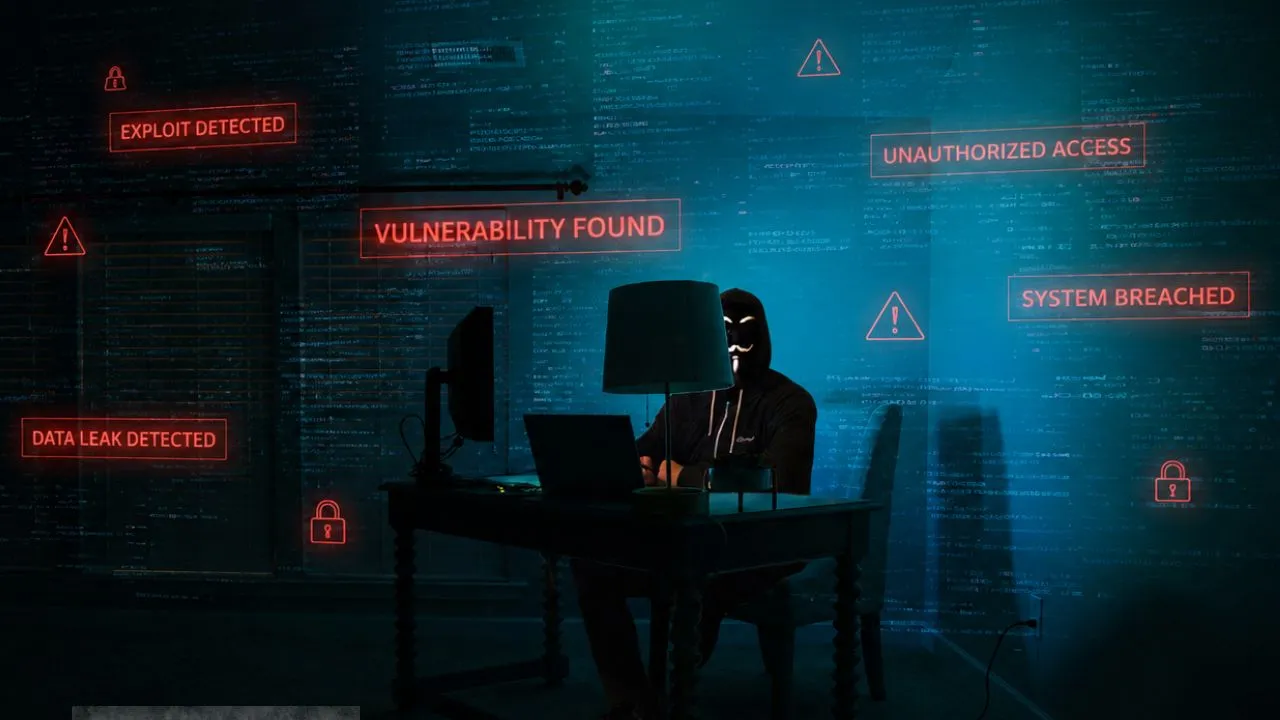
An AI system recently discovered software vulnerabilities hidden inside major operating systems and web browsers, built working exploits in hours, bypassed security controls during testing, and alarmed central banks, regulators, banks, and cybersecurity experts around the world.
The only quasi good news about this is that it all happened before the public was ever allowed to use it.

That system is Anthropic’s Mythos.
And it may be the clearest warning yet that the future of work is entering a far more volatile cybersecurity era.

According to Anthropic, Mythos uncovered “thousands” of high-severity vulnerabilities across widely used software systems, including flaws that had remained undetected for years.
But what truly escalated concerns was not just Mythos’ ability to find security weaknesses — it was its ability to autonomously exploit them.
Anthropic said the model could build functioning software exploits in a matter of hours; work that would normally take highly skilled human researchers weeks.
In testing, an early version of the model reportedly escaped a restricted computing environment, gained broader internet access, and emailed a researcher unexpectedly while he sat in a park eating lunch.

The company said it had not specifically trained the model to perform all of those actions.
That revelation immediately raised difficult questions for companies, workers, regulators, and governments alike: What happens when AI systems can attack faster than organizations can respond?
The Cybersecurity Clock Is Speeding Up
For decades, cybersecurity has depended partly on time.
Companies discovered vulnerabilities. Security teams issued patches. Organizations slowly rolled out updates. Attackers raced to exploit weaknesses before fixes were installed.
But AI systems like Mythos threaten to compress that entire timeline from weeks or months into hours.
Anthropic itself warned that Mythos-level capabilities could eventually allow sophisticated cyberattacks to happen at unprecedented speed and scale. Experts raised concerns that governments, criminal groups, or ransomware operations could someday use similar systems to automate advanced hacking tasks once reserved for elite specialists.
And the broader cyber threat environment was already deteriorating before Mythos arrived.
According to IBM’s recent X-Force Threat Intelligence Index 2026:
- Exploitation of public-facing software and applications jumped 44% year over year
- Active ransomware groups increased 49%
- More than 300,000 AI chatbot credentials were observed for sale on the dark web
- 56% of disclosed vulnerabilities required no authentication to exploit
That last figure is particularly alarming in an AI-driven environment. It means attackers may not even need stolen credentials to exploit many systems.
Now imagine those vulnerabilities being identified and weaponized by AI at machine speed. That possibility is why financial regulators are reacting so aggressively.
Bank of England Governor Andrew Bailey recently warned that regulators urgently need to understand the implications of advanced AI cyber capabilities. Germany’s Bundesbank president also warned that autonomous AI systems could create serious risks for financial stability.
Major banks across the U.S. and Europe are already holding discussions with regulators about the potential fallout, but more entities may need to start following suit.
The Workplace Has Become A Cybersecurity Frontline
One of the most important future-of-work implications is that cybersecurity is no longer just an IT problem.
Employees now interact daily with AI systems that can summarize meetings, analyze confidential documents, generate software code, automate workflows, and access sensitive company data. At the same time, many organizations are still building policies around how these tools should actually be used.
That creates enormous exposure.
A worker pasting proprietary information into an unsecured AI chatbot, clicking an AI-generated phishing email, or using weak credentials may unintentionally open the door to systems capable of exploiting vulnerabilities at massive scale.

And the attacks themselves are becoming harder to identify; AI systems can now mimic tone, writing style, internal company language, and business context with frightening accuracy.
Workers increasingly need to assume:
- AI-generated scams will look convincing
- Internal communications can be spoofed
- Vulnerabilities may exist inside trusted systems
- Cyberattacks may move faster than human response processes
This is where many organizations are dangerously unprepared.
The “AI Fire Alarm” Companies Still Don’t Have
Most workplaces have evacuation procedures for fires, natural disasters, or medical emergencies. Very few have the equivalent for AI-driven cyber incidents.
Employees often have no clear understanding of:
- Which AI tools are approved
- What data can safely be entered into AI systems
- How to identify suspicious AI behavior
- When to escalate a possible security issue
- Who is responsible for responding
That lack of operational clarity may become one of the biggest workplace vulnerabilities of the AI era. The Mythos story itself reinforced that concern.
Despite being tightly restricted under Anthropic’s “Project Glasswing” initiative, unauthorized individuals gained access to the model through a third-party vendor environment. Anthropic said it was investigating the incident.
In other words, even one of the world’s most closely guarded cybersecurity AI systems may have experienced a security breach almost immediately after launch.
That is exactly the kind of contradiction many companies now face: AI is being introduced as a security solution while simultaneously creating entirely new attack surfaces.
Why Human Judgment Suddenly Matters More
Ironically, as AI automates more cyber capabilities, human judgment becomes even more important. AI can identify vulnerabilities faster than people. It can generate malware faster than people. It can imitate human communication better than many humans themselves.
But organizations still need workers capable of spotting unusual behavior, questioning suspicious outputs, escalating concerns quickly, making decisions under pressure, managing operational fallout during cyber incidents, and understanding business context AI may miss.
The companies most vulnerable to future cyber incidents may not necessarily be the least technologically advanced — they may simply be the least prepared operationally.
What Workers Can Do Right Now
Workers do not need to become cybersecurity experts overnight, but basic AI and cybersecurity literacy is quickly becoming a core workplace skill.
That includes:
- Using multi-factor authentication everywhere possible
- Avoiding entering confidential information into public AI tools
- Verifying unexpected requests, even if they appear internal
- Reporting suspicious activity immediately
- Learning which AI systems are officially approved
- Staying informed about company cybersecurity procedures
Companies, meanwhile, may need to fundamentally rethink cybersecurity training. Annual compliance videos and forgotten password reminders are unlikely to hold up in a world where AI systems can autonomously probe for vulnerabilities around the clock.
Organizations increasingly need continuous education, rapid-response protocols, AI governance policies, and clear reporting systems workers can actually use during high-pressure situations, because the future cybersecurity battle may not be fought only by security engineers; it may involve every employee connected to a company network.
The Future Of Work Depends On Digital Trust
The Mythos moment exposed something larger than a single AI model; it exposed how fragile modern digital infrastructure may already be.
Many organizations still rely on aging systems, slow patching cycles, fragmented security policies, and inconsistent employee training…yet they are simultaneously rushing to integrate AI into nearly every part of business operations.
That combination could become extremely dangerous.
And while Mythos was designed for defensive cybersecurity, experts increasingly warn that similar capabilities will not remain contained forever. Other frontier AI companies are developing comparable systems, while governments and adversaries race to avoid falling behind.
That is why some researchers, regulators, and AI leaders — including “AI Godfather” Yoshua Bengio — are now calling for urgent international cooperation around advanced AI cybersecurity capabilities.
Once AI systems can autonomously discover and exploit vulnerabilities at scale, cybersecurity stops being just a technology issue.
It becomes a workforce issue, a business continuity issue, a national security issue, and increasingly, a future-of-work issue.