
Every year, NeoCon and Design Days treat the industry to a snapshot of where workplace design is headed. This year, many manufacturers focused on creating environments that help people feel better, adapt more easily, and work more intentionally. Allwork.Space’s Michelle Weiss, together with DLR Group’s Workplace Client Leader and Futurist Nicole Zack, explored hundreds of products across the Chicago shows, looking beyond individual launches to identify the broader shifts shaping the future of work. Here’s what stood out.
Seating that shifts the body and the mood
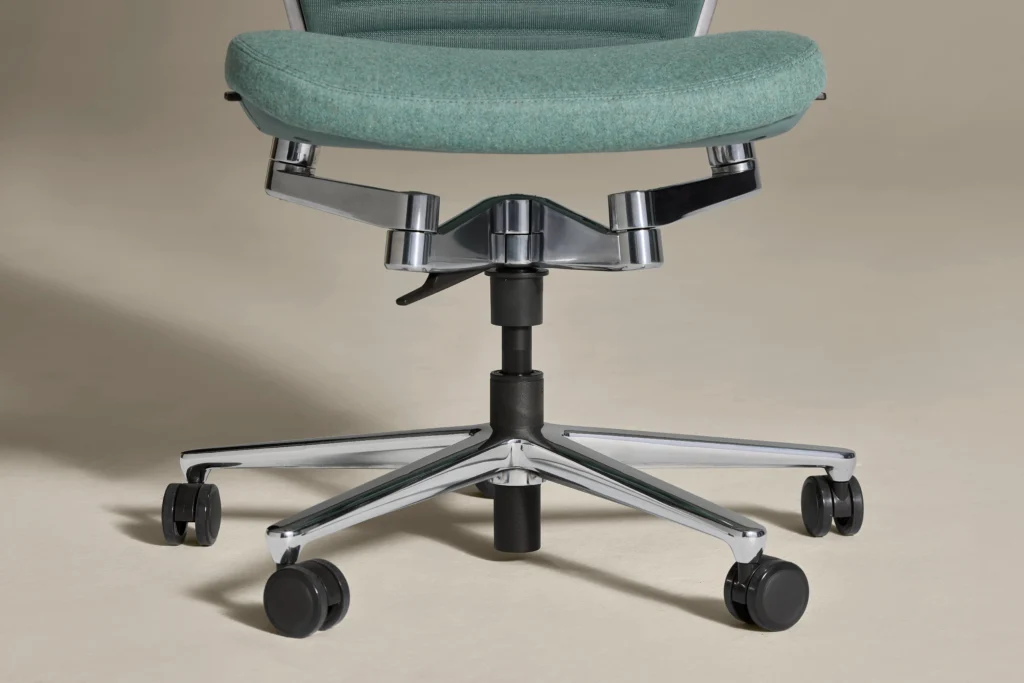
KI’s Cognetic Technology was one of the most memorable moments of the week. I have never before sat in a chair that physically created such a sense of calm and contentment. It reframed seating as something beyond ergonomics. Beyond promoting good posture, it was about movement, nervous system response, and how a chair can actually change how you feel.
PRO TIP: Experience the Kiaura Collection built with Cognetic Technology firsthand by attending an upcoming demonstration event near you.
Sustainability with a second life built in
The strongest sustainability stories went beyond recycled content. They were about products designed for repair, reuse, reconfiguration, and another life. Lucy by Boss Design was a standout with its reupholstery and circularity story. Model No Onda pushed the conversation through 3D-printed, plant-based, reconfigurable furniture. Impact Acoustic Truchet and Impact Acoustic Mycelium showed how acoustic products can carry both material innovation and visual interest.
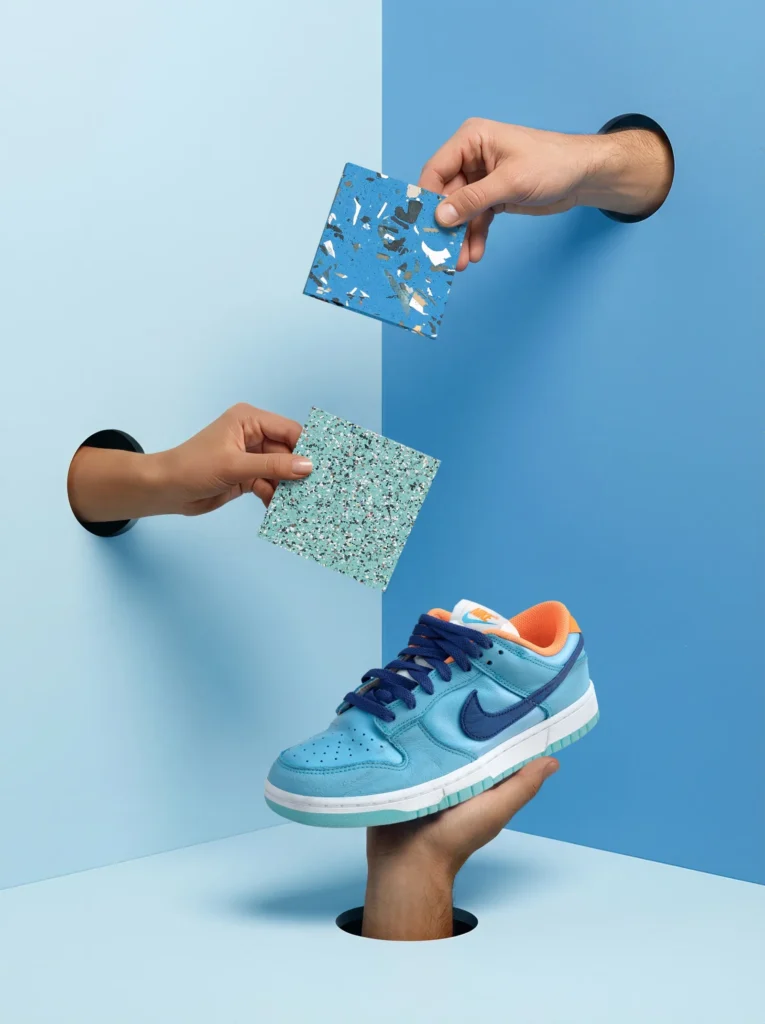
Mohawk Group’s Hero Rubber made with Nike Grind, demonstrated how cross-industry partnerships can drive circular innovation, giving end-of-life athletic footwear a second life as a durable, design-forward flooring solution for commercial interiors. Plus, it’s a 100% recyclable solution through Mohawk Group’s ReCover program, keeping materials in a continuous loop of use and diverting waste from landfills.
The archive as an anchor
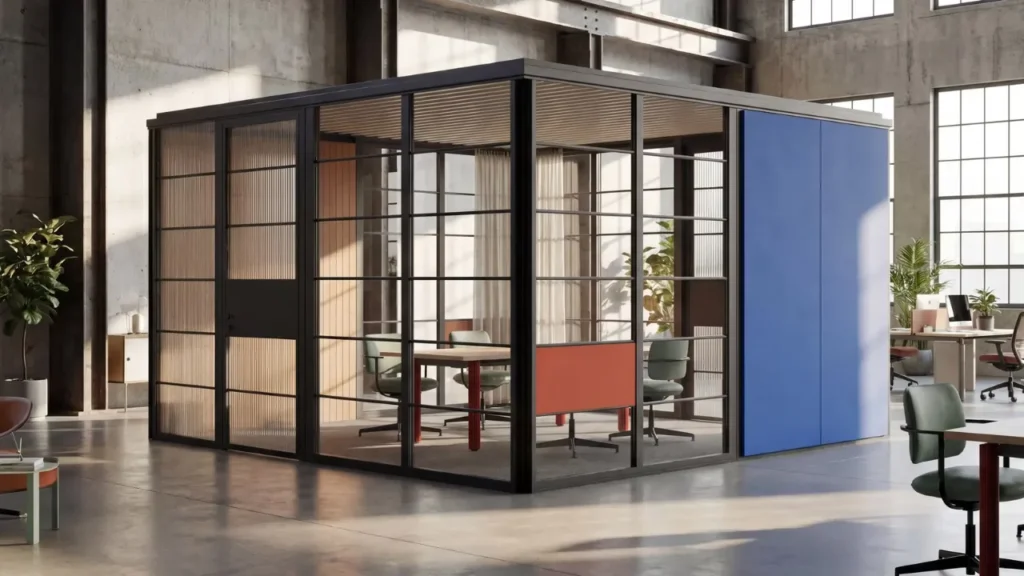
One of the most interesting themes was the return to design archives. Kettal’s Eames Pavilion System, Prostoria’s Richter Collection, IKONstudio’s SOM Collection, and IKONstudio’s Louis Kahn Collection all felt like a grounding moment. In a fast-paced, future-focused society that does not seem to slow down, these reintroductions created a connection to the past without feeling nostalgic.
They reminded us that good design can come back with relevance, restraint, and new meaning.
Biophilia, flexibility, and soft boundaries
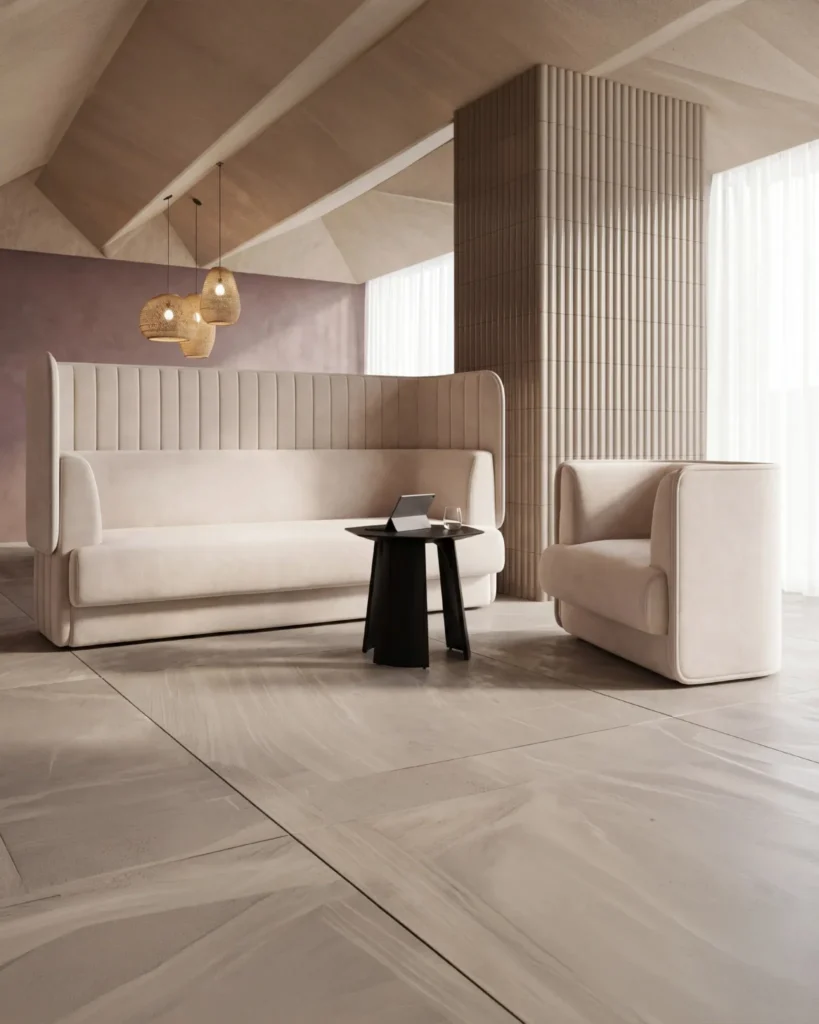
Workplace products continue to move away from fixed solutions and toward softer, more adaptable boundaries. Aster by Three H brought mobility and biophilia together in a smart accessory collection. DARRAN Limousine offered a more sculptural approach to open and enclosed lounge seating. Model No Onda also stood out here as a modular landscape that blends seating, planting, power, and spatial definition.
IKEA Business demonstrated that this trend is reaching the mainstream with its new MITTZON modular office storage system and expanded LILLESÄTER commercial soft seating collection, bringing hospitality-inspired flexibility to workplaces of every size.
Wellness is becoming more sensory and more proven
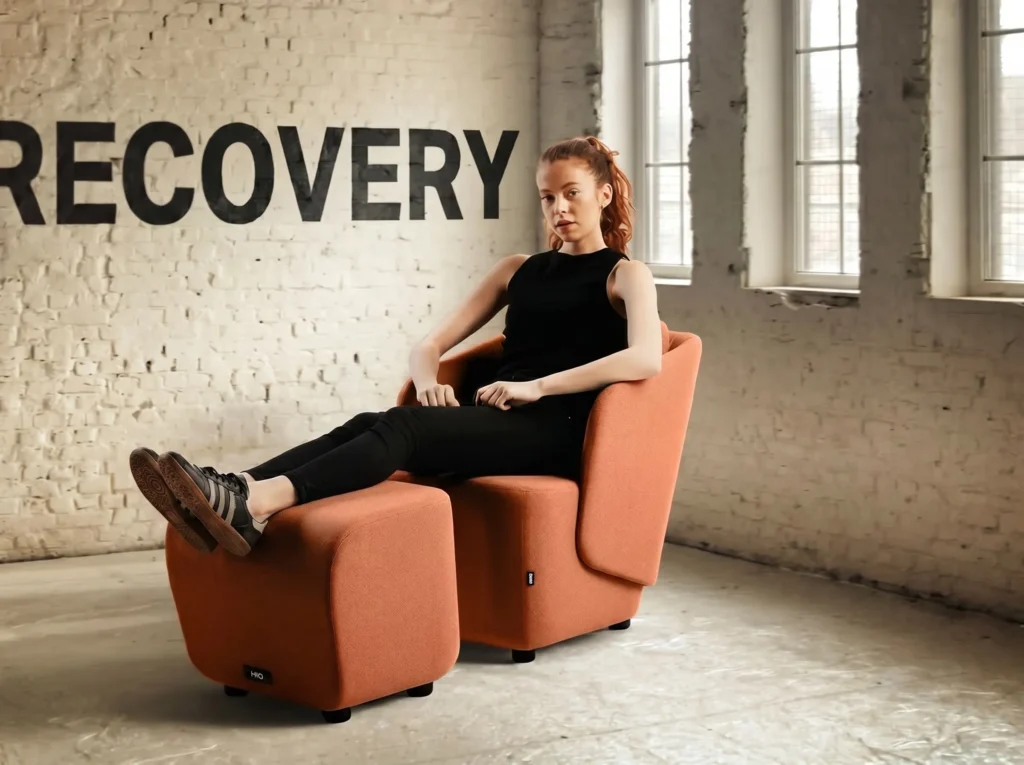
Wellness showed up through light, recovery, movement, and sensory reset. BIOS SkyView was a strong example of lighting moving beyond visibility into mood, focus, and circadian support. Thinkspace Recovery Chair and Thinkspace NeuroPod brought the recovery conversation directly into workplace environments. As a Milan Design Week bonus, Mind Oasis by Rituals connected scent, water, light, and materiality into a true pause moment.
The power of invisible intelligence
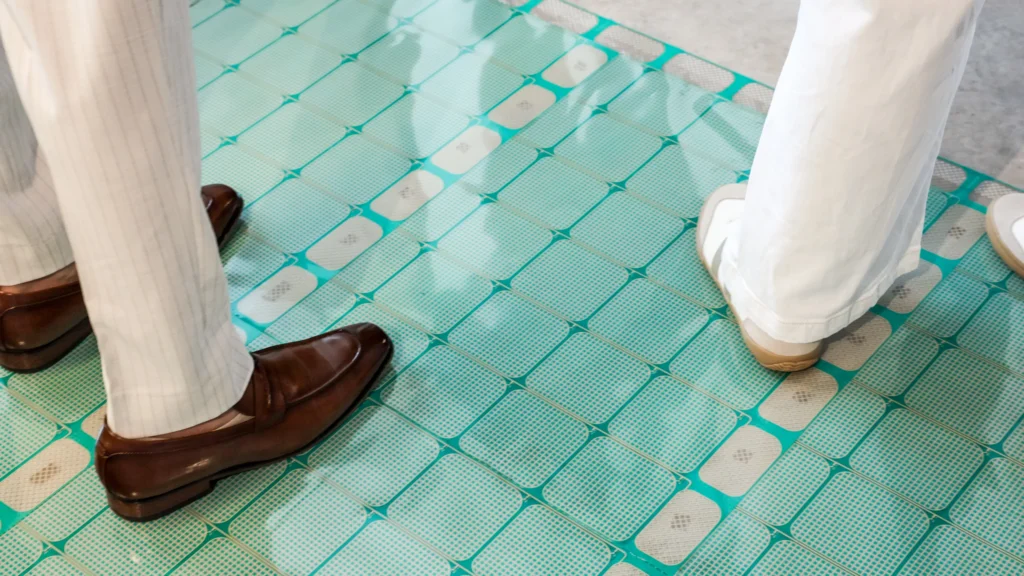
The smartest products weren’t the ones promoting AI, rather they were quietly embedding intelligence into the workplace. Framery’s Gradus turns a workplace pod into a connected source of highly desired utilization insights, Gantner and Salto seamlessly links access, storage, and employee movement, and Tarkett’s collaboration with Scanalytics transforms flooring into an anonymous source of precise occupancy data and an energy reduction tool. Together, they show that the future workplace is able to be more responsive through intelligence that’s almost invisible.
The Showroom Has Become the Product
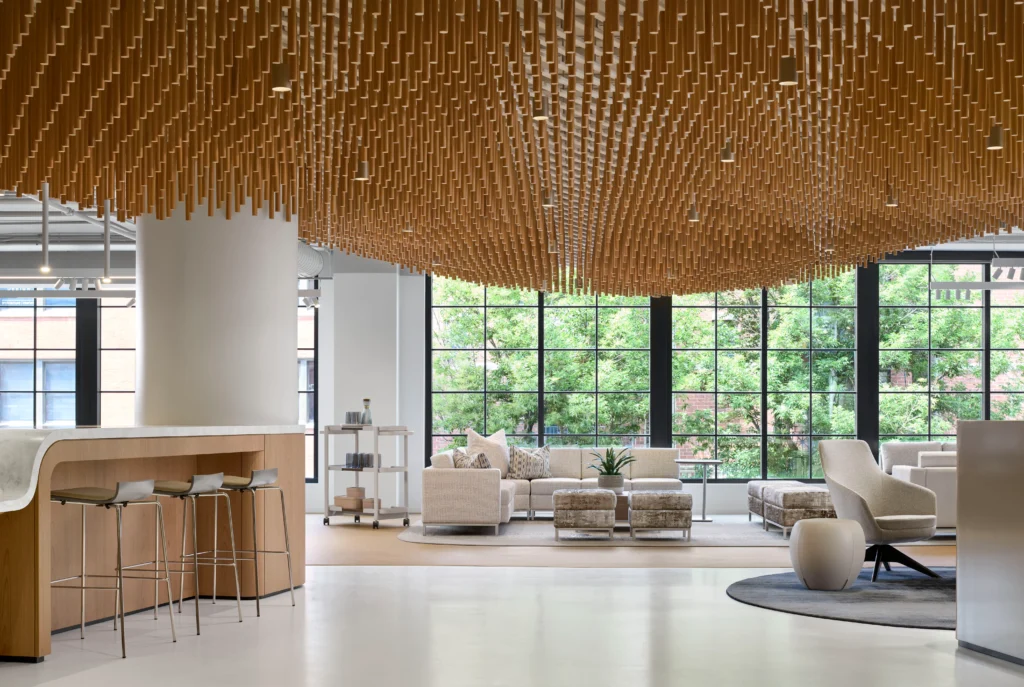
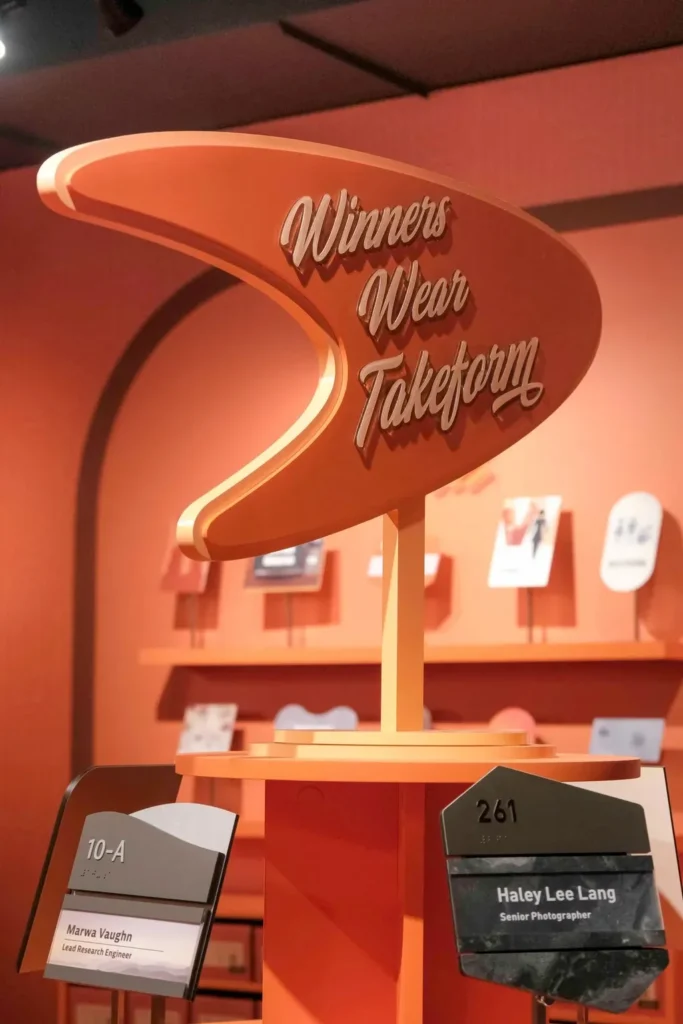
One of the biggest takeaways wasn’t a chair, pod, or lighting system — it was how manufacturers chose to present them. Turf invited visitors to “choose their own journey,” transforming a showroom visit into a personalized experience. Takeform reimagined its showroom as an immersive 1970s department store, proving that even wayfinding and signage can become engaging storytelling tools rather than simple functional elements.
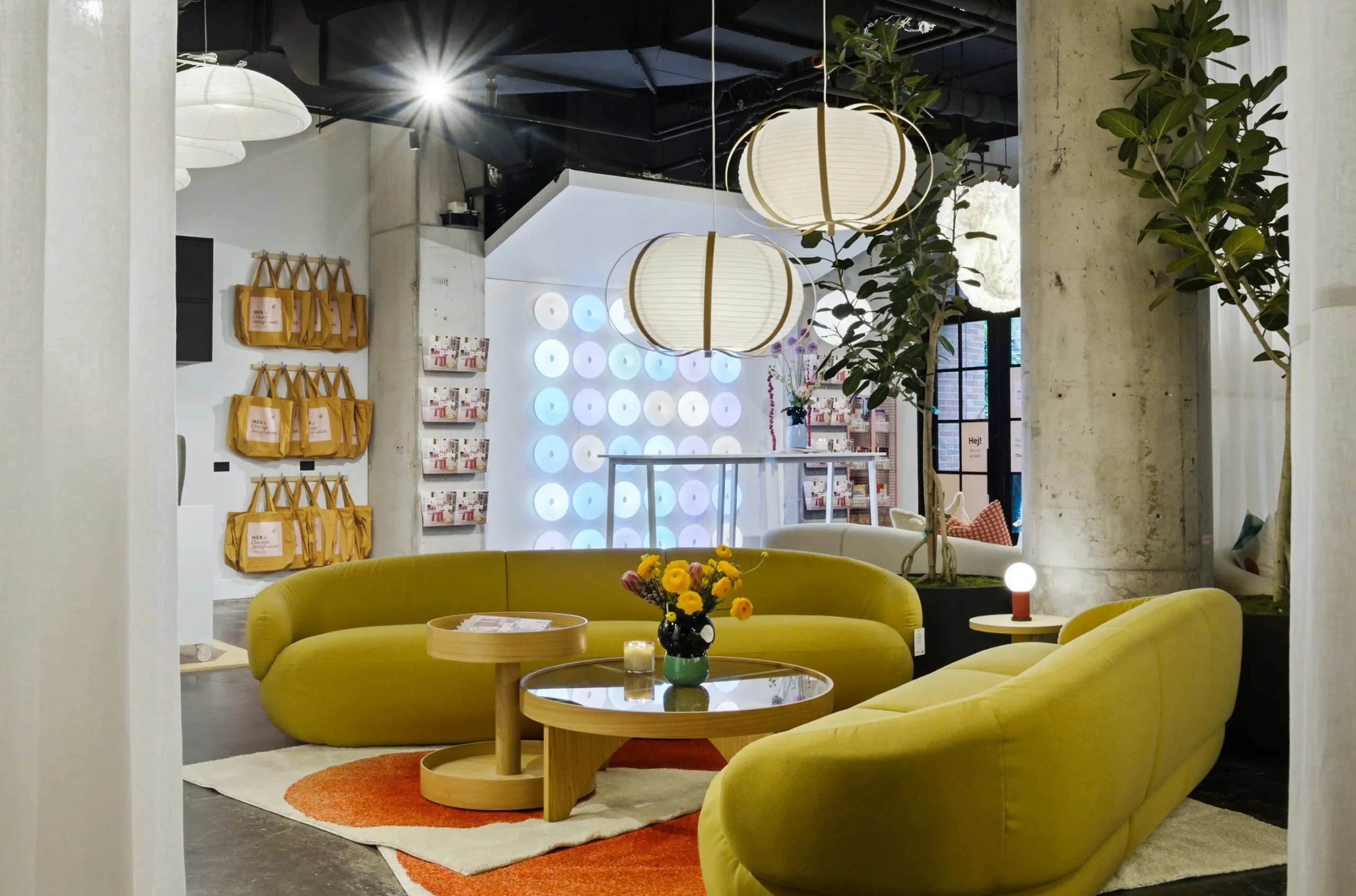
Global welcomed guests into their new showroom through a hospitality-inspired entrance that immediately set a different tone, while OFS continued to blur the line between showroom and luxury hotel, creating a destination where people wanted to linger. Increasingly, brands are designing experiences that reflect how they believe people want to work, connect, and feel.
While no single product defined this year’s shows, the direction was unmistakable. Across every showroom, manufacturers were designing beyond furniture to create workplaces that are more adaptive, restorative, sustainable, and intelligent.
Whether through circular materials, embedded technology, sensory wellbeing, or hospitality-inspired environments, the future of work is becoming less about where we work and more about how those spaces help us perform, connect, and thrive. See you next year in Chicago!