



We’ve spent the last 20-plus years getting better at designing commercial interiors more sustainably. We’ve improved the materials we specify, the health of the environments we create, and our understanding of how the built environment affects the people inside it.
But there’s another question we don’t ask often enough:

What happens when that sustainable workplace needs to change?
I’ve spent years helping organizations design workplaces across healthcare, government, education, and corporate environments. And I’ve also seen what happens a few years later when a thoughtfully designed workplace no longer fits the people using it.

The organization grows. Teams reorganize. Work patterns change. Technology changes how people do their jobs. Suddenly, a workplace that worked beautifully on day one doesn’t work on day 431.
With another redesign, renovation, and budget, too often comes another round of demolition.
I saw Coca-Cola prepare for years for their “Workplace 2020” and then send out new RFPs the following year for spaces that already needed a fresh solution. Chick-fil-A installed gorgeous white board walls but when they went underutilized and the square footage was needed for something else, demolition was the only available solution.
This all raises an important question for anyone responsible for designing or managing a workplace:

Can we really call a space sustainable if it has to be torn apart every time the organization changes?
Sustainability Has Evolved. It Needs to Evolve Again.
Standards like LEED helped the commercial design industry think differently about the environmental performance of our buildings and the materials we put inside them. WELL expanded that conversation by placing greater emphasis on the health and well-being of the people occupying those spaces.
This is important progress and it does make a difference. But sustainability shouldn’t end when the construction project does.
Organizations are constantly changing, and increasingly, those changes happen faster than their real estate can respond. Headcount fluctuates and departments expand and contract. Hybrid work changes how often and why people come to the office. New generations enter the workforce. AI and other technologies reshape roles and workflows.
The workplace has to respond to all of it.
That means we should be thinking not only about how responsibly a workplace is built, but also how easily it can evolve without creating unnecessary waste.
The Sustainability Cost of Change
When traditional built-in architecture needs to change significantly, demolition is often the easiest or only option.
The environmental implications are substantial. According to the U.S. Environmental Protection Agency, the United States generates more than 600 million tons of construction and demolition debris annually. More than 90% of that debris comes from demolition rather than construction, and nearly 144 million tons ultimately go to landfills.
Not all of that waste comes from workplace interiors, of course. But the scale of the problem should cause those of us designing workplaces to consider a simple question:
How much of what we’re designing today could still be useful tomorrow?
That question changes the sustainability conversation. Choosing responsible materials still matters. Designing healthy environments still matters, but another important strategy is preventing perfectly usable materials from entering the waste stream simply because the organization around them changed.
Design for Change Before Change Happens
Adaptability should be considered part of a workplace’s sustainability strategy from the beginning. That doesn’t mean every desk needs wheels or every wall needs to move — that would create its own set of problems.
It more means making intentional decisions about which elements of a workplace should be permanent and which should be capable of changing.
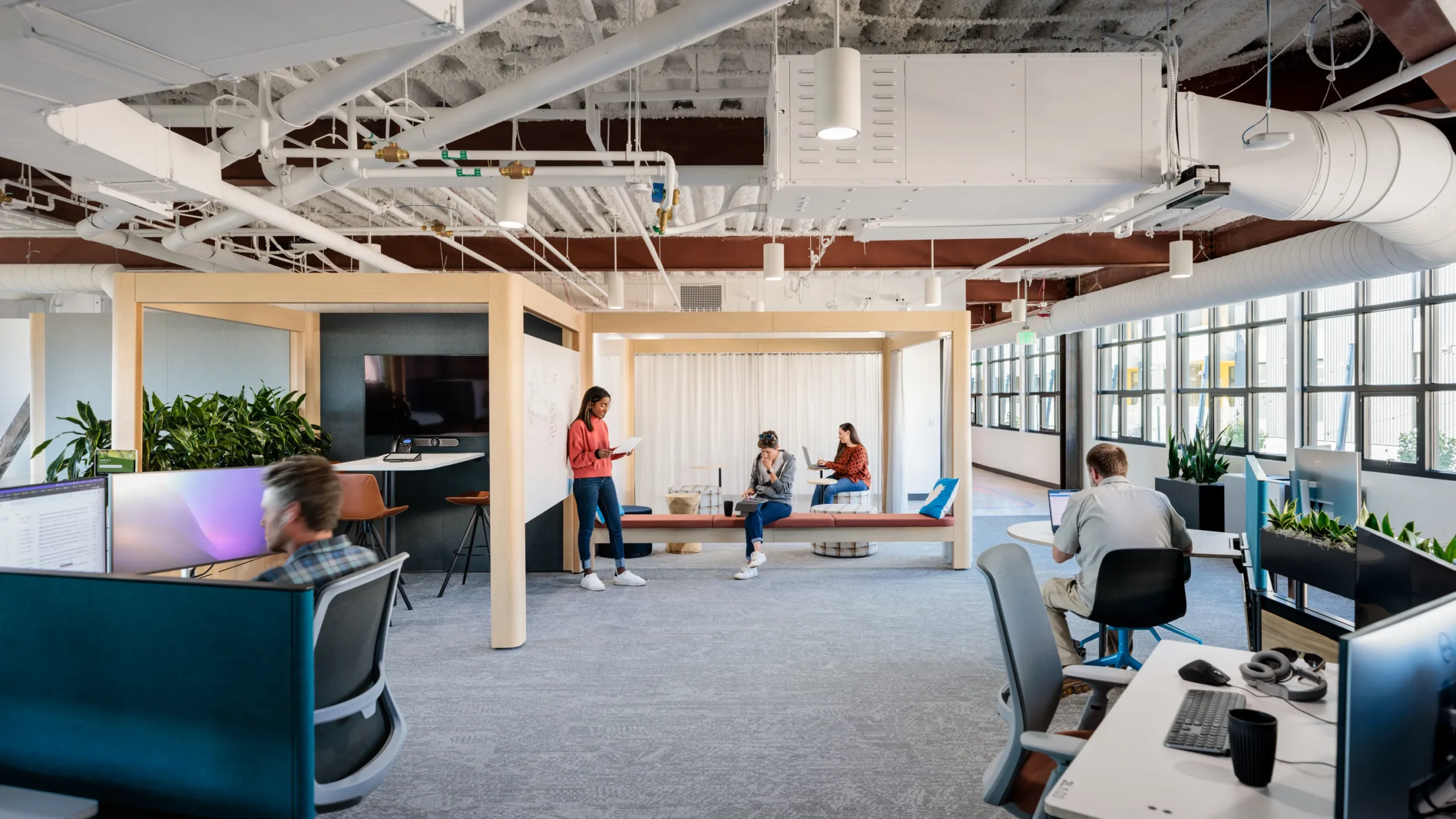
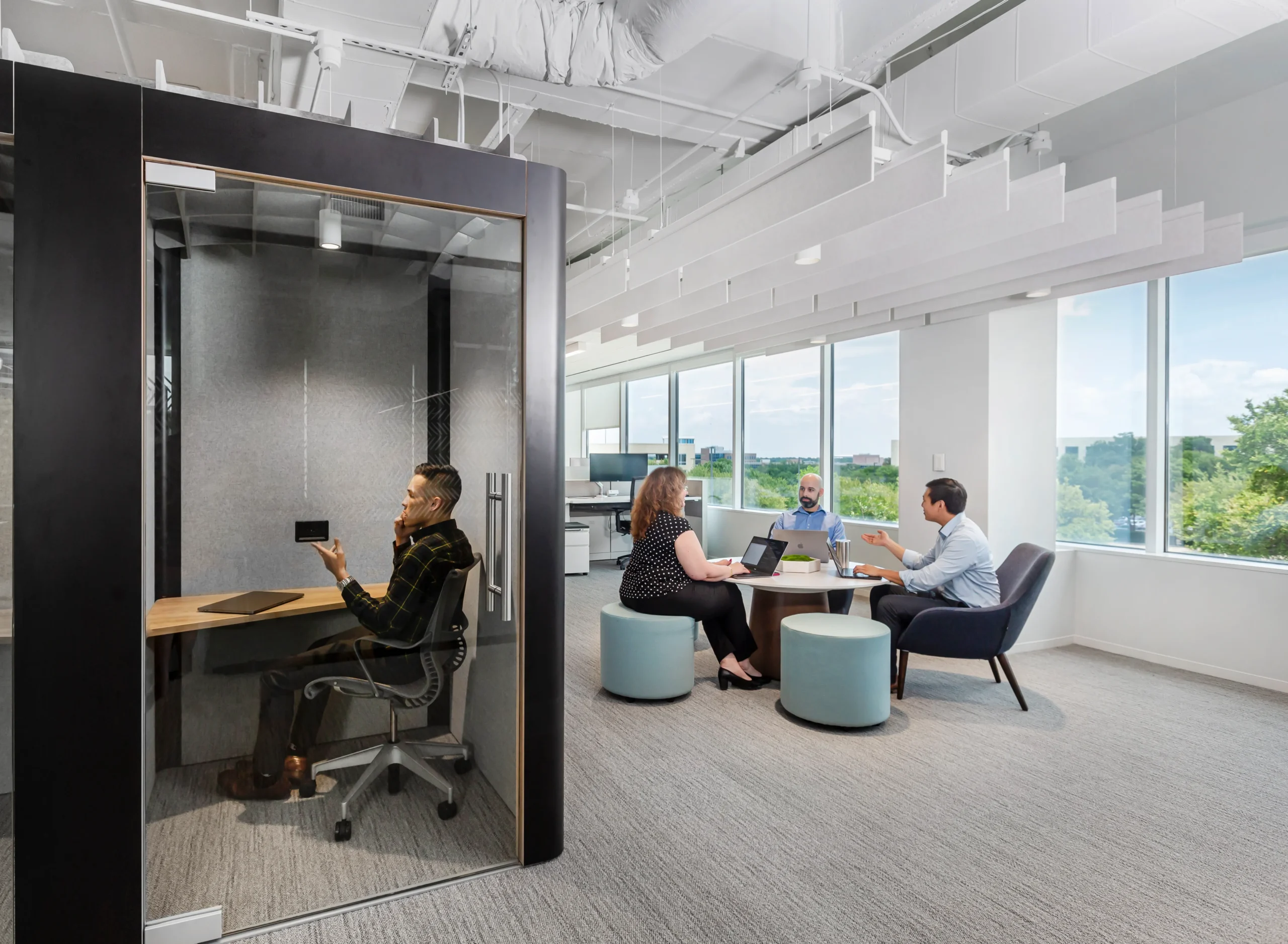
Modular and freestanding furniture can allow spaces to be reconfigured rather than rebuilt. Privacy pods and demountable solutions can provide enclosed space without requiring the same level of permanent construction. Smaller furnishings can move between teams and applications. Components that can be repaired, refreshed, relocated or reused can remain valuable long after their original purpose changes.
The principle is more important than any individual product or solution: Before putting something into a workplace, consider what happens to it when the workplace changes.
That matters even more as organizations reconsider how they consume real estate. JLL has predicted that 30% of office space will be consumed flexibly by 2030, alongside continued growth in pre-built spaces, shared amenities and flexible workplace models.
If the way organizations use real estate is becoming more flexible, the environments inside that real estate should be prepared to change with them.
Put Your Workplace Through an Adaptability Test
For workplace leaders, designers, and facilities teams, this doesn’t have to be complicated.
As you make decisions about a space, ask:
Can it move and could this element serve another area or team if our needs change?
Can it change and can it be reconfigured for a different type of work without significant construction?
Can it be reused because if (or when) we no longer need it here, could it serve another purpose somewhere else?
Can it be repaired or refreshed which basically asks, can individual components be replaced instead of discarding the entire product or system?
What happens to it when we’re done with it; is there a realistic next life for this material, product, or architectural element?
These questions won’t eliminate change, but they are intentionally meant to help us design for its inevitability.
The Workplace Will Change. Plan for It.
One of the realities of workplace design is that we’re designing for organizations we know will be different in the future.
Cushman & Wakefield estimates that at least 60% of U.S. office space could be considered for a fit-out as owners and occupiers compete to attract workers back to the office. That makes adaptability more than a design preference. It makes it a business and sustainability consideration.
A workplace that can evolve can reduce demolition, keep usable materials out of landfills, minimize disruption, and extend the useful life of the investment an organization has already made.
We’ve gotten good at asking whether a workplace is sustainable on day one. Now we need to ask whether it can remain sustainable on day 1,000, and whatever comes after that.
The real test of a sustainable workplace is taking the time to evaluate how little we have to throw away when it inevitably needs to change.