



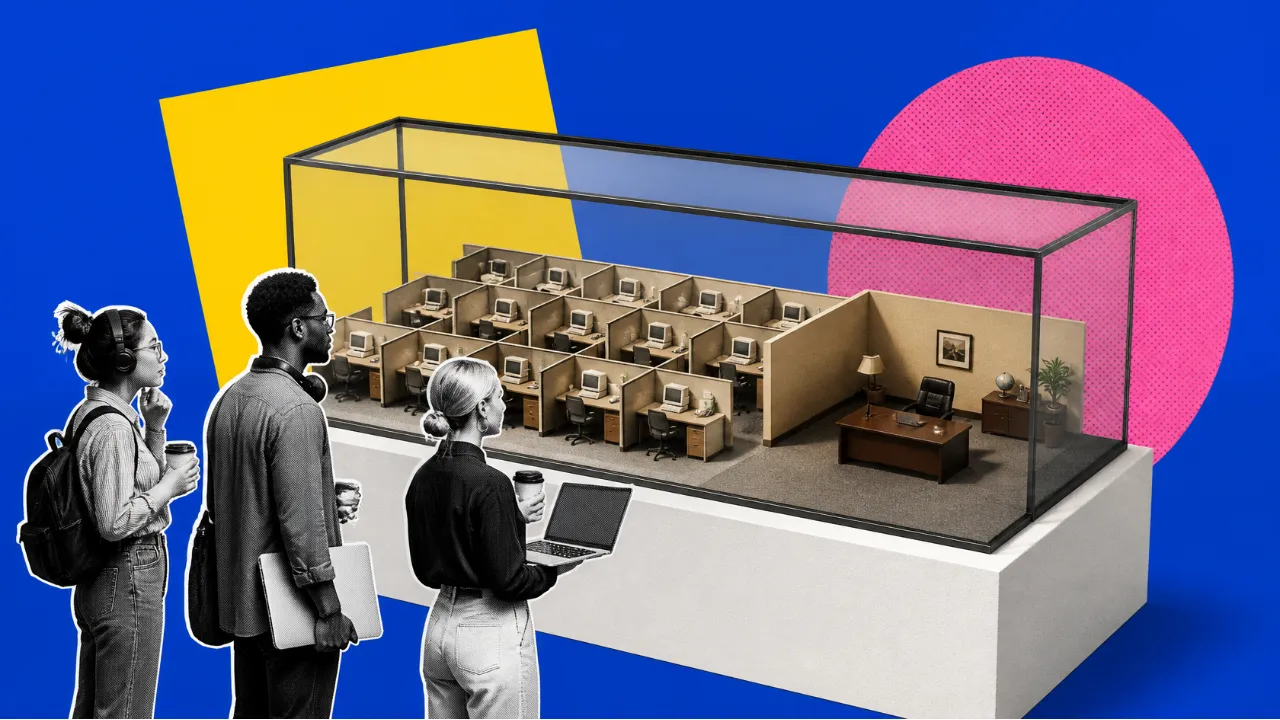
The traditional office was built around predictable schedules, assigned workstations, long meetings and employees spending most of their working hours in the same building.
That model certainly fits fewer organizations today Hybrid schedules mean employees may be in the office on different days. Digital tools and AI are changing how work gets done, while teams increasingly need a mix of collaboration, individual focus and spaces equipped for virtual meetings.

An office does not need to look like a coworking space to meet those needs, but if its layout assumes every employee works the same way, at the same desk, on the same schedule, it may be time to reconsider the design.
Here are six red flags that your office might be designed for a workforce that no longer exists.

1. Every Employee Has An Assigned Desk, Whether They Use It Or Not
Rows of permanently assigned desks made sense when employees came into the office five days a week and spent most of the day at a workstation, but hybrid schedules complicate that arrangement. Desks can sit empty on remote days, while employees who do come in may struggle to find the kind of workspace they need.
That does not mean assigned desks are automatically outdated. A 2026 study of university support staff found that having a dedicated desk was an important preference, alongside personalization and opportunities for teamwork. The findings suggest that employees can value having a consistent place to work even when they also need shared spaces.
The problem is treating one desk arrangement as the answer for everyone. Offices can combine assigned workstations with bookable desks, team neighborhoods and shared areas, giving employees more choice without removing the stability some people prefer.
2. Executive Offices Take Up More Space Than Employees Can Use
Large private offices for senior leaders can reflect a workplace built around hierarchy, where access to space is tied to job title rather than the work being done.
That arrangement can leave less room for shared meeting areas, employee workstations or smaller spaces where teams can collaborate. As organizations reconsider how much office space they need, the value of dedicating substantial square footage to individual executive offices deserves a closer look.
A more functional layout can still provide privacy for confidential conversations and focused work without making large private offices the default perk of seniority.
3. One Huge Conference Room Is Expected To Handle Every Meeting
A large boardroom may be useful for company-wide presentations, but it is a poor substitute for a range of meeting spaces.
Teams often need smaller rooms for quick discussions, private calls, project work and video meetings with colleagues who are not in the building. When the only option is a large conference room, employees may end up taking calls at their desks or competing for limited space.
Technology makes this mismatch more obvious. Digital collaboration tools and AI can help employees prepare information and complete routine tasks, while human collaboration remains important for discussion, coordination and decisions.
A useful office needs meeting rooms of different sizes, reliable video and audio equipment, and spaces that support both in-person and remote participants.
4. The Layout Cannot Adapt When Teams Or Work Habits Change
Fixed rows of cubicles, immovable furniture and departments separated into permanent zones can make an office difficult to adjust as projects and teams change.
That rigidity is a problem when employees need different environments throughout the day. A team might need an open area for a workshop in the morning, individual workstations in the afternoon and a private room for a client call later.
Activity-based offices offer one approach, with separate areas for focused work, teamwork, calls and informal conversations. But flexibility needs to be planned around actual employee needs. One analysis found that activity-based offices increased coworker contact and physical activity, while also increasing job demands.
Furniture that can be rearranged, movable partitions and spaces with more than one purpose make it easier to accommodate changing work without a major renovation.
5. There Is Nowhere To Work Without Being Interrupted
Open-plan offices were often designed to encourage communication, but constant noise and interruptions can make concentrated work difficult.
That matters as employees juggle more digital communication, meetings and complex tasks. A workplace built entirely around open desks leaves employees with few options when they need uninterrupted time. Quiet rooms, phone booths, private work areas and spaces with sound control can give employees somewhere to concentrate without having to leave the office.
The goal is not to make every office silent, but rather to give people control over where they work based on the task at hand.
6. The Office Is The Only Place Employees Can Work Flexibly
A conventional office model assumes employees need to travel to one central location whenever they work in person. That can be limiting for distributed teams, employees who live far from headquarters and organizations whose space needs change throughout the week.
Coworking spaces offer another option. Companies can use them to provide employees with access to workspaces closer to home, meeting rooms in other cities or additional space when their own offices are full. Employees can also use coworking locations for a change of environment without commuting to headquarters.
For organizations with unpredictable attendance or teams spread across multiple locations, flexible workspace can complement a central office rather than replace it. It also gives businesses another way to provide in-person work options without maintaining a large permanent footprint.
The modern office does not have to abandon assigned desks, private rooms or traditional conference spaces, but it does need to make room for different work styles, changing attendance patterns and the technology employees now use. When a workplace offers only one way to work, the design may be serving an older version of the workforce.