
- 75% of remote workers have reported that they regularly experience stress and burnout.
- Studies have found that meditation practices can improve cognition and decrease stress and anxiety levels.
- Meditation is not as straightforward as merely closing your eyes and hoping that something magical happens.
Remote work is on the rise and here to stay. For many, this change in employment has been a life-saver. But for others, it has only made their problems worse.
A recent survey found that 37% of remote workers report working more than they did when they worked a traditional job. Much of this has resulted in blurring the lines between work time and home time, resulting in 75% of remote workers reporting that they regularly experience stress and burnout. On top of increased childcare demands due to being at home, remote work isn’t necessarily the utopia that many have chalked it up to be.

Meditation has garnered considerable traction in recent years within the health and wellness community. However, meditation has been around for thousands of years and the word “meditation” covers a wide range of different practices from different cultures and traditions.
Meditation is often lauded for providing a whole host of health benefits, including improved cognition and decreased stress and anxiety levels.

How can meditation help remote workers?
Meditation can help remote workers improve their wellbeing. That being said, meditation is not as straightforward as merely closing your eyes and hoping that something magical happens.
Meditation isn’t like a pill you can take that absolves you of negative symptoms. Rather, meditation is more akin to physical exercise. Instead of working out your body, meditation works out your mind through specific methods of training and discipline.
The most studied form of meditation is what’s colloquially known as “mindfulness” meditation –traditionally referred to as Vipassana, a Pali word that translates to “insight” in English. From the context of the Buddhist tradition of meditation, Vipassana is most often coupled with Samatha or “concentration” meditation.
Concentration and mindfulness meditation, when coupled, are designed to help you get better control of how you use your attention.

This might sound trivial, but the reality is that most of us are perpetually lost in thought –especially when we are at home, alone, at work!
While being lost in thought isn’t all bad—it can be the source of creative ideas—, it can quickly spiral out of control.
With that in mind, here’s a quick guide to prevent your thoughts from consuming you:
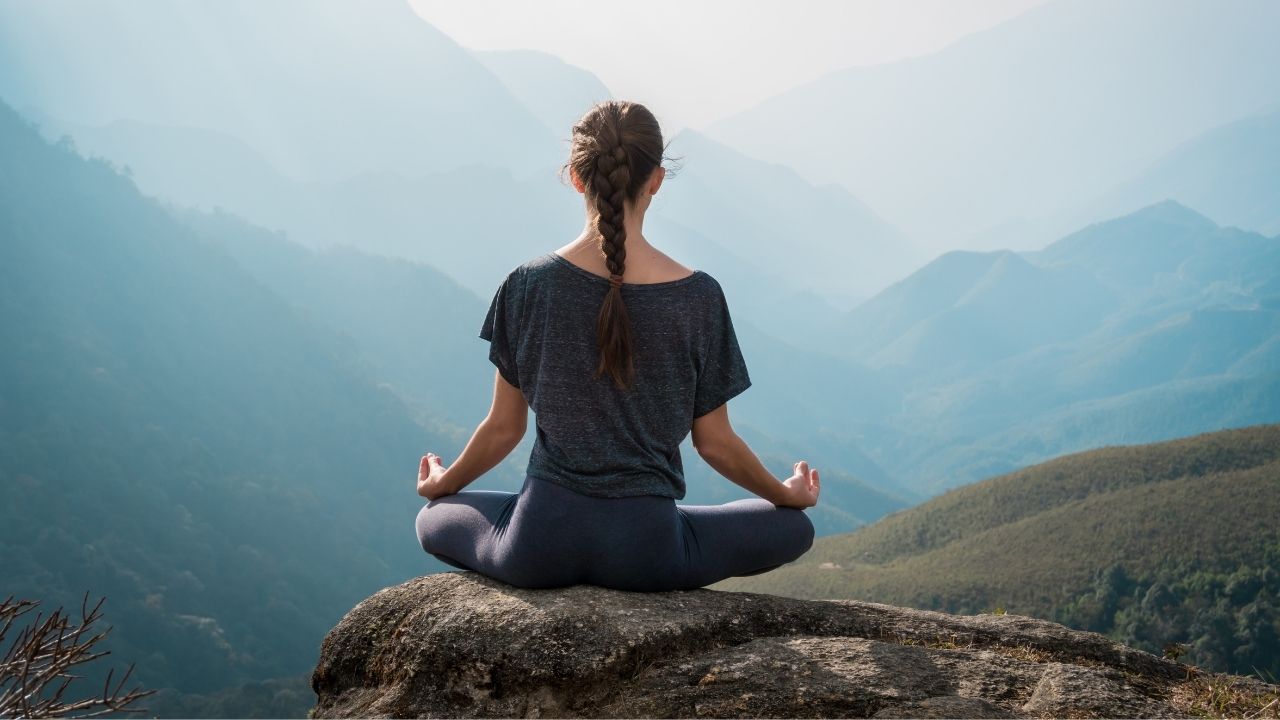
- Sit somewhere quietly –ideally a soft chair or a cushion where it is easy for you to maintain an erect posture.
- Begin by taking a few deep breaths. Notice the weight of your abdomen and torso shifting up and down as you breathe, along with the sounds your nose and mouth are making.
- Slowly allow your breath to return to a normal pace. Once you’ve done this, pay close attention to the sensations associated with breathing. Pick one such sensation, and concentrate on it for as long as you can.
- Inevitably, thoughts will begin to arise. This is natural and does not mean you are doing anything wrong. When this happens, try noticing thoughts as they appear and use that as a cue to return to your point of concentration.
The point of concentration doesn’t have to be the breath. You can, instead, focus on what you see when you close your eyes, which is known as phosphene, the flashes of light and color that arise and fade while your eyes are closed.
While a lot can be learned from meditation, the simple act of meditating (even if it’s just for five minutes) can lower blood pressure and cortisol levels, effectively reducing the physiological causes of stress and anxiety.
Beyond that, when we meditate, we learn to cut through the chain of thinking to quiet the mind. Anxiety is thinking run amok, which is why meditation provides us a tool we can use to cut anxious thoughts short in their tracks.
Meditation teaches that we don’t have thoughts, but rather that there are thoughts. This means that we don’t need to identify all our thoughts, we can simply acknowledge them and let them go.
Meditating can be easier said than done, especially getting into the habit of practicing it routinely—which is where meditation apps come into play.
3 Meditation apps to help you get started and stay on track
Meditation apps can help remote workers get into the habit of meditating by providing consistent, guided meditations designed to help individuals progress their meditative skillset.
There are many meditation apps on the market, and each one is quite different. For example, some cater towards religiosity, and others are explicitly areligious. Here are three apps that you’ll be sure to get a lot out of:
Waking Up with Sam Harris
Pros:
- If you can’t afford a membership, you can email support to get a free membership.
- Provides various meditation classes, as opposed to only mindfulness.
- Bases meditation courses on several different cultural foundations, such as Buddhism, Hinduism, Stoicism, and others.
- It comes with lectures about theories surrounding meditation practice
Cons:
- I’ve found that the guided meditations entail the instructor talking too much. This is a con because if you are prone to distraction, this might become a problem.
Headspace
Pros:
- Student discounts.
- Progress tracker.
- Workout classes for extra stress and anxiety relief.
Cons:
- One of the most expensive meditation app in the market.
- Meditation guides become repetitive –even those which are “designed” to help aid different ailments.
- If you become advanced at meditation, Headspace doesn’t accommodate for progressing further.
Insight Timer
Pros:
- It has the most free content among meditation apps, making it especially good for those on a budget.
Cons:
- The sheer volume of content might overwhelm beginners.