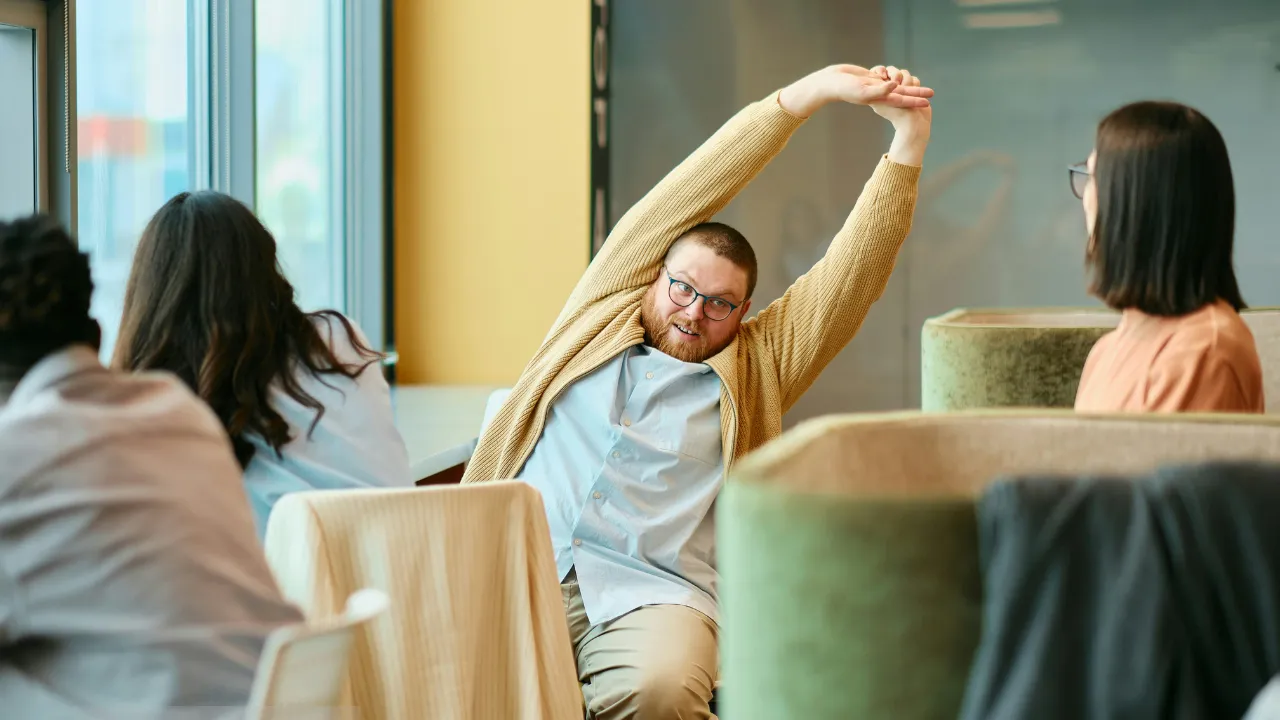
Remote work removed commutes, gave people more flexibility, and made it easier to work from almost anywhere. It also surreptitiously increased the amount of time many people spend sitting still.
For remote workers especially, the workday can become surprisingly stationary. Hours pass between Zoom calls, Slack messages, and laptop sessions without much movement at all. Kitchen tables became desks. Couches became offices. And for many workers, stiffness, tight hips, back tension, neck pain, and fatigue slowly became part of the routine.

The health risks tied to prolonged sitting are well documented. Sedentary behavior has been linked to cardiovascular issues, muscle weakness, poor posture, reduced mobility, and chronic discomfort. Even workers who exercise regularly can still feel the effects of sitting for most of the day.
As hybrid and remote work continue settling into long-term routines, more people are looking for ways to counterbalance the physical side effects of desk-heavy work.

Stretching Moves Into the Workplace Wellness Conversation
One area gaining more attention is assisted stretching. Unlike stretching alone at home or after a workout, practitioner-assisted stretching involves a trained specialist helping guide the body through targeted movements and mobility work.
A recent study published in the Journal of Musculoskeletal Disorders and Treatment examined the effects of Stretch Zone’s practitioner-assisted stretching program over a 30-day period. According to the findings:
- 78% reported reduced pain and tension
- 85% improved their range of motion
- 66% experienced higher energy and less fatigue
- 61% found daily activities easier
- 58% said they slept better
The results point to a more encompassing issue many office and remote workers already recognize: lack of movement adds up over time, and mobility often declines gradually before people fully notice it.
Visiting Stretch Zone
Recently, I visited a Stretch Zone location in Phoenix to better understand what practitioner-assisted stretching actually looks like in practice, and to see if they had any tips for workers who sit all day.

A practitioner guided each stretch while explaining how different muscle groups connect to posture, movement, and everyday tension patterns. Much of the focus centered on areas many desk workers struggle with most: hips, shoulders, lower back, and hamstrings.
It felt like yoga was being done to me, rather than me doing yoga.
What stood out most was how much tightness had become normalized without me really noticing it. Certain movements immediately revealed how restricted some areas had become after long stretches of sitting and computer work.
My practitioner told me that he could tell my lower back was extremely tight, most likely from sitting everyday as I write articles (such as this one).
After stretching my hips and legs in ways I didn’t realize they could move, my practitioner showed me an exercise meant to relieve lower back tension and open up the shoulders.
Standing with my heels and the back of my head pressed against a wall, I held my arms bent beside my ears in a goalpost position, then slowly rotated and lifted them upward while trying to keep them against the wall the entire time. It felt a bit like a slow-motion wall angel — and quickly revealed how tight my shoulders had become from long hours at a desk.
The Future of Work Includes Physical Health
Remote work discussions often focus on productivity, flexibility, and technology. Physical wellbeing tends to enter the conversation later, usually after discomfort becomes difficult to ignore.
But as work becomes increasingly screen-based, mobility and movement are becoming part of the workplace wellness discussion too. Standing desks, walking meetings, mobility breaks, ergonomic setups, and stretching programs are all gaining more attention as workers look for ways to offset long periods of sitting.
For many people, the challenge is no longer finding time to sit down and work; it’s actually finding reasons to regularly get back up.