




Advertisements
Ergonofis
  • Marketplace
  • Resources
  • Business Directory
  • Events
  • Advertise
  • Publish a Press Release
  • Submit Your Story | Get Featured
  • Get the Newsletter
  • Contact
  • About Us
The FUTURE OF WORK® since 2003
Allwork.Space
No Result
View All Result
Subscribe
  • Submit Your StoryNew
  • More
    • Columnists
      • Dr. Gleb Tsipursky – The Office Whisperer
      • Nirit Cohen – WorkFutures
      • Angela Howard – Culture Expert
      • Drew Jones – Design & Innovation
      • Jonathan Price – CRE & Flex Expert
    • Get the Newsletter
    • Events
    • Advertise With Us
    • Publish a Press Release
    • Brand PulseNew
    • Partner Portal
  • Latest News
  • Business
  • Leadership
  • Work-life
  • Career Growth
  • Tech
  • Design
  • Workforce
  • Coworking
    Let’s Call It What It Is Why The World Needs A Standard Name For Modern Workspaces

    Let’s Call It What It Is: Why The World Needs A Standard Name For Modern Workspaces

    Do Humanoid Robots Have A Place In The Future Of Coworking Communities

    Do Humanoid Robots Have A Place In The Future Of Coworking Communities?

    Forget Vibe-Based Pricing, Just Use Coworking Data (1)

    Forget Vibe-Based Pricing, Just Use Coworking Data

    Coworking Statistics And Key Trends Shaping The 2026 Flexible Workspace Industry

    Coworking Statistics And Key Trends Shaping The 2026 Flexible Workspace Industry

    10 Must-Have Software Integrations To Streamline Your Business Center In 2026

    10 Must-Have Software Integrations To Streamline Your Business Center In 2026

    Coworking Is Getting Crowded — Use These 10 Strategies To Stand Out

    Coworking Is Getting Crowded — Use These 10 Strategies To Stand Out

    Top 5 Approaches To Boost Member Satisfaction In Coworking And Flex Spaces

    Top 5 Approaches To Boost Member Satisfaction In Coworking And Flex Spaces

    Flexible Workspaces And The Rise Of Corporate Downsizing

    Flexible Workspaces And The Rise Of Corporate Downsizing

    Why IoT Still Hasn’t Lived Up To The Hype In Coworking Spaces

    Why IoT Still Hasn’t Lived Up To The Hype In Coworking Spaces

    Trending Tags

    • Coworking Spotlight
  • CRE
  • Podcast
  • Submit Your StoryNew
  • More
    • Columnists
      • Dr. Gleb Tsipursky – The Office Whisperer
      • Nirit Cohen – WorkFutures
      • Angela Howard – Culture Expert
      • Drew Jones – Design & Innovation
      • Jonathan Price – CRE & Flex Expert
    • Get the Newsletter
    • Events
    • Advertise With Us
    • Publish a Press Release
    • Brand PulseNew
    • Partner Portal
  • Latest News
  • Business
  • Leadership
  • Work-life
  • Career Growth
  • Tech
  • Design
  • Workforce
  • Coworking
    Let’s Call It What It Is Why The World Needs A Standard Name For Modern Workspaces

    Let’s Call It What It Is: Why The World Needs A Standard Name For Modern Workspaces

    Do Humanoid Robots Have A Place In The Future Of Coworking Communities

    Do Humanoid Robots Have A Place In The Future Of Coworking Communities?

    Forget Vibe-Based Pricing, Just Use Coworking Data (1)

    Forget Vibe-Based Pricing, Just Use Coworking Data

    Coworking Statistics And Key Trends Shaping The 2026 Flexible Workspace Industry

    Coworking Statistics And Key Trends Shaping The 2026 Flexible Workspace Industry

    10 Must-Have Software Integrations To Streamline Your Business Center In 2026

    10 Must-Have Software Integrations To Streamline Your Business Center In 2026

    Coworking Is Getting Crowded — Use These 10 Strategies To Stand Out

    Coworking Is Getting Crowded — Use These 10 Strategies To Stand Out

    Top 5 Approaches To Boost Member Satisfaction In Coworking And Flex Spaces

    Top 5 Approaches To Boost Member Satisfaction In Coworking And Flex Spaces

    Flexible Workspaces And The Rise Of Corporate Downsizing

    Flexible Workspaces And The Rise Of Corporate Downsizing

    Why IoT Still Hasn’t Lived Up To The Hype In Coworking Spaces

    Why IoT Still Hasn’t Lived Up To The Hype In Coworking Spaces

    Trending Tags

    • Coworking Spotlight
  • CRE
  • Podcast
No Result
View All Result
Subscribe
Allwork.Space
No Result
View All Result
Advertisements
Yardi Kube automates flex & coworking operations
Home Design
In collaboration with

A Guide To Workplace Metrics, Data, And Research

Space planning isn’t just about gathering data - it’s just as important to undertake holistic analysis to understand how staff members interact daily and how groups work best, to create a space that aligns with company values, vision, culture, productivity, wellbeing, and more.

Guest ContributorbyGuest Contributor
March 17, 2022
in Design
Reading Time: 6 mins read
A A
A Guide To Workplace Metrics Data And Research

Client engagement early in the planning process, allows our designers to understanding the corporate vision and prioritize what’s most important to the company. Credit: Thomas McConnell

  • When planning and designing a company workspace, data – such as head counts and square footage – is essential.
  • But how do you measure things like culture, morals, productivity, and well-being?
  • Stantec’s Brad Robichaux and Stephanie Wood explore how to utilize data, while also taking a holistic view, to create a space that fosters community and ‘buy in’ that is tied to company culture.

This article was written by Brad Robichaux and Stephanie Wood and was originally published on Work Design Magazine.

What is the significance of data when space planning? Head counts, seat counts, and standards are all typical ways to start generating square-footage requirements, but these are simply numbers and counts. They do not reflect the holistic view of the ‘heart’ of a company and its staff or how the work environment should be organized to optimize things like culture and wellbeing, while supporting productivity and creating a space where staff thrive. So how are things like culture, morals, productivity, and well-being measured in the first place? Is it even possible? If it is possible, how is that information leveraged to create a sense of community and ‘buy in’ that is tied to company culture? Can that be accomplished through space planning?

Advertisements
Your Brand Deserves The Spotlight - Advertise With Us - Allwork.Space

The answer is yes. A carefully planned process – unique to each client – is critical to align their elements (space and culture) by successfully engaging the client from start to finish.
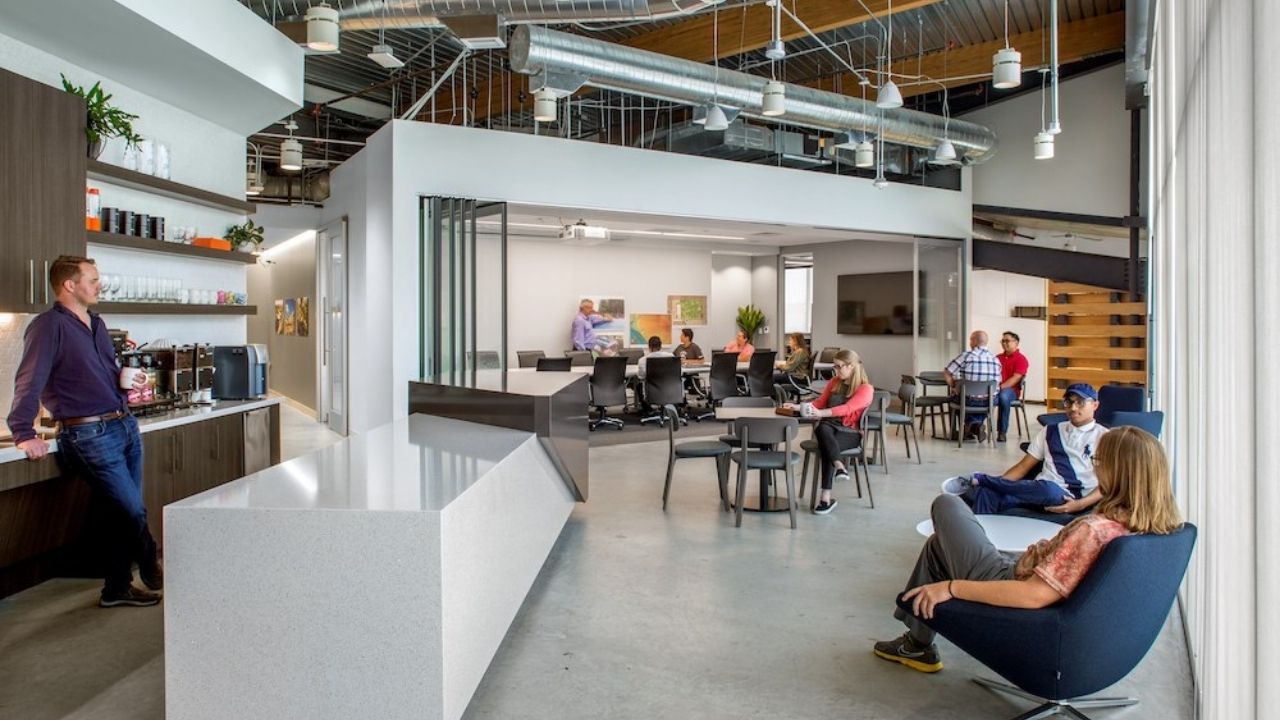
It is important to understand the dynamics of how people work most effectively in an office space.
It is important to understand the dynamics of how people work most effectively in an office space. Credit: Garrett Rowland

Start with the client vision in mind

Initial engagement with the client begins with visioning, which aims to host a discussion that enables clients to prioritize what is most important to their company. Topics range from service delivery to sustainability to workplace culture. Questions are posed during the discussion that are intended to not only extract goals and expectations, but also to raise awareness from different angles, points of view and even introduce information pertinent to space needs, such as best practices and benchmarking. This provides the framework for understanding and prioritizing overall client needs, requirements, and wishes. We can then use the framework throughout the subsequent phases where more specific, detailed information is gathered from a strategic variety of sources.

Advertisements
Deel - Upgrade your global team management

For the subject of culture and morale, it is important to establish an environment of psychological safety when approaching focused groups of employees. Creating a safe space for employees to express potential disengagement or cultural voids will yield more valuable data and feedback. Morale and culture are very difficult to measure without the necessary context of a company’s organization and structure. Since culture is typically what people do when no one is looking, it grows into unspoken social norms and will often affect employees more than formal written policies.
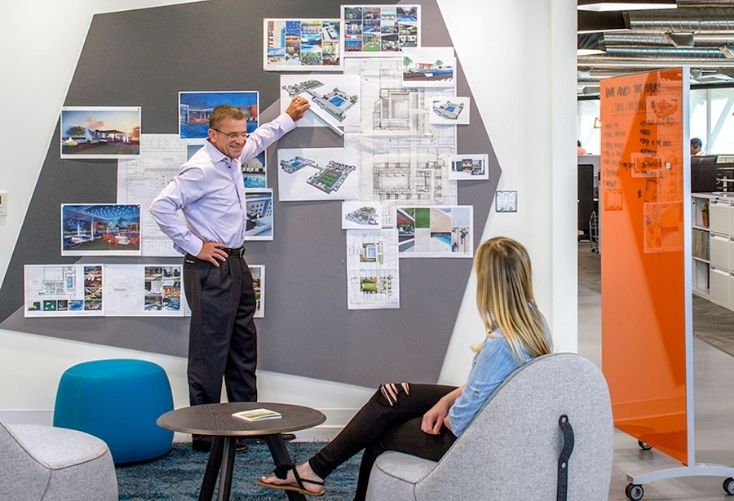
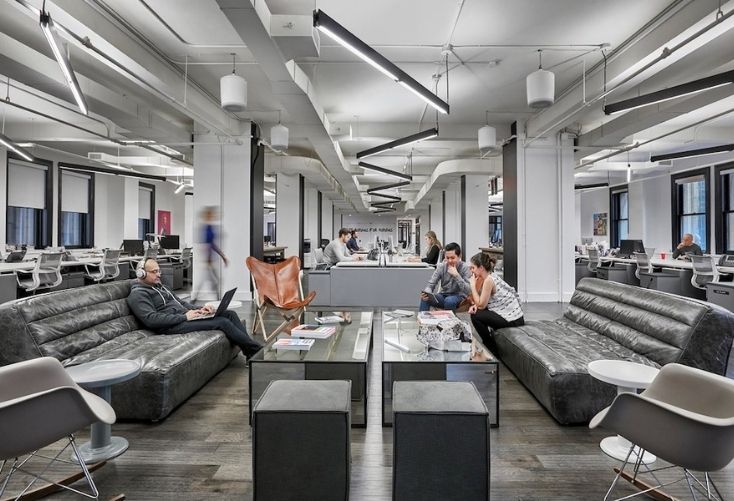
Data helps us identify and measure a company’s unique blend of worker/persona types to understand how to best design one space for all.
Data helps us identify and measure a company’s unique blend of worker/persona types to understand how to best design one space for all. Credit: Thomas McConnell

Design by the numbers

Sure, the end goal is usually to collect as much data as possible within a limited window of time, How the data is collected is just as, if not more important and will inform the entire conversation and the resulting dataset. This data will also form the development of an accurate representative baseline of required space needs. Collecting data from individuals of similar management levels will provide context to the data and can be paired with company hierarchy. Example: Do managers think everything is ok, while everyone else thinks the ship is sinking? Recognizing a potential disconnection of cultural perspectives can highlight the need for increased engagement, communication, or leadership shifts.

In the context of evaluating an organization’s workflow or productivity needs, most companies will focus heavily on the type of work a group performs. However, it is just as important to understand how the work is being performed. Approaching this topic requires a curious, open, and exploratory mindset. Using exercises that investigate “A Day in the Life” will allow employees to think about their work activities through a different lens.

What postures do they prefer for different tasks? Upright and focused? Lounged and relaxed? Open and noisy (collaborative)? Dark and enclosed (head’s down)? Providing options for employees can empower them to be more productive by allowing them to choose the posture type or environment that suits the immediate task. Employees that have options express increased efficiency, engagement, and wellness.

Advertisements
Get more revenue. Do less work - Alliance Virtual Offices

Investigating how people work within the physical environment can sometimes dissolve stereotypes of different groups within the organization. Why do we assume all accountants are drawn to towering cubicles? Do lawyers always want to be enclosed in offices with their massive mahogany desks or would they prefer spaces that allow them to collaborate on cases with colleagues? Breaking through stereotypes and asking these questions in a safe space can reveal insightful data and we can then use for creative problem solving and planning.
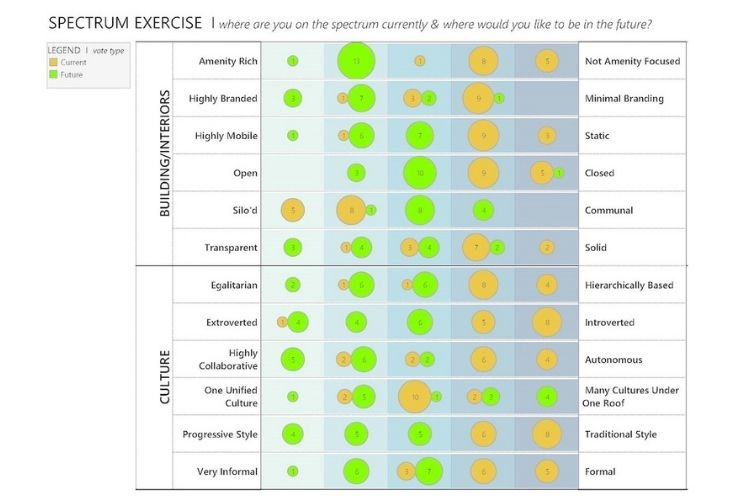
The spectrum exercise tool is utilized during early workshops to measure the current state of a company’s environment, culture, and characteristics as well as where they would like to be in the future. This information is utilized to develop goals for planning.
The spectrum exercise tool is utilized during early workshops to measure the current state of a company’s environment, culture, and characteristics as well as where they would like to be in the future. This information is utilized to develop goals for planning. Credit: Stantec

Plan with all the facts

Asking the right questions produces the raw data necessary to begin space planning. Holistic analysis of the data collected requires constant oscillation between micro and macro lenses. How do staff members interact daily? How do departments or groups perform at their best? What type of ‘worker/persona’ can we assign that begins to speak to the type of work environment we’re planning for?

For example, a group might function best when they have ample choices of work points to use. This may range from working at home to a focus space provided within the office to a social café style meeting space. The characteristics associated with this persona type can then be assigned a set of parameters based on specific standards and requirements, which can then be represented through visual graphics and analysis. One of the parameters may include work point sharing ratios. Based on the understanding of this group’s preferences of work-point sharing and a desire to hotel, head count to work point ratios can be generated. Perhaps it is a 10:1 hoteling ratio for touchdown spaces, 35:1 hoteling ratio for focus spaces, and a 6:1 ratio for work point sharing at a workstation. Because this group would require fewer seats than their head count, further analysis is needed to cross check the data that relates to the number of in-person meetings and collaboration requirements. This helps determine what kind and how many support spaces are needed.

Another consideration is support space requirements for peak occupancy—the largest anticipated number of staff that would be in the office at a given time. This may be determined based on the need for collaboration or policy requiring staff to attend the office on a particular day. For example, there might be a meeting that requires everyone to attend in person on a weekly basis. This would indicate a peak occupancy data, which would then necessitate a re-examination of the support spaces provided to accommodate the additional influx of staff. Spaces like huddle rooms, focus rooms and collaborative space can provide enough seats for everyone to have a place to ‘plug and play’ while they are at the office.

More stories for you

Think Outside The Office To Earn The Commute

Think Outside The Office To Earn The Commute

3 days ago
What High-Performing Teams Know About Space That Everyone Else Misses

What High-Performing Teams Know About Space That Everyone Else Misses

5 days ago
Biohacking is hitting the workplace from treadmill desks to meditation zones, companies are redesigning offices to help employees hack their biology and perform at their best

Optimize Future Well-Being By Biohacking Your Office Design Now

6 days ago
Why Viewing The Office As A 3-Legged Stool Can Unlock Meaningful Work

Why Viewing The Office As A 3-Legged Stool Can Unlock Meaningful Work

1 week ago

Keep it custom

Each organization has a unique blend of persona types. Once these have been identified and analyzed, the next layer of evaluation investigates interactions between personal types. This not only helps to nurture productivity, but also to re-enforce company culture. Can some groups share spaces? Is it conducive to collaboration and/or workflow? By examining the data collectively, we can then begin to understand the bigger picture of how each individual group’s needs relate to each other and to the larger company vision to build a holistic program.

Even with diligent and comprehensive data collection and analysis, inevitably, there will be variables to contend with before determining a final program. Variables could be anything from future growth projections to alternative workflows. Whatever the variables are, they can alter the total square footage need significantly. Developing a baseline scenario program allows for comparison of alternative scenarios that include the variables. Alternative scenarios can be represented in several ways. A stack diagram not only gives an idea of how much square footage any group may require in relation to the amount of available square footage on a floor within a building but can also illustrate other data collected, such as: adjacencies, ideal support spaces, and proximity to social or focus spaces on that floor.

The visualizations produced are manifestations of the data gathered over the course of the project, both qualitative and quantitative. They enable the client to understand the complex network of data in an easy to digest manner. Workshops with the client utilize visualizations to highlight various possibilities and further help prioritize space needs. In the end, the data collection and analysis process build trust from the client – which, in turn, creates a successful workplace design.

Advertisements
Subscribe to the Future of Work Newsletter
Tags: Workplace Design
Share6Tweet4Share1
Guest Contributor

Guest Contributor

Guest contributors from across industries share workplace solutions, fresh ideas, and actionable strategies for modern professionals, forward-thinking leaders, and organizations navigating what’s next.

Other Stories Recommended For You

Think Outside The Office To Earn The Commute
Design

Think Outside The Office To Earn The Commute

byWork Design Magazine
3 days ago

Hybrid work is reshaping offices, making neighborhood amenities key to drawing people in.

Read more
What High-Performing Teams Know About Space That Everyone Else Misses

What High-Performing Teams Know About Space That Everyone Else Misses

5 days ago
Biohacking is hitting the workplace from treadmill desks to meditation zones, companies are redesigning offices to help employees hack their biology and perform at their best

Optimize Future Well-Being By Biohacking Your Office Design Now

6 days ago
Why Viewing The Office As A 3-Legged Stool Can Unlock Meaningful Work

Why Viewing The Office As A 3-Legged Stool Can Unlock Meaningful Work

1 week ago
Advertisements
Get more revenue. Do less work - Alliance Virtual Offices
Advertisements
Ergonofis

Unlock your competitive edge in tomorrow's workplace.

Join a community of forward-thinking professionals who get exclusive access to the latest news, trends, and innovations that are shaping the future of work.

2025 Allwork.Space News Corporation. Exploring the Future Of Work® since 2003. All Rights Reserved

Advertise  Submit Your Story   Newsletters   Privacy Policy   Terms Of Use   About Us   Contact   Submit a Press Release   Brand Pulse   Podcast   Events   

No Result
View All Result
  • Home
  • Latest News
  • Topics
    • Business
    • Leadership
    • Work-life
    • Workforce
    • Career Growth
    • Design
    • Tech
    • Coworking
    • Marketing
    • CRE
  • Podcast
  • Events
  • About Us
  • Advertise | Media Kit
  • Submit Your Story
Subscribe

Welcome Back!

Login to your account below

Forgotten Password?

Retrieve your password

Please enter your username or email address to reset your password.

Log In
This website uses cookies. By continuing to use this website you are giving consent to cookies being used. Visit our Privacy and Cookie Policy.
-
00:00
00:00

Queue

Update Required Flash plugin
-
00:00
00:00