





- Workplaces are more accessible than ever but creating a space where everyone can thrive requires a more holistic approach, including subtle elements of design.
- The business case for inclusive design is pivotal — these spaces not only attract the best talent in the industry, but they offer a sense of belonging for all employees and help get the best from them.
- A space’s impact on the senses should be considered as early as possible in the design phase, and inform decisions from the acoustic strategy, right through to lighting choices.
This article was written by Tash Hewlett, and was originally published on Work Design Magazine.
To design truly people-centred workspaces, you have to maintain a delicate balance of varying priorities, tastes and needs. When it’s done right, human-centric workplaces stimulate productivity and support wellbeing, and with up to 15% of people thought to be neurodiverse, striking that balance includes prioritizing the individual requirements of neurodivergent employees.

Workplaces are more accessible than ever but creating a space where everyone can thrive requires a more holistic approach, including subtle elements of design. This should be far from being an extra consideration, the business case for inclusive design is pivotal – these spaces not only attract the best talent in the industry, but they offer a sense of belonging for all employees and help get the best from them.
 The power to choose
When given the correct working environment, neurodiverse employees are often extremely high performing individuals. They will most likely have a comprehensive understanding of their own ways of working, so it’s important to gain their input when designing an office space, this could be done by conducting workshops with employees or surveys to collate feedback.
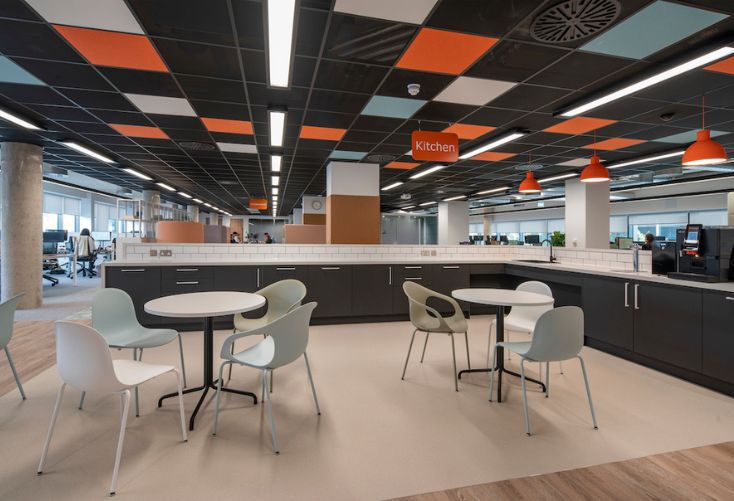
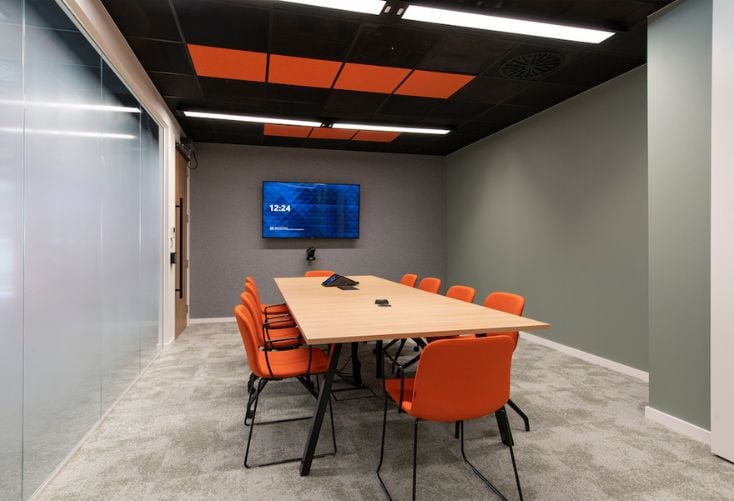
By creating flexible workspaces, employers can cater to a diversity of needs and show people that they trust them to tailor their working environment according to what they need. These provisions can be small, like specifying dimmable lights in meeting rooms and quiet spaces. It’s important to remember that people have become accustomed to the power to choose while working from home, and they shouldn’t have to sacrifice it as they return to the office even more regularly.
 Building adaptability into workspaces helps soften the divide between spaces optimized for neurodiversity and those with other focuses. Acknowledging neurodiversity ultimately means providing a choice that doesn’t involve people completely separating themselves from others. Design and accessibility aren’t mutually exclusive, and workplace designs that flow naturally from open plan to intimate, or lively to quiet, have more influence than heavily labeled ‘accessible’ spaces which can feel tokenistic and patronizing.
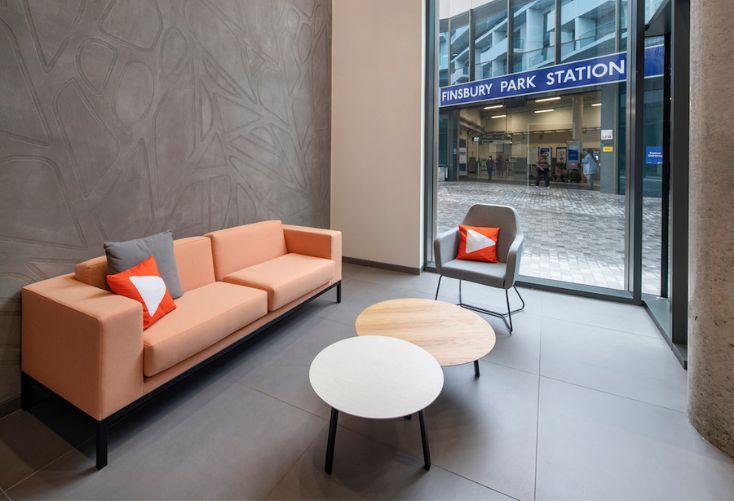 Making sense
People’s experience of a space is impacted by how it interacts with their senses, and for employees who are neurodivergent, this is something that can quickly become overwhelming depending on certain design choices. For example, the transition away from desk-based workplaces towards more open plan environments can support collaboration, but it can also become loud, congested and over-stimulating, which can damage productivity. Better known as sensory overload, which can be particularly disruptive for people with ADHD and autism, whose high energy makes them proactive and enthusiastic problem solvers but can also make them more susceptible to distractions from excessive noise, light, and other sensory inputs.
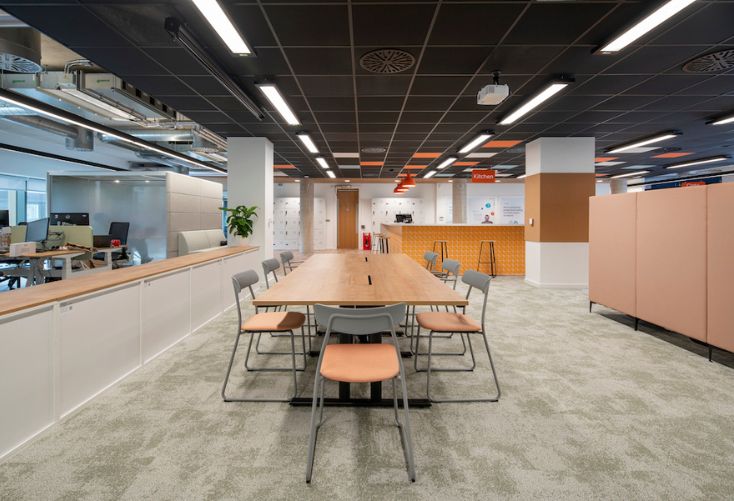
Therefore, a space’s impact on the senses should be considered as early as possible in the design phase, and inform decisions from the acoustic strategy, right through to lighting choices. The influence of color has a similar significance to many people. Businesses often use bright and vibrant branding to attract the attention of potential customers or clients, but this can end up distracting employees when trying to create that sense of identity in the workplace. This doesn’t mean that brand and identity need to be banished, but they can be adapted to better serve those working in certain environments on a regular basis. Introducing cooler tones and gentler transitions makes branding less intrusive and, if especially bold, they can even be removed completely in areas designated purely for focus.

 Inclusive technology
Deciding on appropriate technology for new workspaces already entails catering to a wide range of attitudes and experience, however, when specifying for neurodiversity there is an even bigger emphasis on usability. Being unable to use technology presents a barrier to productivity, a problem which can be minimized by more intuitive user interfaces and comprehensive and compassionate training. Familiarity with a system goes a long way, and there are quick and easy ways to implement this when choosing new software. Take room booking as an example, if you switch to a digital system, red and green color codes are commonplace, and it’s this kind of simple consideration that can really help a space work as effectively as it can.
A lot of this comes again down to choice, particularly across hardware and software, and there is a growing drive towards diversity within most systems for the purpose of greater accessibility.
 A learning experience
We are seeing a broad and enthusiastic rise in businesses designing inclusive workspaces , and at Peldon Rose we’re happy to be spending more of our time on proactive inclusion and accessibility. However, this means constantly developing our knowledge base and realigning our perspective to understand how everyone experiences the spaces we build.
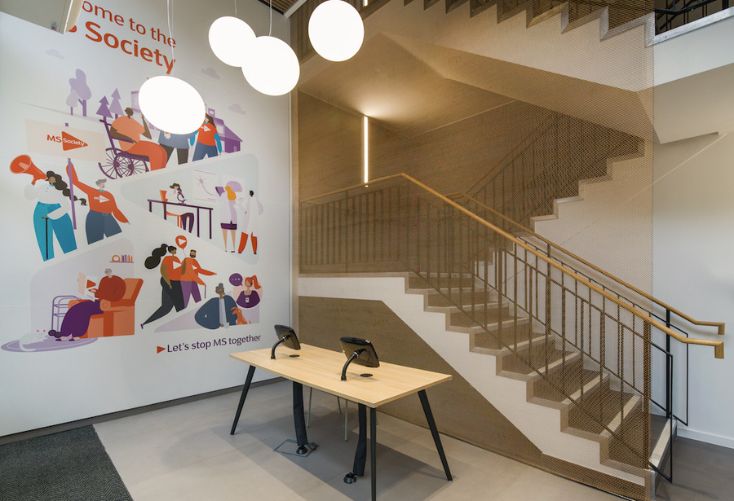
In August 2021, while designing a new working environment for the MS Society in north London, we collaborated with a specialist consultant to deliver a completely accessible space that the company needed. We developed a design that naturally brings people together in inclusive spaces, and the insight we gained working with this industry expert has helped us to hold ourselves to higher standards when building for accessibility, and neurodiversity in particular.
Opportunities for education are abundant, and employers and business leaders will only gain from taking advantage of them. Neurodiversity research and policy is a constantly evolving field, and there are plenty of resources out there, from small-scale interventions such as LinkedIn Learning courses to formal training programmes covering legal obligations and appropriate terminology. Ultimately, there is no substitute for a business trusting its workforce to understand its own needs and it’s imperative that the physical office space works for everyone.