


- Younger lawyers prioritize a legal workplace that supports flexibility, equality, and collaboration, favoring environments with open spaces and modern aesthetics over traditional “men’s club” interiors; these preferences are reshaping law firm office design.
- Hybrid work models integrating office and remote work are preferred by younger attorneys, and law firm spaces with amenities like themed collaboration zones and well-equipped tech setups for virtual interactions are becoming essential for attracting and retaining talent.
- Law firms that invest in versatile event spaces, embrace technology-enabled rooms, and support varying work styles through thoughtful office design are likely to be more successful in maintaining a productive, innovative, and satisfied workforce.
This article was written for Work Design Magazine by Dana Nalbantian, Principal, Studio Director and workplace design expert for Gensler.
Thanks to Netflix, the series Suits has sparked an unusual interest in the dynamics and design of the legal workplace. If you look beyond the unqualified attorneys and unrealistic pace of case work, the show depicts incredible offices. However, what the drama doesn’t show is how much the physical workplace impacts employee experience. I interviewed younger associates at a top law firm to understand their work styles, desires and demands of the current legal workplace. Here’s what they would love to see!

The importance of the next generation in workplace design
The legal industry is evolving. Demand for legal services is on the rise post pandemic, thanks to areas such as cybersecurity, cannabis, labor, elder law, energy, IP, health, and artificial intelligence. Firms are investing in resources and professional development to excel in these industries, but they are not investing in workplaces that will house the next generation of attorneys. Look in many suburban law firms today and you may find endless paper storage, a “men’s club” aesthetic, dark mahogany and tufted leather chairs.
Research shows the average tenure of a law firm associate is 2-3 years, giving firms a narrow window to impact the recruitment and retention of staff, especially younger associates. Fresh attorneys move more frequently in search of opportunity and salary bumps, while seasoned lawyers tend to stay longer, so the workplace plays a critical role in retention. Now, more than ever, it must deliver an experience.

To understand their desires and needs of the legal workplace, we interviewed younger attorneys at CSG Law, the third largest law firm in New Jersey, and recognized as a Regional Powerhouse by Law360 and the Law Firm of the Year by the New Jersey Law Journal. CSG recently completed an interior and exterior renovation at their new headquarters in Roseland, New Jersey while also celebrating 50 years in business. The 120,000 square foot space offers flexibility and equality with a variety of private and collaboration spaces and no proverbial corner offices. According to Francis J. Giantomasi, Co-Chair of the Executive Committee at CSG Law, it was designed to reflect the preferences and styles of the attorneys who will be “leading the firm 15-30 years from now.”
Gensler: How does the office support your work style?
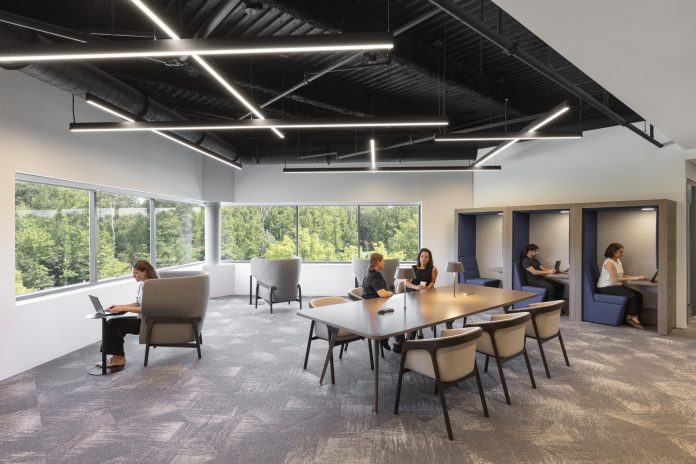
“The open space concept with the library tables brings me back to law school. The fundamental thing in law school is that you’re sitting at a long table with colleagues talking through challenges, not sitting alone in a cubicle or an office. When I use this space, it brings me back to my training roots as a lawyer where we exchange ideas and work in collaborative spaces,” said Frank Wukovits, an associate in the Tech, Privacy, & Data Innovations practice. What will really set successful organizations apart is the variety and quality of experiences they create for employees. Younger attorneys are increasingly looking for flexibility in how and where they work.
Gensler: How has the office evolved through the last five years?
It is now clear that one of the enduring effects of the pandemic is the hybrid work model, combining working in the office with some amount of remote work. According to Gensler’s 2021 Workplace Survey, younger generations are most likely to prefer a hybrid work model and least likely to prefer to work full-time remote. There seems to be an emerging consensus among many law firms that the appropriate hybrid mix is to require about three to four days a week in the office for most lawyers. However, when employees were required to work from home, they also learned the comforts that come with it, which can be difficult to give up when going to the office.
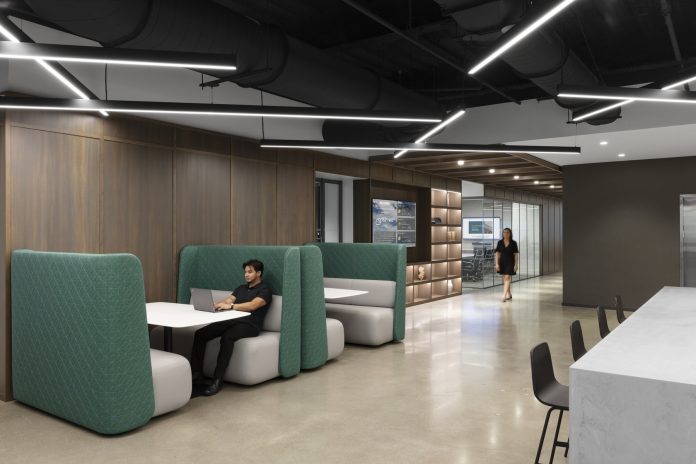
According to Aiyana A. Goldberg, an associate in the firm’s Real Estate Group, there’s power in knowing employees have choice when it comes to working in the office. “At CSG, there is a big focus on collaboration; everyone is chatty—the spontaneous interaction is incredible. We really take advantage of the pantry and collaboration zones on each floor; each has a different theme. We have the best floor on two, the ‘energizing’ floor. We have fresh cold brew!”

Gensler: What is your top reason for coming into the office?
Hybrid work has taken a foothold, even in a predominantly in person industry such as law. Overall, law firms are still reliant on in-person office work for collaboration, mentorship, culture, and client interaction. Gensler research shows that young professionals value the office for collaboration, but what’s also surprising is that some see the office as the best place for individual activities, including thinking and ideation.
This begs the question: how to make the office a compelling destination, rather than an obligation. Brittany Manna, an associate with CSG’s litigation group, said she comes into the office for the opportunity to collaborate in person. “There’s just a contagious energy because there’s transparency. In the old office, if someone’s door was closed, you had no idea if they were in the office, but here, we’re in glass front private offices. I can see someone is on the phone, but still pass by and wave.” Manna finds she’s productive in the office, “I’m in the office four days a week, sometimes five. My set-up with the sit-stand desk, expansive monitors…I feel like they’ve replicated the comforts of my home here.”
Gensler: What is one space that you have that you feel every law firm should have, either in their space or in their building?
An organization’s most productive and leading-edge work often takes place in a range of shared spaces. In an era of increasing workplace cross-functionality, having rich spaces where people have access to seamless connectivity, day light and views is critical. Of the CSG headquarters, Goldberg noted, “Our events space fosters internal and external events, everything from professional development sessions to attorney networking and community impact fundraisers. Having the ability to open and close the [large] walls easily allows us have more than one event at time. And since we have a large space, we have been asked to host many events for outside organizations. If I have the opportunity to attend an event after work that’s 20 minutes away or downstairs, you know I’m going downstairs.”
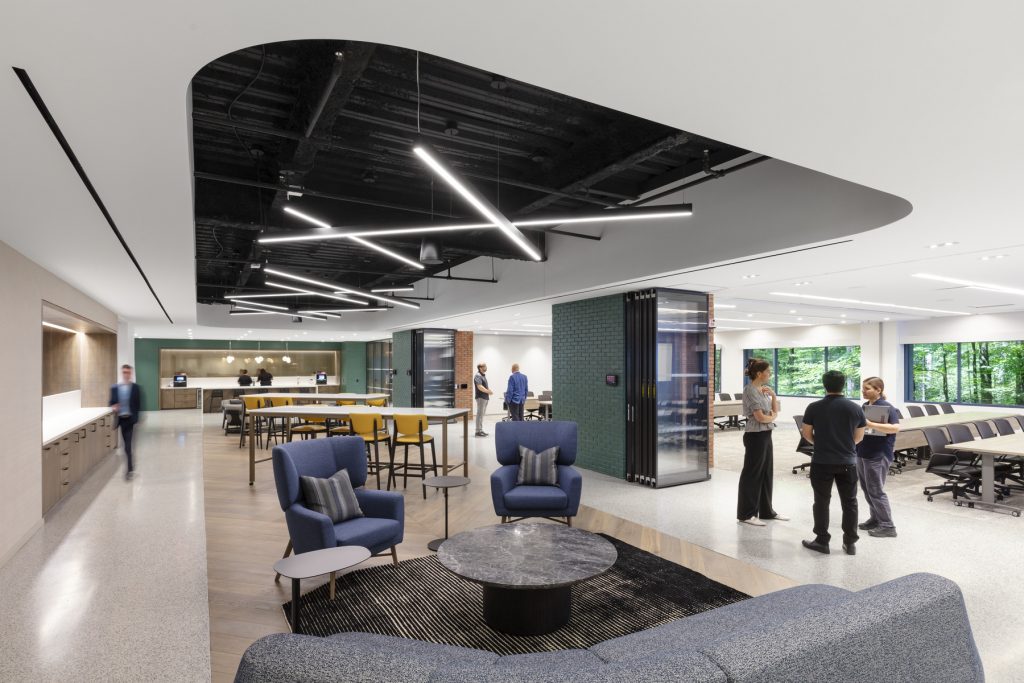
Spaces that embrace ease of interactions with clients are also key. Whether in-person meetings or virtual, the ease of access to technology is critical. Virtual depositions are becoming commonplace. “I also like the Zoom rooms adjacent to the atrium. We spend a lot of time there because the tech setup is perfect,” Goldberg said. “The sunlight is nice. Previously, I worked in what seemed like the casino—no light, no sense of openness. This is so different from that.” For firms with a significant client base, conference and meeting rooms require an ease of connectivity and sophisticated technology for those in the room that bear a similar experience to their client base.
Choice, flexibility, and technology are key aspects young attorneys are looking for when they select a workplace. The firms that consider these as part of their strategy will recruit and retain the most attractive talent in the market.