





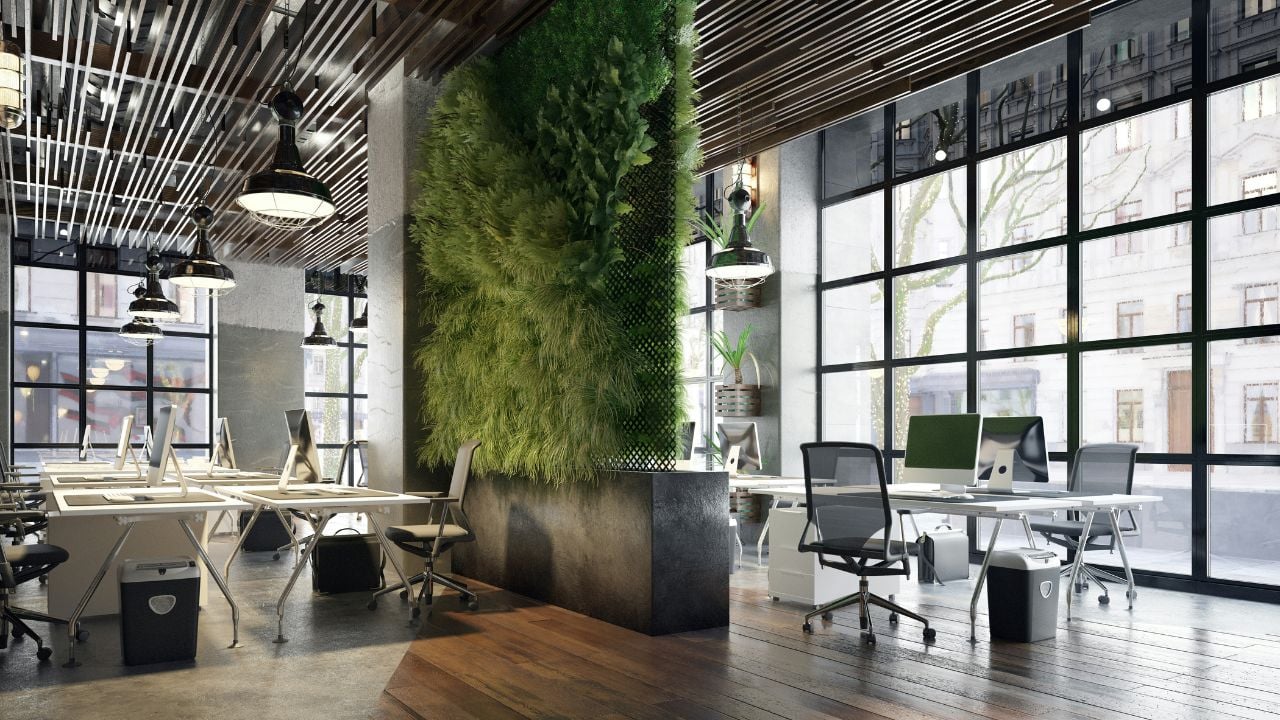
This article was written by Mette Shenker for Work Design Magazine.
Design inspired by nature’s patterns and rhythms can restore focus, spark creativity, and bring joy—turning everyday spaces into places that support both function and well-being.

Humans have always been seekers—not just of food and shelter, but of beauty, wonder and meaning in our surroundings. This innate desire is reflected across history, from the writings of Roman philosophers to modern psychology and neuroscience, which continue to affirm the profound impact of our environment on our mental and emotional well-being.
Psychologist Kurt Lewin was among the first to formalize this understanding through his Field Theory, which posited that human behavior is shaped not only by internal impulses but also by external environmental forces. His work laid the foundation for understanding how surroundings influence decision-making, mood and social interaction—ideas that remain central to environmental psychology today.

 More recently, researchers like Marc Berman, professor at the University of Chicago, have explored how natural environments improve cognitive, physical and social well-being. In his book Nature and the Mind, and in conversations with neuroscientist Andrew Huberman, they discuss how modern life bombards us with “junk stimuli”—visual and auditory inputs that are chaotic, artificial and cognitively taxing. These stimuli contribute to directed attention fatigue, a condition where our ability to focus becomes depleted due to constant demands on our limited cognitive resources.
Unlike involuntary attention—triggered for instance by loud noises or bright lights—directed attention is essential for deep work, problem-solving and creativity. To support directed attention, environments must offer restorative experiences that allow the brain to think, focus, reset and recharge.
 Nature provides this restoration through what researchers call soft fascination. Natural settings—like forests, coastlines and mountains —contain fractal patterns, gentle contrasts and repeated structures that are easy for the brain to process. These elements engage our attention without overwhelming it, allowing for mental recovery. Our brains, which evolved in natural environments, are attuned to these patterns. They require less cognitive effort to interpret, store and navigate, making nature a uniquely effective antidote to modern overstimulation.
Tapping into these neurological needs, the workplace could recapture attention, reset thinking, and expand and support innovation drivers by means of architectural features like light reflections, material deepness, soundscapes, graphic depictions and spatial layout.

Biophilic design has for a while been known to benefit human well-being and is often linked to indoor greenery and access to outdoors, but taking the soft fascination stimuli a bit further can dramatically improve human experience. A well-considered floor plan, like the rhythm of waves that offer a constant or the symmetry of a grove of trees, offers orientation and order—countering chaos and promoting calm. For neighborhoods, work rooms, libraries and focus places, such spatial clarity fosters collective thinking, interaction and focus.
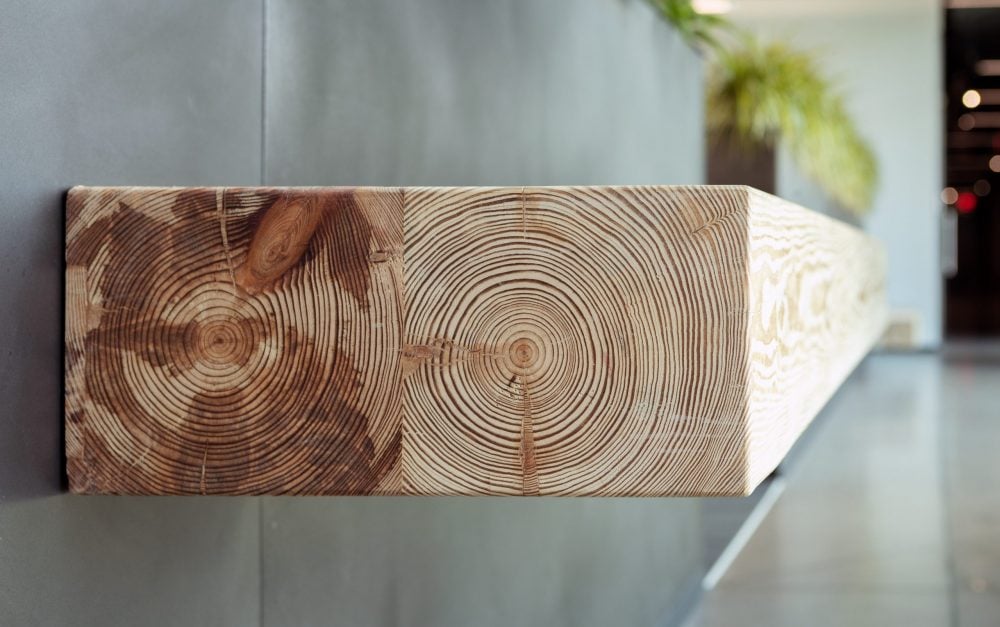 Materials and architectural features play a crucial role in promoting the soft fascination mentioned above. Natural materials like wood, stone, cork, bark and wool/cotton textiles provide both uniformity and variation. From a distance, they can appear cohesive, but up close they reveal intricate textures and patterns. This layered complexity mirrors nature’s own design and can be tailored by designers to evoke different emotional responses—from serenity to joyful stimulation. Adding a variety of light experiences that range in luminosity from soft, bright, diffused, in-direct and in different temperatures makes space feel varied and less uniform.
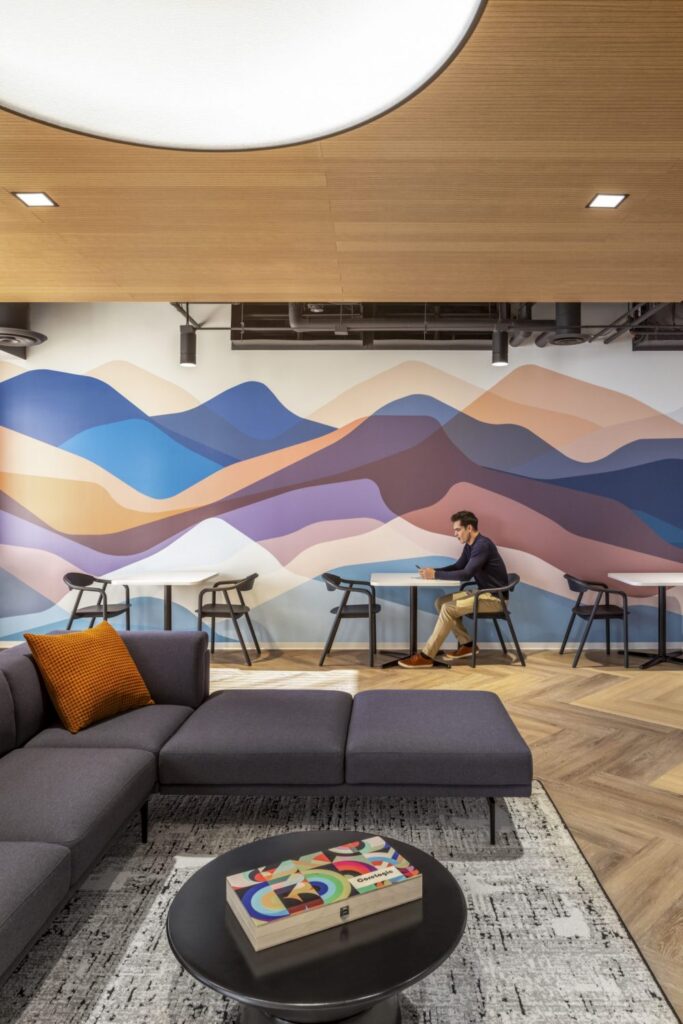
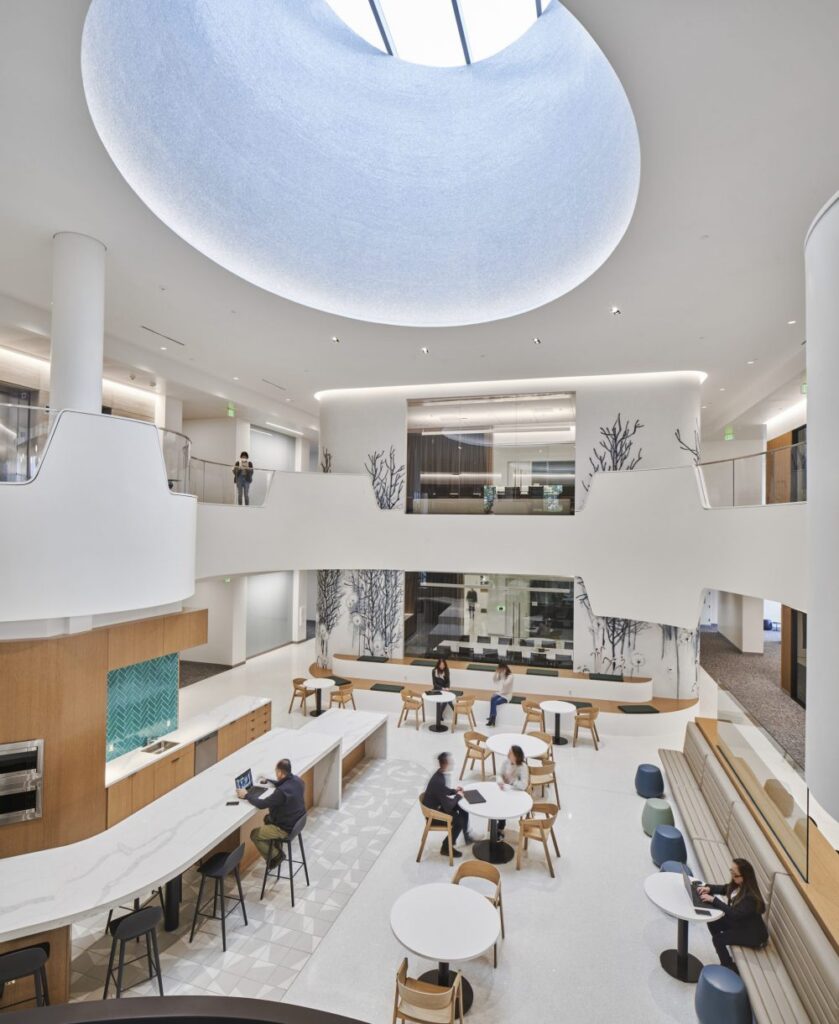
Once this low frequency baseline to stimulate and direct attention and joy is established, design can move toward delight. Just as a sudden meadow or waterfall surprises and uplifts, certain spaces can be designed as social destinations—places that energize and inspire. In these areas, stimuli can be amplified by color variances, bolder juxtapositions of materials, dynamic acoustics and playful textures that create a sense of vibrancy and engagement. Food spaces, team zones, large meeting rooms and in between spaces are ideal for this kind of design, supporting social interaction and creative energy.
Designing for joy and delight is a purposeful blend of neuroscience, psychology and spatial creativity.
It begins with recognizing how our brains respond to the environments we inhabit—how nature restores attention, how spatial order calms the mind and how sensory variation sparks curiosity and engagement.
Incorporating principles like soft fascination, fractal patterns and restorative stimuli into architectural design allows us to counter the cognitive fatigue caused by overstimulating modern environments. Through thoughtful use of natural materials, varied lighting and rhythmic spatial layouts we can create spaces that support both deep focus and communal energy.
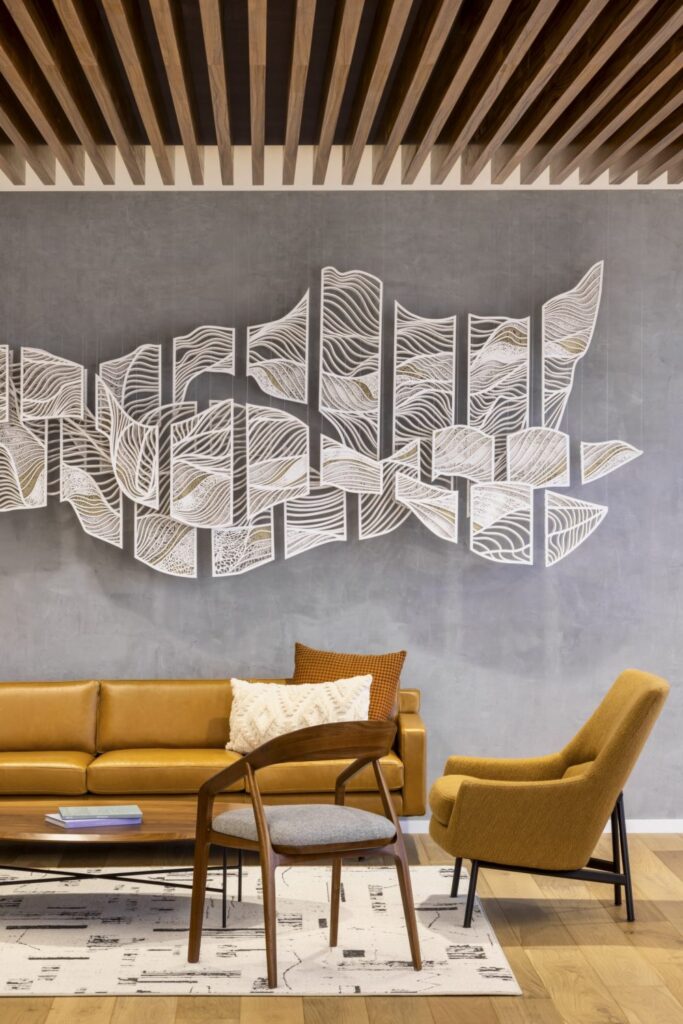 Beyond calm, design can also uplift. By introducing moments of surprise—through color, texture, acoustics and dynamic spatial transitions—we invite delight and social connection. These elements transform everyday spaces into destinations that inspire creativity, collaboration and joy.
In an age of constant distraction, intentional design offers a way to reconnect—with nature, with others and with ourselves. It’s not just about aesthetics; it’s about creating environments that help us thrive.