





This article was written by Anna Alm-Grayhek for Work Design Magazine.
Historically, the three-legged stool has been used as both a framework and metaphor for a system or philosophy that represents “the balance of critical components necessary for stability and success.”

Moreover, “the three-legged stool model in sustainable development focuses on balancing three main areas: economic, environmental, and social/cultural aspects. Each ‘leg’ contributes equally, supporting long-term growth. If any leg is missing, the whole structure collapses.” The physical workplace (aka The Office) can serve as a similar type of 3-legged stool. One that provides that stable base for individuals where they can learn, grow and thrive in their pursuit of a meaningful life.
In an Office, the “legs” of our three-legged stool can be categorized as the following:
Income – Human Connection – Purpose
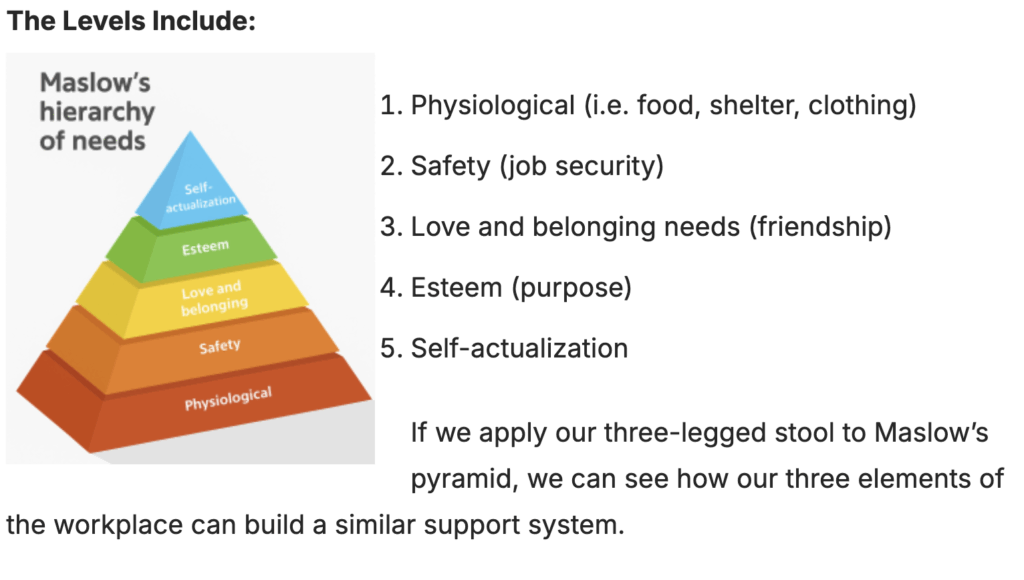
If we compare this to Maslow’s Hierarchy of Needs, we can see how these three elements play into a similar theory for fulfilling one’s full potential. The Hierarchy of Needs is represented as a pyramid categorizing human needs into five levels – where lower-level needs must be satisfied before higher-level needs can be addressed.
The Levels Include:
- Physiological (i.e. food, shelter, clothing)
- Safety (job security)
- Love and belonging needs (friendship)
- Esteem (purpose)
- Self-actualization
If we apply our three-legged stool to Maslow’s pyramid, we can see how our three elements of the workplace can build a similar support system.
 Income: A job provides the most basic requirement, income, that is then leveraged to meet the two bottom tiers of Maslow’s pyramid: shelter, food and clothing (in other words, Safety and Physiological needs). It can also add resilience by acting as a third space – providing an alternate location for shelter, a retreat to focus, or a place to gather outside of work.
“But it’s what happens in the office that allows us to move beyond those essential lower tiers.”
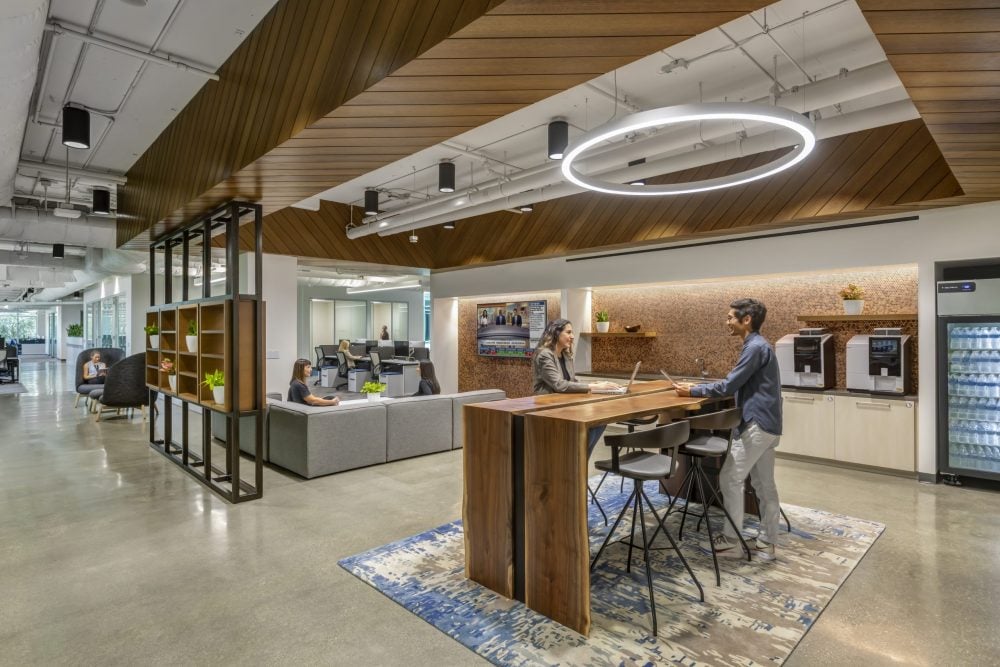
Human Connection: As we moved higher up the pyramid, friendships, particularly those that are born out of “in real life” (IRL) experiences, fulfill that next tier of “belonging.” Remote work fails to provide the same connections created by being together and in-person. And social settings in the office, where impromptu conversations can occur, provide the backdrop for those social bonds to develop.
Purpose: The top two tiers of the pyramid are Esteem and Self-Actualization, in other words, a Purpose. It is virtually impossible to reach these if the lower tiers of the pyramid have not already been met. These upper tiers include being valued and contributing to something larger than oneself in pursuit of a common goal.
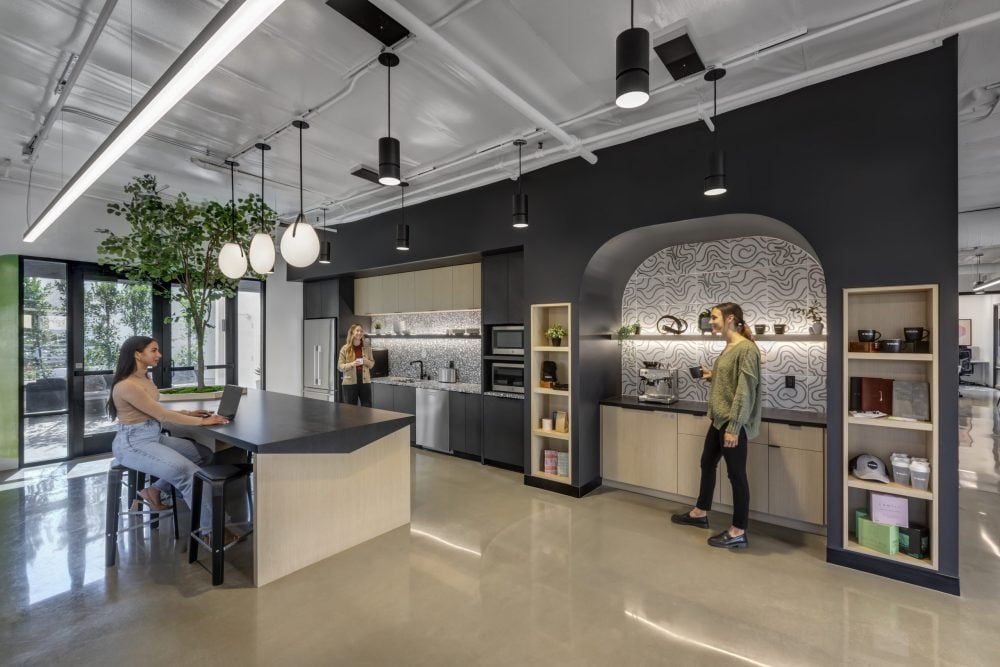
Having a Purpose is one reason that many people continue working well beyond retirement or financial necessity. Being physically together in a workplace can provide the backdrop for achieving your personal mission, including opportunities for mentorship, and building a legacy for others to continue once we are gone.
The office continues to provide value beyond being just a place where work gets done. It can serve as the three-legged stool that supports individuals in their higher pursuit of goals that bring meaning and purpose to their lives.