
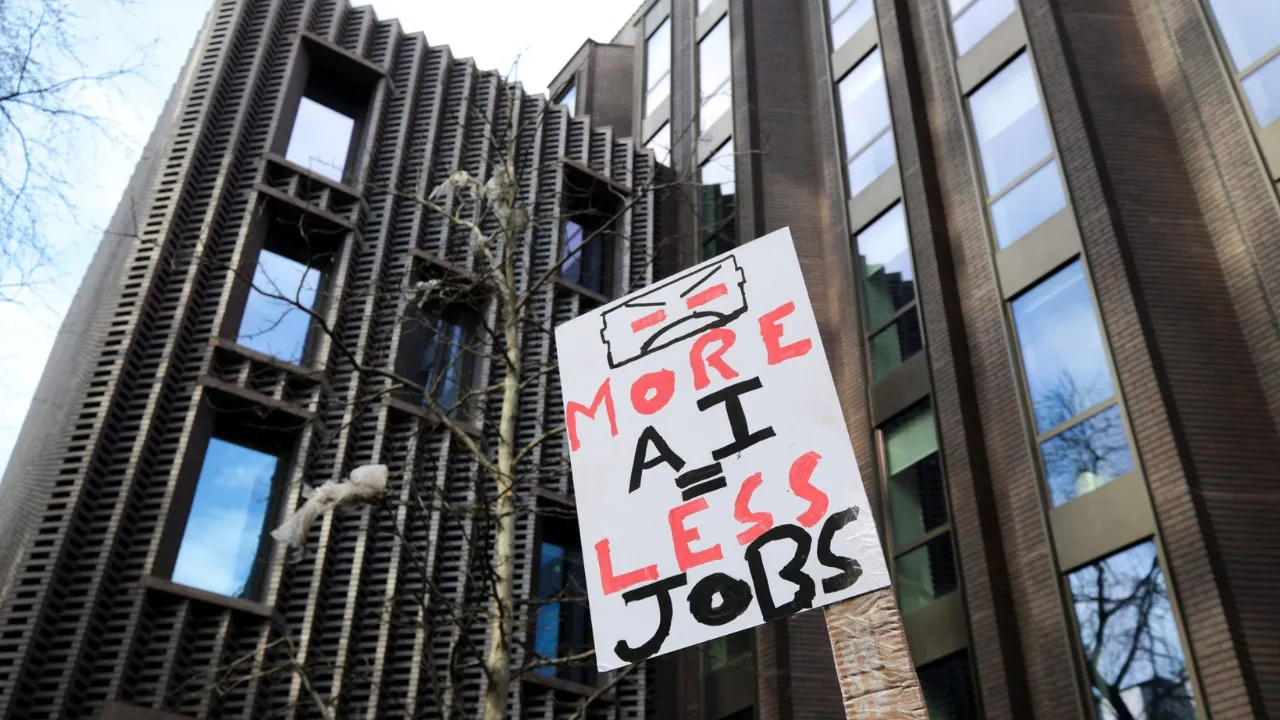
In 2023, artificial intelligence was capable of just a fraction of what it has achieved today. ChatGPT had just launched. Distorted AI photos and videos had just started to hit your timeline. The technology was improving, but adoption was slow and productivity gains were a dream away. Today, it’s being rapidly deployed across industries, and that pace has sounded the alarms for workforce researchers.
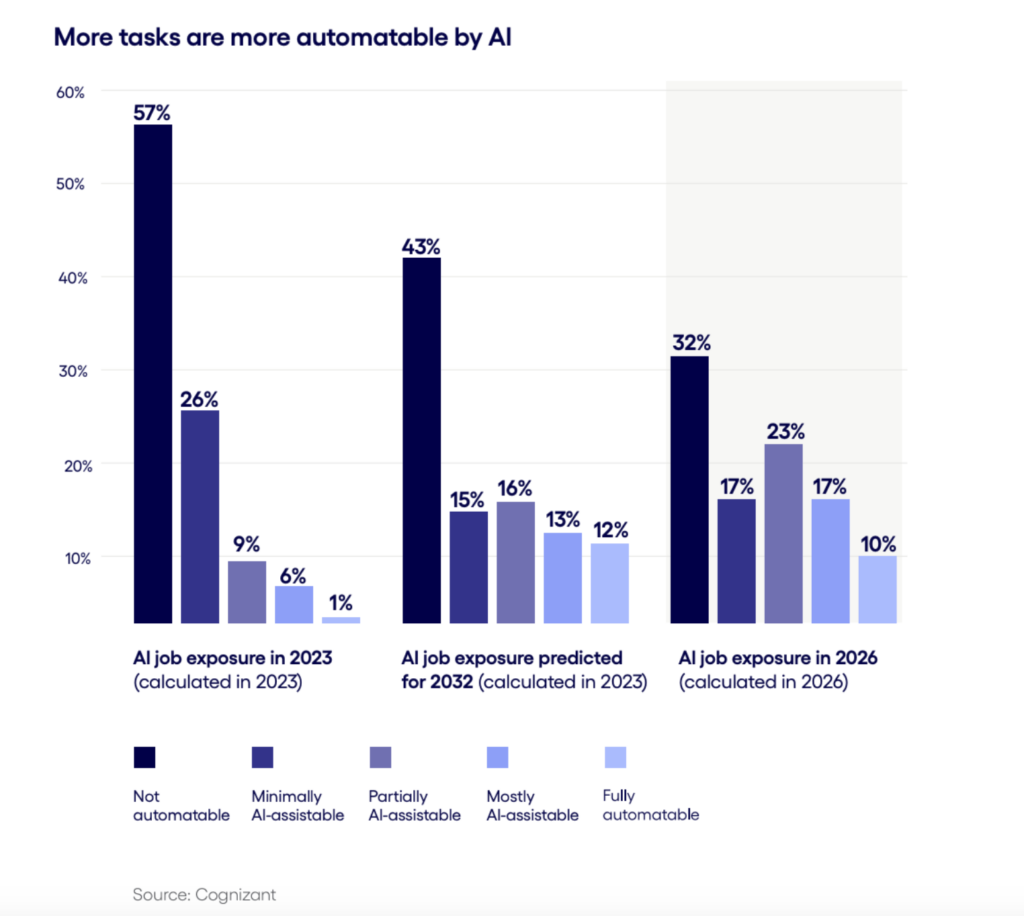
Professional services company Cognizant (number 217 on the 2026 edition of the Fortune 500) has reassessed its estimate of AI’s impact on the workplace, and the results are starker than before. They’ve updated their original forecast made in 2023 — formulated by examining 18,000 tasks and nearly 1,000 jobs from the U.S. Department of Labor occupational data — to find that 93% of jobs could undergo at least some disruption from the technology.

And the threat has become existential for a wider range of jobs. The research found that 30% of jobs could face an existential threat from AI, 15 percentage points higher than the initial assessment. In total, the report estimates AI-driven disruption could shift roughly $4.5 trillion in labor from humans to machines.
“We underestimated the impact of the technology,” the report reads. “What we projected might take until 2032 to unfold is happening now before our eyes.”

A growing chorus of business leaders and insiders is sounding the alarm on the looming threat AI poses to the workforce, particularly in white-collar roles. And those predictions are slowly becoming reality as companies — especially tech firms — have started to cut sizable chunks of their workforces, attributing the layoffs to AI.
Jack Dorsey’s Block cut nearly half of the company’s workforce thanks to AI automation. Australian-American tech firm Atlassian cut 10% of its workforce to fund AI investments. And now Meta reportedly plans to cut 20% of its roughly 79,000-person workforce, which tech analyst Mark Shmulik warned could lead to “a cascade of hurried pivots, half-formed strategies, and reactive restructuring across the ecosystem” as firms race to remain competitive in the AI era.
“Today — six years ahead of schedule — 93% of jobs could be impacted in some way by AI,” the report reads. “The technology, in short, is affecting more jobs, faster, and to a greater extent than we anticipated.”
Beyond white-collar work: manual labor and health care see first signs of disruption
The report found that the current potential for AI disruption extends beyond the professional world. The technology has started to encroach on the once-assumed safe realm of manual-labor tasks. In construction, for example, the technology can now help with interpreting blueprints. And in transportation, it can examine shipments or perform safety inspections.
“Tasks once considered purely manual actually contain embedded cognitive elements that AI can augment,” the report reads. “When those improvements occur across every shift and every site, the gains become transformative.”
In health care, too, AI is already showing signs of disruption, moving from assisting with small tasks to automating complex ones. The study found that the technology has improved diagnostic accuracy and patient care.
 AI still has a long way to go before establishing a workforce that’s majority machine and minority human, according to Matt Sigelman, president of the Burning Glass Institute, a think tank that analyzes the workforce.
“Some of these disruptions will take much longer to play out than we assume,” Sigelman told Fortune. “The timeline of disruption will be longer, the nature of the impacts may be more subtle.”
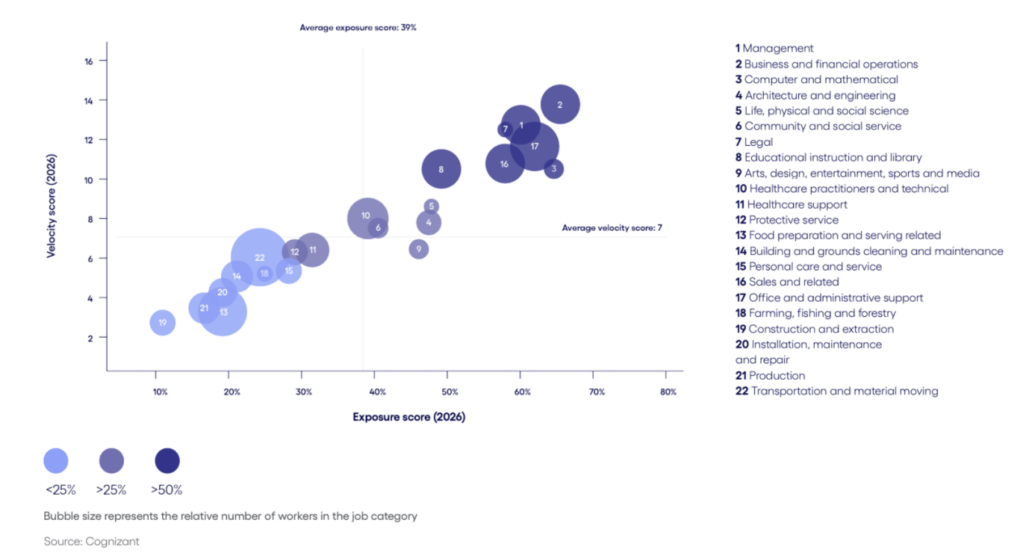
The study found that while the majority of tasks today are in some way able to be assisted by AI, just 10% are fully automatable. And while the researchers calculated an average exposure score of 39% by industry, several sectors with big workforces, including transportation and construction, are still far off from facing substantial exposure to AI.
But Sigelman adds that while the timeline may differ from Cognizant’s projections, the overall impact on the workforce could be just as significant. He said AI will usher in requirements for a completely different skill set, which can disrupt even some of the most established professionals, potentially requiring significant retraining and upskilling.
“People who have been in a job for decades may no longer be qualified for the job that has defined their careers.”
Written by Jake Angelo for Fortune as “Fortune 500 firm updates AI price tag to $4.5 trillion, estimating 93% of jobs vulnerable to disruption” and republished with permission.