Not long ago, coworking spaces inside residential buildings were considered a real selling point — proof that developers understood how residents actually lived and worked.
These days, they barely move the needle.

Coworking has entered an accountability phase where value is tied less to perception and more to performance. The question is no longer whether coworking supports leasing, but whether it can sustain meaningful usage and deliver operational impact over time. This distinction directly impacts the bottom line, especially with today’s record-high vacancy rates and tight margins.
Apartment List’s National Report shows U.S. multifamily vacancy rates holding steady at 7.3%, the highest level since 2017, while rent growth is now sitting at -1.7%, the lowest reading in the index’s recorded history. CBRE points to continued pressures and owners increasingly scrutinizing every line of their operating budget.

At the same time, Gallup indicates that hybrid work has stabilized as a long-term reality, with about half of workplaces maintaining hybrid models in the post-pandemic era.
Together, these trends are forcing multifamily leaders to carefully evaluate their approach to coworking. It is no longer a differentiator, but infrastructure, and infrastructure is judged by consistent performance, effortless operations, and whether it can justify its financial footprint.
So, does it?
Microshifting has placed value in use, not design
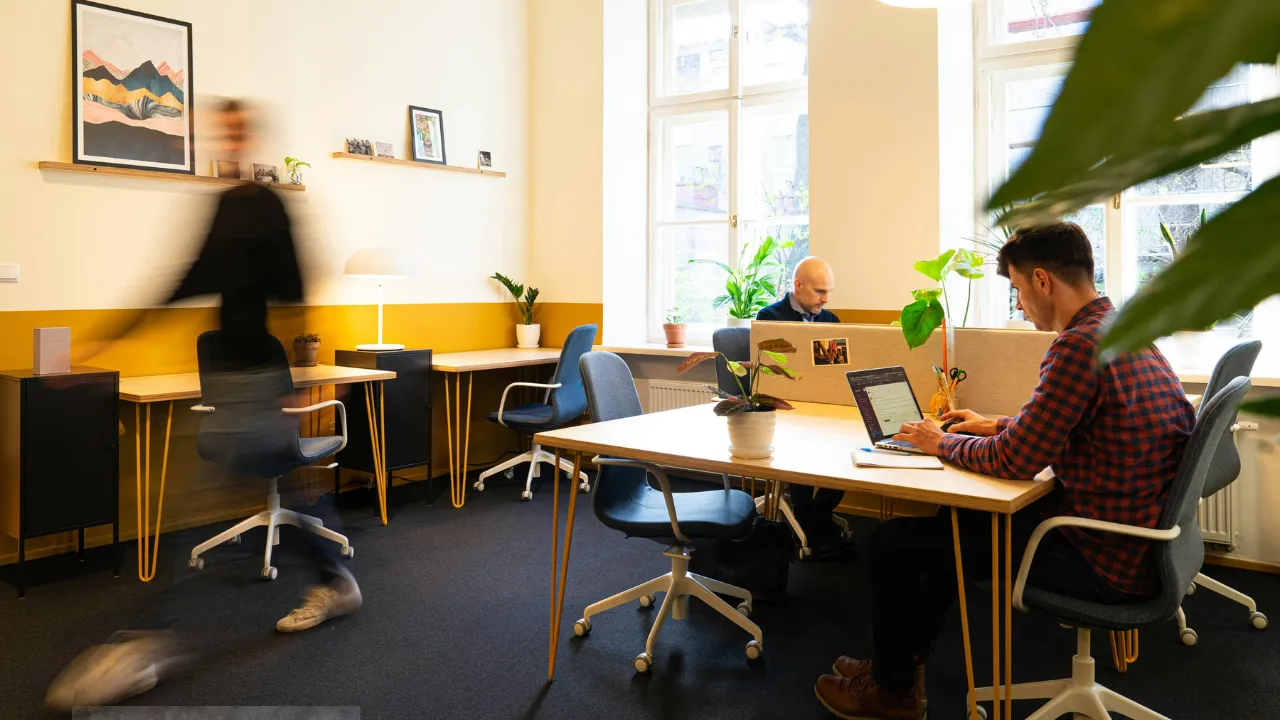
The first generation of residential coworking spaces were built to impress. Open layouts, shared tables and glass-walled conference rooms mirrored the corporate environments they were meant to replace. They reflected a familiar atmosphere of productivity, one built on structure, visibility, and permanence.

But work is no longer stationary, scheduled, or contained. It’s fragmented and fluid. Residents move through coworking spaces in short, task-specific intervals throughout the day. A 20-minute video call in the morning. A 90-minute focus block in the afternoon. Quick check-ins between meetings. Then back to their apartment or another part of the property.
This pattern aligns with what Owl Labs’ State of Hybrid Work report describes as microshifting, where employees work in non-linear blocks based on energy, tasks, and productivity. According to the report, 65% of employees say they prefer this flexible, distributed approach.
Spaces designed for microshifting see more consistent engagement. Spaces built around static, conference room-heavy design tend to underperform, regardless of how well they photograph.
In student housing, this gap is even more pronounced. Demand clusters around exam periods, group project deadlines, and internship recruiting seasons, meaning a space that struggles under normal conditions won’t hold up when an entire floor needs it all at once.
Operations, not aesthetics, determine longevity
Design intent matters, but usage patterns matter more.
The questions that once guided coworking design were fairly straightforward:
Does the property offer it?
Does it look modern?
Does it appeal to prospective residents?
Today, operators care more about performance:
Is it used consistently?
Does it support multiple types of work?
Is it easy to maintain?
Even the most well-designed spaces can fail in practice, but that doesn’t happen suddenly. It builds over time through inconsistent connectivity, lack of access to shared tools, and amenities that depend on staff to function.
When coworking is treated as infrastructure, it’s expected to work consistently, without drawing attention to itself or creating additional work for on-site teams. Otherwise, it becomes another underutilized space in a market where every square foot carries financial weight.
Coworking works when technology does
A community’s coworking space is just a container. The technology inside it determines whether it gets used, so amenities must support daily routines.
According to Owl Labs, 85% of workers say having the right technology is critical to their work, with 77% reporting they regularly lose time to technical difficulties.
That gap between expectation and experience becomes more visible in residential coworking spaces. When fundamental technology breaks down, usage follows. A dropped connection during a call. A tool that requires multiple steps to access. A process that depends on office hours or staff availability.
An occasional interruption is forgivable. Repeated instances start to change resident behavior.
Two of the most relied upon and most frequently overlooked amenities are printing and coffee.
Even in digital-first workflows, printing remains a crucial need. WithMe’s 2026 State of Printing Report revealed that more than 1.1 million people used PrintWithMe to print over 33 million pages in 2025, whether that was presentation decks, meeting notes, or client-facing documents. In student housing, that number spikes around academic deadlines.
When access is limited or overly complicated, residents don’t wait for a resolution. They leave the property to find one.
Coffee works the same way; it’s a daily-use one that turns a coworking space into part of a resident’s routine. A resident who comes down for coffee in the morning is more likely to stay and work. One who doesn’t creates their habits elsewhere.
Over time, that difference shows up in how often the space gets used and whether it can justify its footprint.
From amenities to assets
Modern residents expect to have access to tech-enabled amenities that are self-serve, intuitive, and always available so they can handle tasks on their own schedules without depending on staff.
The technology and services in residential coworking spaces need to function as a reliable, self-sustaining part of the resident experience, not something that requires constant oversight. Otherwise, they become another expense operators can’t justify.