
This article is based on the Allwork.Space Future of Work Podcast episode “Why Every Generation Is Asking for Dignity at Work with Angela R. Howard.” Click here to watch or listen to the full episode.
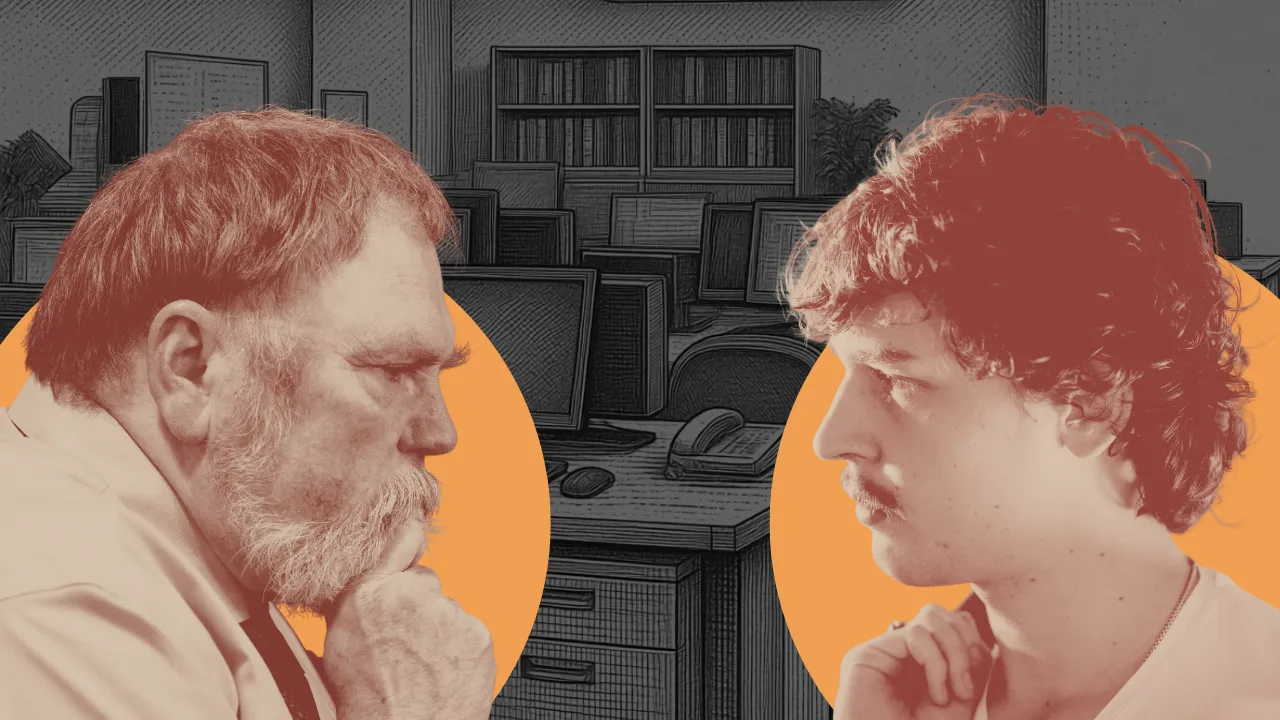
For years, workplace conversations on conflict have been framed around generational divides.

Millennials were accused of wanting too much flexibility. Gen Z is frequently portrayed as unwilling to work. Meanwhile, older generations are often characterized as resistant to change.
But according to Angela R. Howard, founder of Call for Culture, that framing misses the point entirely.

Speaking on The Future of Work® Podcast, Howard argued that the workplace is not experiencing a generational crisis as much as a reckoning around how work is structured, how people are led, and what employees expect from employers in an era of rapid technological and social change.
“There’s kind of this tension between the old and the new in succession,” she said.
Rather than focusing on age groups, she believes organizations should pay closer attention to the issues that have surfaced repeatedly throughout history: dignity, respect, fair compensation, belonging, and leadership that treats people as human beings.
The Same Workplace Debate, Generation After Generation
Howard points out that complaints about younger workers are hardly new. Historical records show similar criticisms stretching back more than a century. Every generation, it seems, is accused of lacking work ethic, commitment, or resilience.

What changes are the circumstances surrounding work itself.
Howard sees this as one reason generational debates can be misleading. What younger workers are often criticized for wanting — more balance, stronger communities, and greater flexibility — may indicate larger social changes affecting workers of all ages rather than attitudes unique to any one generation.
Today, organizations are traversing the rise of artificial intelligence, changing expectations around flexibility, growing concerns about burnout, and evolving ideas about the role work should play in people’s lives.
While those factors may make current workplace tensions feel unique, Howard argues that the underlying concerns remain remarkably consistent. At their core, workers continue to seek fair treatment, meaningful opportunities, and environments where they feel respected.
The challenge for leaders is recognizing those common threads rather than becoming distracted by generational stereotypes.
Work Has Become More Than a Job
One of Howard’s more thought-provoking observations is that many organizations have become responsible for needs that historically belonged elsewhere.
Over the past decade, employers have increasingly invested in community-building initiatives, employee well-being programs, healthcare benefits, childcare support, and workplace belonging efforts.
While many of these initiatives provide real value, Howard questions whether workplaces have become the default solution for broader social challenges.
In her view, this helps explain why conversations about work often become tangled up in generational narratives. As traditional sources of community and support weaken, employees increasingly look to employers to fill those gaps, creating expectations that extend far beyond the job itself.
As loneliness rises and traditional community structures weaken, employees often look to work as a primary source of connection and support. That creates both opportunities and risks.
Strong workplace culture matters, but when work becomes someone’s primary source of community, identity, healthcare access, and social support, organizations may find themselves carrying responsibilities that extend far beyond their original purpose.
For coworking operators and workplace leaders, this raises important questions about where workplace community creates value — and where it may be compensating for gaps elsewhere in society.
Benefits Can’t Fix Poor Leadership
Howard believes many organizations still misunderstand what creates a healthy workplace culture. Too often, companies focus on workplace perks while overlooking foundational issues.
Additional benefits, flexible policies, and employee programs can be valuable, but they cannot compensate for toxic leadership, poor management, or environments where people do not feel psychologically safe.
The problem, she suggests, is that organizations frequently try to address higher-level needs before addressing basic ones.
Drawing on concepts similar to Maslow’s hierarchy of needs, Howard noted that employees are unlikely to feel a sense of belonging or engagement if they are simultaneously dealing with unfair treatment, poor communication, or inconsistent accountability.
Culture, in her view, is not built through isolated programs. It emerges from how organizations hire, coach, reward, promote, and hold people accountable every day.
AI Is Changing Leadership Faster Than Leadership Is Changing
Howard sees AI as both an opportunity and a challenge. Many traditional management functions — tracking projects, assigning work, monitoring deadlines, and organizing information — are becoming increasingly automated.
As those responsibilities shift toward technology, leaders may need to focus less on managing tasks and more on understanding people.
That means developing capabilities that have often received less attention in traditional leadership development programs: empathy, adaptability, relationship-building, pattern recognition, and judgment.
Rather than replacing leadership, AI may be forcing leaders to become more human.
The organizations that thrive may be the ones that use technology to handle administrative complexity while allowing leaders to spend more time coaching, supporting, and understanding their teams.
Howard worries that some organizations are using AI as a substitute for developing those skills instead of using it as a tool that frees leaders to focus on them.
The Growing Gap Between Education and Work
If organizations are focusing on the wrong workplace debates, Howard believes they may also be overlooking another structural challenge: the growing disconnect between education and workforce development.
As technology evolves, skills requirements are changing faster than many institutions can adapt. She believes employers and educators need stronger collaboration to identify the capabilities people will need in the future.
Importantly, the conversation should not focus solely on technical AI skills. Human-centered capabilities — including leadership, communication, adaptability, and critical thinking — may become even more valuable as automation becomes more widespread.
The future workforce will likely require both technical literacy and strong interpersonal skills, yet many organizations and educational systems continue to treat those areas separately.
The Problem With “We’re a Family”
Generational stereotypes are not the only workplace assumptions Howard believes leaders should challenge. She also questions one of the most common cultural narratives in business: the idea that employers should function like families.
While the phrase is often intended to communicate care and connection, she warned that it can sometimes create unhealthy expectations around loyalty and accountability.
In certain organizations, particularly family-owned businesses, loyalty can become so deeply embedded that it slows necessary change or makes difficult decisions harder to make.
Healthy workplace cultures require balance. Organizations can care deeply about people while still maintaining clear expectations, accountability, and the flexibility needed to evolve. Treating employees with dignity and respect does not eliminate the need for difficult business decisions. It simply changes how those decisions are made and communicated.
Ultimately, Howard views culture not as a program or initiative, but as an operating system.
Her broader message is that organizations may be spending too much time debating whether Gen Z, Millennials, Gen X, or Baby Boomers are responsible for workplace disruption. The more important question is whether leaders are addressing the same concerns workers have raised for generations: dignity, respect, fair treatment, belonging, and the ability to thrive amid change.
For workplace leaders, coworking operators, and employers alike, the lesson is clear: the future of work is not primarily a story about generations, but about whether organizations can build cultures that evolve as quickly as the world around them while continuing to meet those fundamental human needs.