Winning the best talent for your company often means winning on place. Aesthetics, comfort, and access to amenities are key considerations for today’s office workers, but what keeps them coming back is character, a space that feels distinct rather than interchangeable with any other office in any other building.
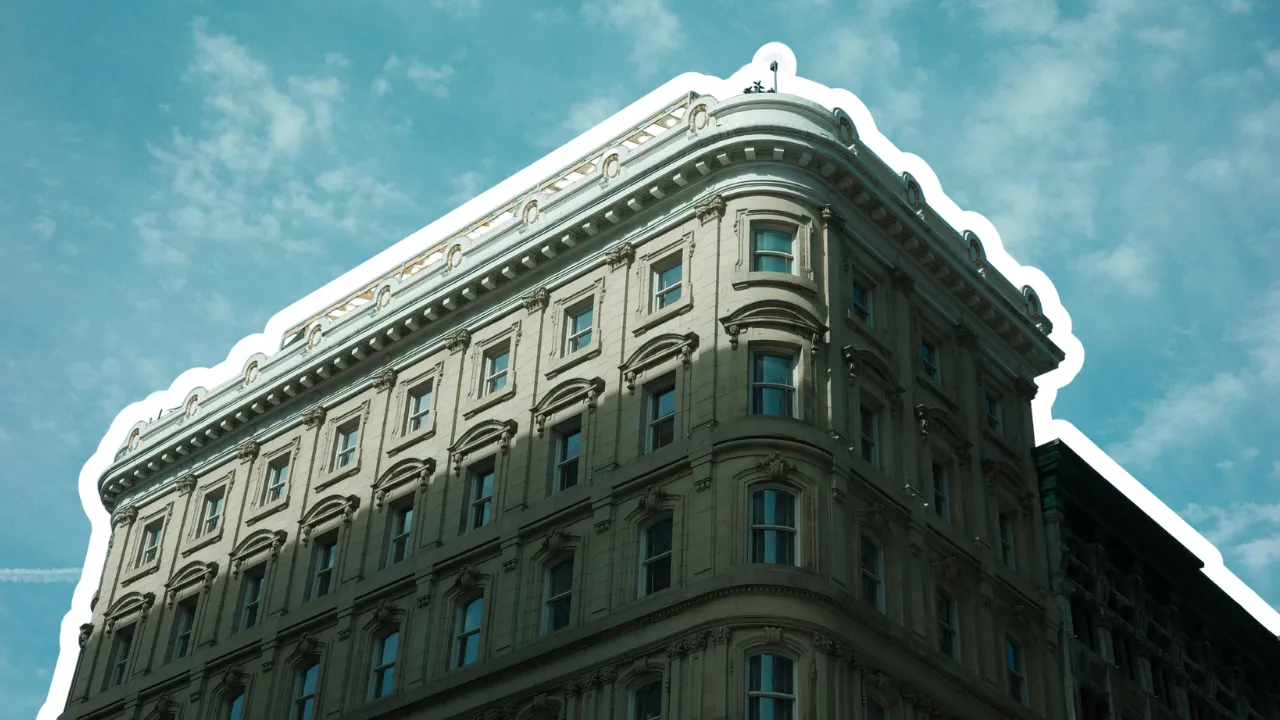
Few environments offer that kind of distinctiveness more reliably than old buildings and historic neighborhoods, which is why firms looking to attract tomorrow’s talent are setting up shop in yesterday’s buildings. Tech startups are moving into century-old warehouses; developers are building new, drawing on the legacy character of the neighborhoods around them. Such spaces have a story to tell, and when new occupants move in, they add a new chapter to the narrative.

What’s driving this new interest in old places? Here are three reasons cited by our clients.
Reuse shows you truly value sustainability.
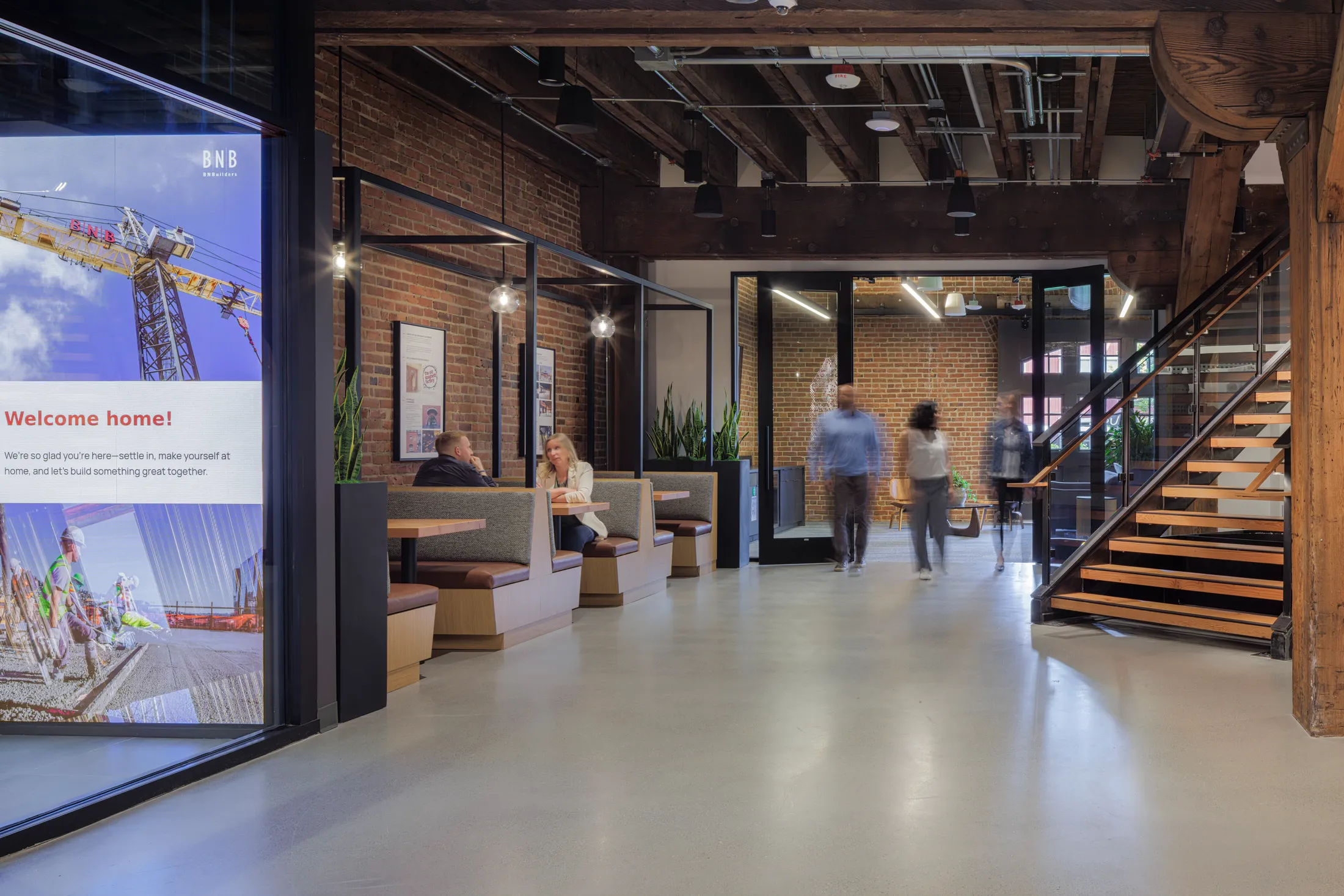
Lots of companies claim they’re committed to sustainability, but few acts prove it better than choosing adaptive reuse over new construction. When the project involves keeping an existing structure rather than demolishing it, adaptive reuse delivers a double win: it sidesteps the carbon emissions of all-new construction, and it keeps demolition waste out of the landfill.

Older buildings also carry a level of craftsmanship that’s hard to find in newer, machine-made construction: hand-set masonry, old-growth timber, joinery built to last centuries rather than decades. Restoring that work instead of replacing it is its own argument for quality over convenience.
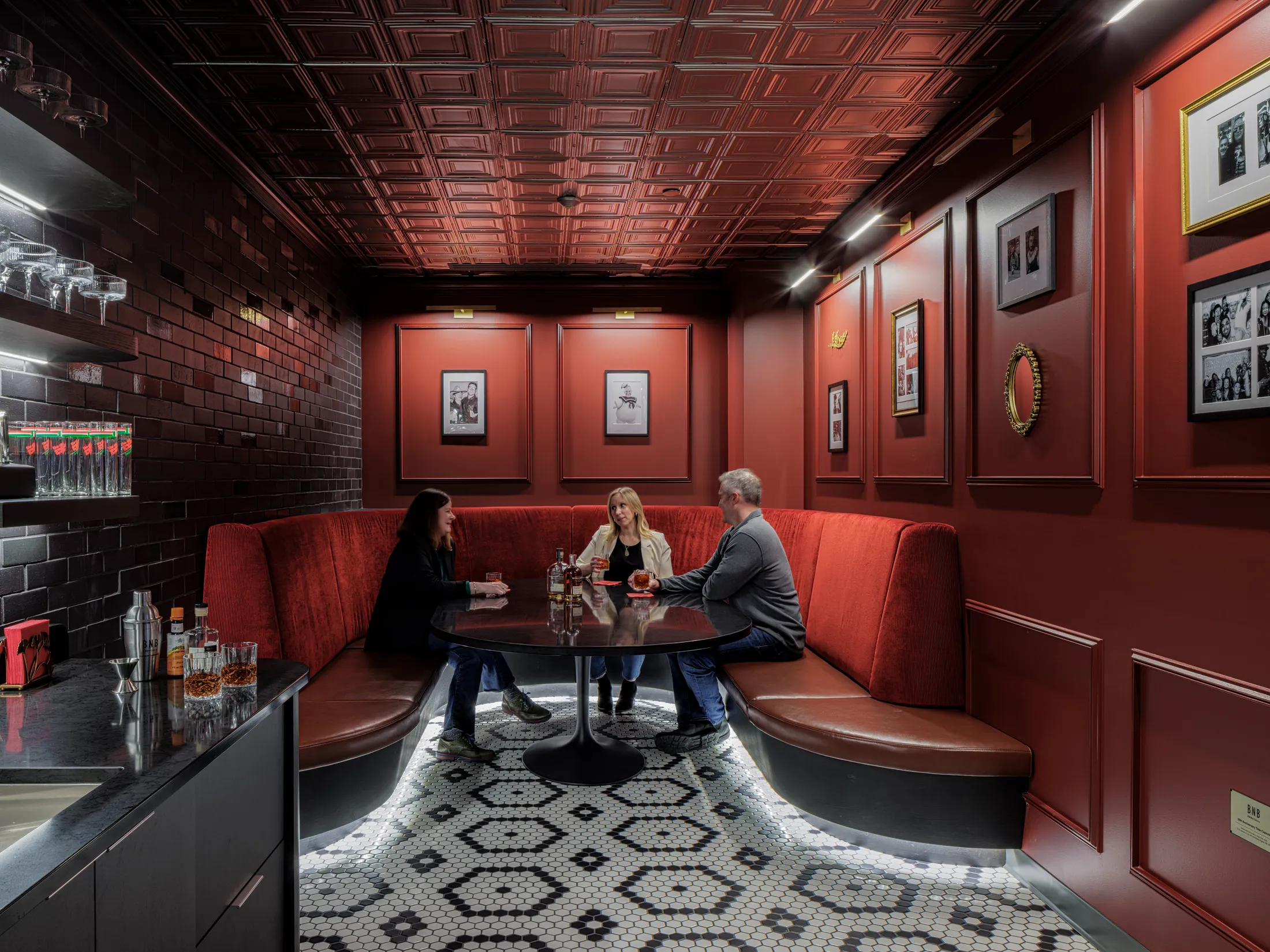
A passion for preservation and a commitment to sustainability were key drivers in BNBuilders’ decision to locate its new headquarters in a former fish-processing facility in Seattle. The company wanted to create a modern workplace while also honoring the cultural and structural legacy of a turn-of-the-century building, striking a deliberate balance between past and present usage.
When the team cut an opening in the building’s historic cardecking to add a new communicating stair, they didn’t haul the wood away — they salvaged it and refurbished it into the treads of a showpiece staircase at the center of the building. A speakeasy hidden behind a bookshelf channels the same 1920s-era spirit. The nods to history across the space engage employees and instill in them a sense that they’re part of a longer, more sweeping story.
History gives new spaces a story employees want to be part of.
A building doesn’t have to be old to carry history. Sites carry it too; in what stood there before, what industries built the surrounding neighborhood, what stories are embedded in the ground itself. Firms are increasingly designing new construction to draw that context forward, giving employees a sense of connection to something larger than the building they work in.
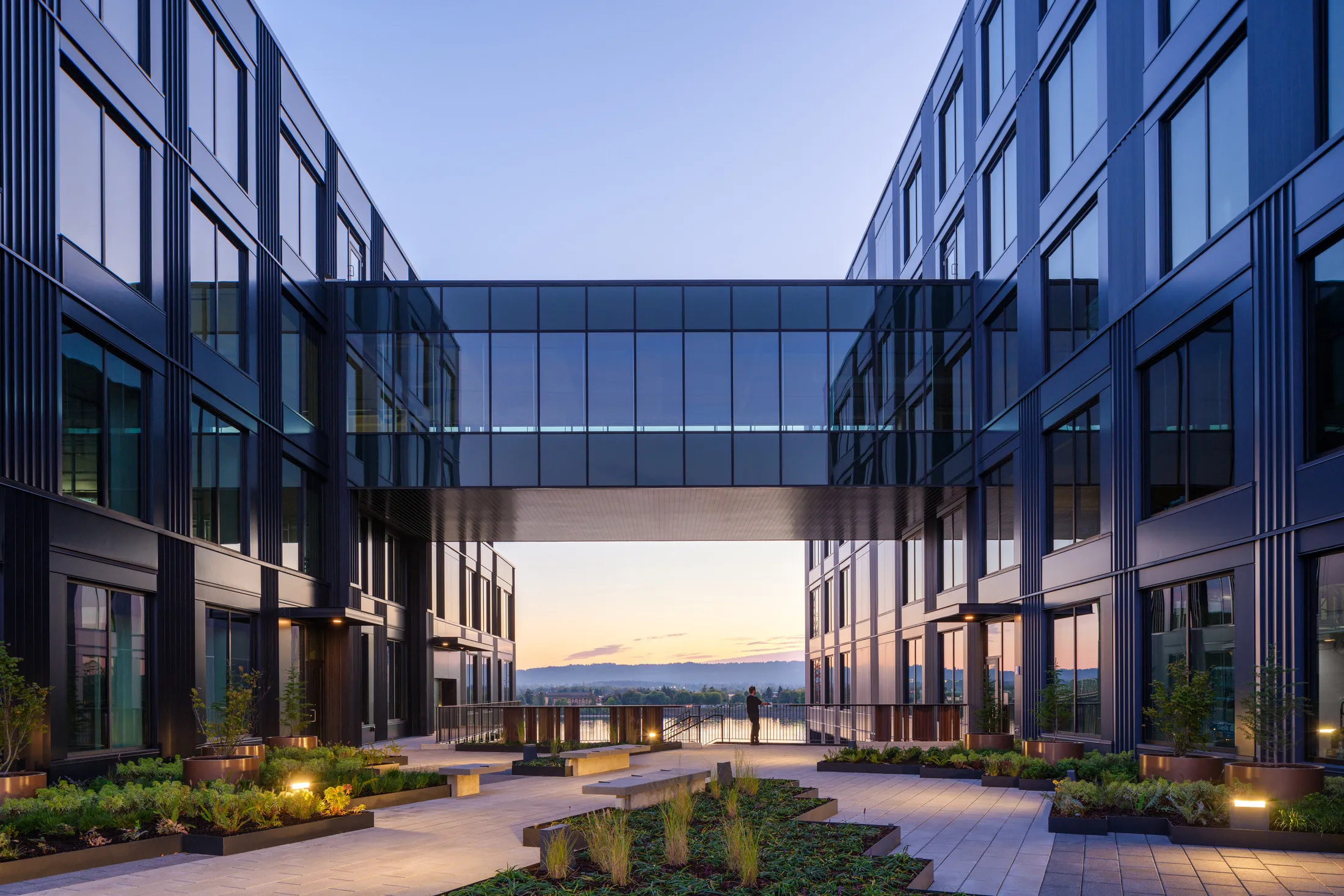
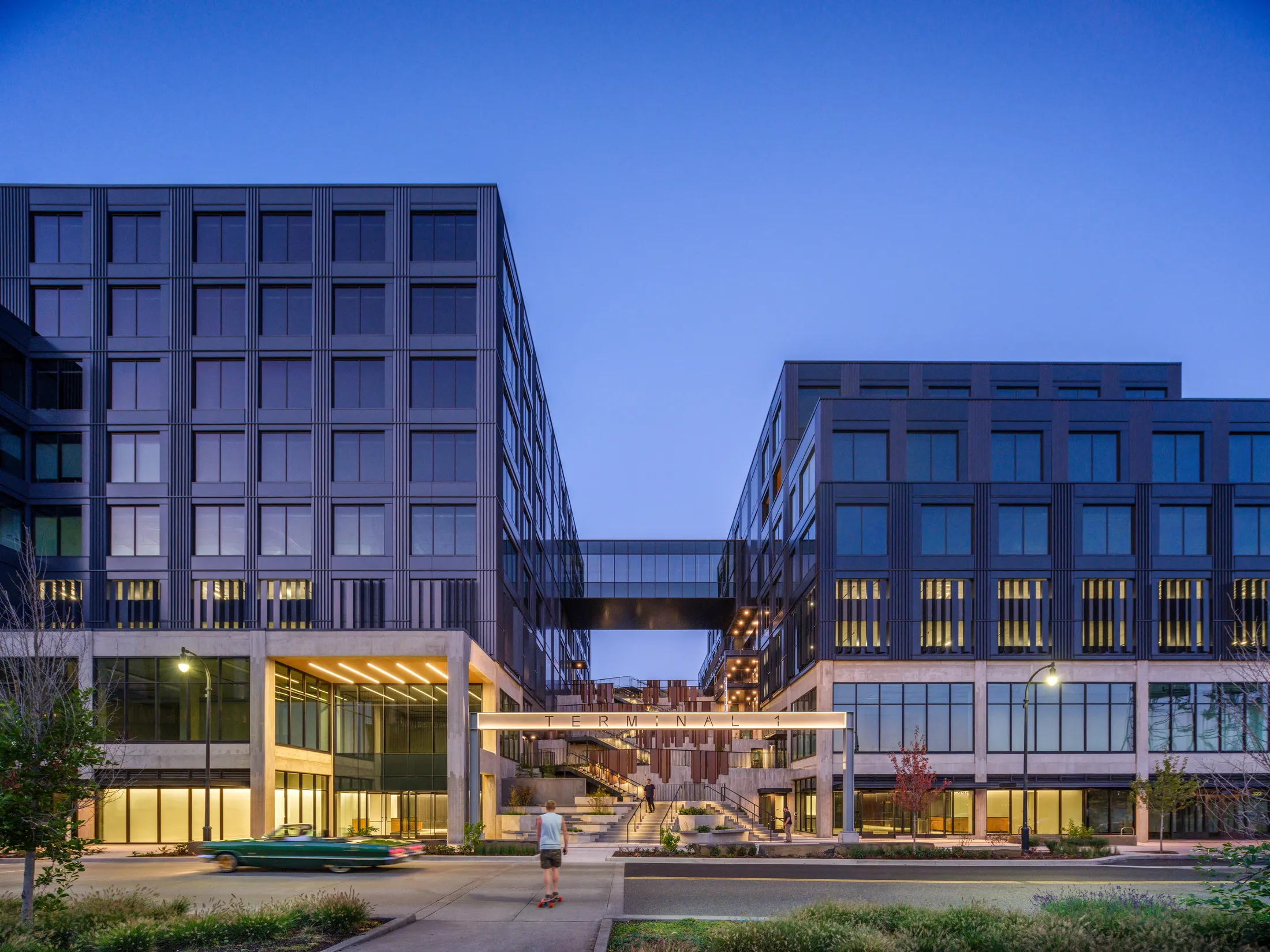
History was a significant consideration in our design for Terminal 1 Blocks A & C, a pair of mid-height office buildings developed along the waterfront in Vancouver, Washington. The development, though new, reestablishes the site’s connection with the Columbia River, and the towers are linked by “The Launch,” a terraced public promenade that recalls the site’s shipbuilding legacy and frames views of the riverfront. Tenants and employees in the space can draw a line between the shipping companies that once fueled the city’s economy and the modern concerns that support it today.
Respect for history translates into community support.
When an organization opts to rehabilitate rather than raze a structure, they send a message to the surrounding community that indicates they care about the place, its history, its people, its aesthetic, its vibe. Done right, adaptive reuse recognizes the context of the project and honors the historic and cultural fabric into which it is knit.
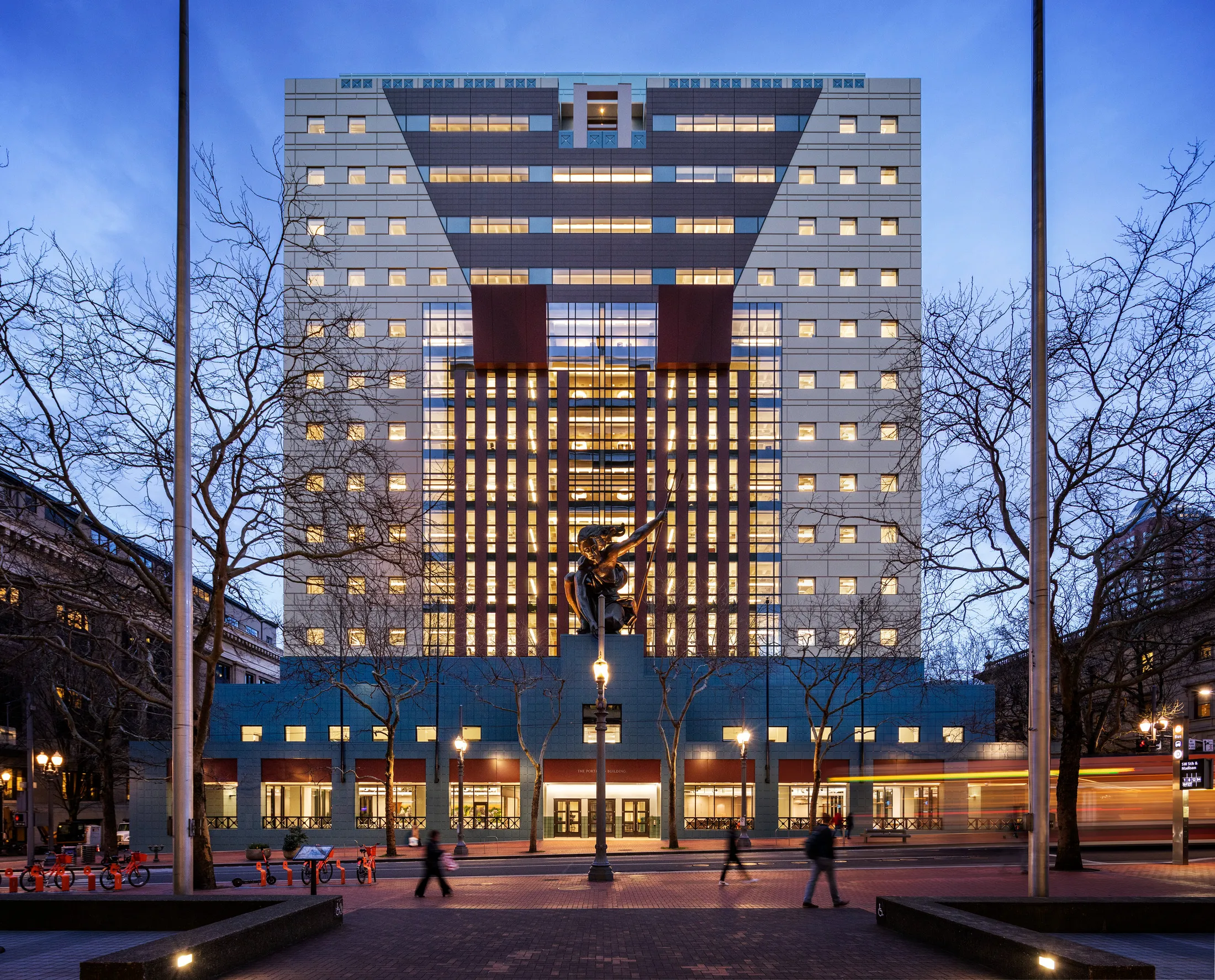
A few years ago, as the City of Portland began to weigh the fate of the Portland Building, a municipal facility designed by Michael Graves in the 1980s, a question loomed: Could the iconic building (both loved and hated for various reasons) be saved, despite significant structural problems. The challenges were many, and starting from scratch seemed not unreasonable to some, but our team proposed both saving and improving the building with a series of design interventions.
Wrapping the building in unitized metal panels improved overall performance and rendered the original colors of the post-modern structure more crisp. Replacing tinted windows and expanding their size without altering the exterior appearance of the building allowed us to flood the interior with light, vastly improving conditions for workers within the structure.
The message behind the project was clear: This building has become a landmark in our community, embedded in the city’s fabric. Preservation and modernization resulted in a structure that could both honor Portland’s past and honor it for decades into the future.
Of course, adaptive reuse may not be the right solution for every company. But for firms that want workers to feel comfortable, inspired, and maybe even a little bit nostalgic, historic structures have something unique to offer. They take work to redesign and reimagine, but their value, to employees and even the wider community, is often priceless.