
Advertisements
Your Brand Deserves The Spotlight - Advertise With Us - Allwork.Space
  • Marketplace
  • Resources
  • Business Directory
  • Events
  • Advertise
  • Publish a Press Release
  • Submit Your Story | Get Featured
  • Get the Newsletter
  • Contact
  • About Us
The FUTURE OF WORK® since 2003
Allwork.Space
No Result
View All Result
Subscribe
  • Submit Your StoryNew
  • More
    • Columnists
      • Dr. Gleb Tsipursky – The Office Whisperer
      • Nirit Cohen – WorkFutures
      • Angela Howard – Culture Expert
      • Drew Jones – Design & Innovation
      • Jonathan Price – CRE & Flex Expert
    • Get the Newsletter
    • Events
    • Advertise With Us
    • Publish a Press Release
    • Brand PulseNew
    • Partner Portal
  • Latest News
  • Business
  • Leadership
  • Work-life
  • Career Growth
  • Tech
  • Design
  • Workforce
  • Coworking
  • CRE
  • Podcast
  • Submit Your StoryNew
  • More
    • Columnists
      • Dr. Gleb Tsipursky – The Office Whisperer
      • Nirit Cohen – WorkFutures
      • Angela Howard – Culture Expert
      • Drew Jones – Design & Innovation
      • Jonathan Price – CRE & Flex Expert
    • Get the Newsletter
    • Events
    • Advertise With Us
    • Publish a Press Release
    • Brand PulseNew
    • Partner Portal
  • Latest News
  • Business
  • Leadership
  • Work-life
  • Career Growth
  • Tech
  • Design
  • Workforce
  • Coworking
  • CRE
  • Podcast
No Result
View All Result
Subscribe
Allwork.Space
No Result
View All Result
Advertisements
UltraSoftBIS Work Smarter, Not Harder
Home News

Could The Euro Hit $1? What Weaker Currency Means For European Workers

As the euro nears parity with the dollar, here's what it means for wages, hiring trends, and household budgets.

Emma AscottbyEmma Ascott
November 14, 2024
in News
Reading Time: 4 mins read
A A
Could The Euro Hit $1 What Weaker Currency Means For European Workers

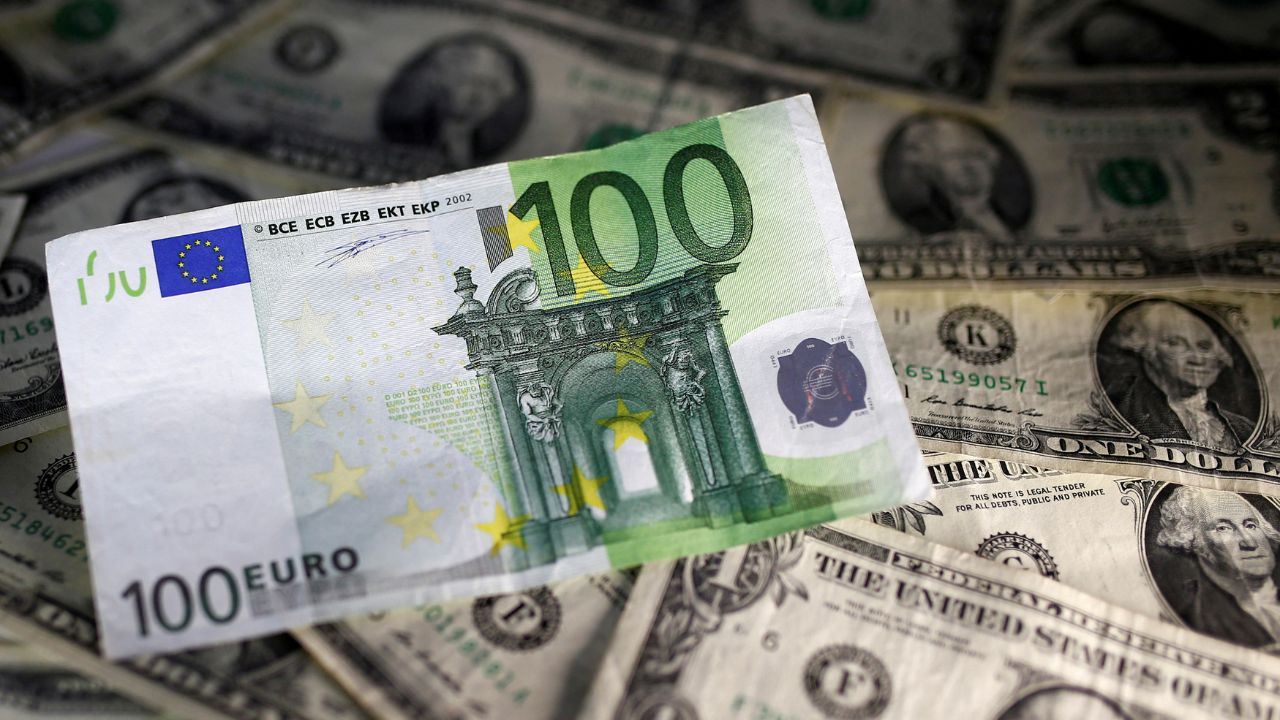
U.S. dollar and Euro notes are seen in this November 7, 2016 picture illustration. Picture taken November 7. REUTERS/Dado Ruvic/File Photo

The euro has fallen to one-year lows, reviving talk the currency could hit the $1 mark. Donald Trump’s U.S. election win raises the prospect of a hike in tariffs that could deal a fresh blow to the euro zone economy.

At around $1.05, the euro has slumped 6% from more than one-year highs in September when a weakening economic outlook stopped it in its tracks.

Advertisements
Yardi Kube automates flex & coworking operations

Euro/dollar is the world’s most actively traded currency pair. 

The future of work is closely tied to currency fluctuations, as they can reshape employment opportunities, wage growth, and the stability of household budgets. 

Advertisements
Nexudus - Tech Stack Lovers

A weaker euro could drive job growth in key European industries but also create inflationary pressures, impacting workers’ purchasing power and highlighting the importance of adaptable economic policies to protect worker welfare.

Here’s a look at what’s driving the move in the euro and what could be next for the currency. 

1. Could the euro hit $1?

It’s possible. Parity is just 5% away and the euro has traded below that level before — once in the early 2000s and again for a few months in 2022, when U.S. interest rates were rising faster than euro zone ones as Europe grappled with the energy price surge that followed the war in Ukraine.

For traders, the $1 mark is a key psychological level. So a fall below here could exacerbate negative euro sentiment, leading to a further depreciation.

Advertisements
Get more revenue. Do less work - Alliance Virtual Offices

Big banks including JPMorgan and Deutsche Bank reckon a drop to parity could happen, depending on the extent of tariffs. Tax cuts could also fuel U.S. inflation and limit Federal Reserve rate cuts, making the dollar potentially more attractive than the euro.  

2. What does it mean for businesses, households, and individual workers? 

A weak currency typically raises the cost of imports. That can lead to prices of food, energy and raw materials rising, aggravating inflation. 

Since hitting double digits two years ago, inflation has fallen quickly so the hit to prices from currency weakness shouldn’t be a big worry for now. Most economists see inflation back at its 2% target next year after some volatility at the end of 2024.    

Conversely, a fall in the euro makes exports cheaper — good news for Europe’s automakers, industrials and luxury retailers, for example, and for individuals or investors with overseas incomes.

More stories for you

U.S. Planned Layoffs Plummet 53% In November, But Still Outpace 2024 Levels

U.S. Planned Layoffs Plummet 53% In November, But Still Outpace 2024 Levels

16 hours ago
U.S. Weekly Jobless Claims Fall To Three-Year Low Amid Mixed Labor Market Signals

U.S. Weekly Jobless Claims Fall To Three-Year Low Amid Mixed Labor Market Signals

16 hours ago
Meta Plans Steep Budget Cuts For Metaverse Team, Raising Layoff Concerns

Meta Plans Steep Budget Cuts For Metaverse Team, Raising Layoff Concerns

16 hours ago
U.S. Department Of Health And Human Services Makes It Harder For Federal Employees With Disabilities To Work Remotely (1)

U.S. Department Of Health And Human Services Makes It Harder For Federal Employees With Disabilities To Work Remotely

16 hours ago

It’s especially positive for Germany. Long-considered Europe’s export engine, the German economy has suffered from a number of headwinds including a weak Chinese economy. 

For workers, a weaker euro can have both positive and negative effects. On the downside, higher import costs due to a weaker currency could lead to rising prices for everyday goods like food, energy, and raw materials, which might strain household budgets and contribute to inflation. If inflation picks up, workers could face higher living costs without an immediate increase in wages.

On the upside, if European exports get cheaper and more competitive, it could boost demand for goods and services, potentially leading to job growth in export-driven sectors like manufacturing, automotive, and luxury goods. 

However, if businesses face higher operating costs due to tariffs or supply chain disruptions, they might cut back on hiring or even reduce their workforce.

Advertisements
Yardi Kube automates flex & coworking operations

3. Is the euro being singled out?

Not necessarily. Many currencies of major U.S. trading partners have been hit hard in the past six weeks by tariff worries.

The euro has lost over 4.5%, while the Mexican peso has lost 6% and the Korean won has fallen 5.4%. The euro actually rallied 6% over the course of Trump’s last term, but fell by nearly 6% in the six weeks following the 2016 result, before recovering. 

And look at Japan’s yen. It’s down almost 10% this year against the dollar; the euro has fallen less than half of that.

4. Is it really that bad?        

Not everyone has a bearish long-term view of the euro. Many banks see parity as possible, but not necessarily probable.

Advertisements
Your Brand Deserves The Spotlight - Advertise With Us - Allwork.Space

Faster interest rate cuts from the European Central Bank (ECB) than in the United States would be negative for the euro, but on the positive side that easing could also support the currency longer term by boosting the economic growth outlook.

The euro zone economy grew 0.4% in the third quarter from the previous three months, faster than forecast, positive for the euro. The collapse of Germany’s government that potentially paves the way for growth-boosting spending under the next one could also be supportive.

“Everyone is gloomy on Europe and we understand the gloominess but we could have some positive surprises,” said Edmond de Rothschild CIO Benjamin Melman, adding he does not see a significant euro downturn from here. 

5. What does it mean for the ECB? 

The ECB is in a better position than the last time the euro weakened sharply — that was in 2022 and inflation was surging so the euro’s drop below $1 added pressure on the central bank to hike rates.

Advertisements
Get more revenue. Do less work - Alliance Virtual Offices

Fast forward to today and inflation is trending lower. There are other reasons why a fall to $1 would not be a huge worry for the ECB. 

The ECB pays more attention to how the euro performs against a basket of the currencies of the euro area’s main trading partners. Viewed this way, it’s not looking so weak. The trade-weighted euro is down less than 1% in the past week and well above levels seen in 2022.

Economists also note that the pass-through from currency moves to inflation is relatively small, so euro weakness shouldn’t stall rate cuts for now.

(Reporting by Emma Ascott, Amanda Cooper, Dhara Ranasinghe and Naomi Rovnick. Additional reporting by Alun John and Yoruk Bahceli. Editing by Elisa Martinuzzi and Mark Potter)

Advertisements
Your Brand Deserves The Spotlight - Advertise With Us - Allwork.Space
Source: Reuters
Tags: BusinesseuropeWorkforce
Share10Tweet6Share2
Emma Ascott

Emma Ascott

Emma Ascott is a contributing writer for Allwork.Space based in Phoenix, Arizona. She graduated from Walter Cronkite at Arizona State University with a bachelor’s degree in journalism and mass communication in 2021. Emma has written about a multitude of topics, such as the future of work, politics, social justice, money, tech, government meetings, breaking news and healthcare.

Other Stories Recommended For You

U.S. Planned Layoffs Plummet 53% In November, But Still Outpace 2024 Levels
News

U.S. Planned Layoffs Plummet 53% In November, But Still Outpace 2024 Levels

byAllwork.Space News Team
16 hours ago

Layoffs announced by U.S. employers fell sharply in November, but hiring intentions continued to lag as businesses navigated an uncertain...

Read more
U.S. Weekly Jobless Claims Fall To Three-Year Low Amid Mixed Labor Market Signals

U.S. Weekly Jobless Claims Fall To Three-Year Low Amid Mixed Labor Market Signals

16 hours ago
Meta Plans Steep Budget Cuts For Metaverse Team, Raising Layoff Concerns

Meta Plans Steep Budget Cuts For Metaverse Team, Raising Layoff Concerns

16 hours ago
U.S. Department Of Health And Human Services Makes It Harder For Federal Employees With Disabilities To Work Remotely (1)

U.S. Department Of Health And Human Services Makes It Harder For Federal Employees With Disabilities To Work Remotely

16 hours ago
Advertisements
Get more revenue. Do less work - Alliance Virtual Offices
Advertisements
Nexudus - Discount

Unlock your competitive edge in tomorrow's workplace.

Join a community of forward-thinking professionals who get exclusive access to the latest news, trends, and innovations that are shaping the future of work.

2025 Allwork.Space News Corporation. Exploring the Future Of Work® since 2003. All Rights Reserved

Advertise  Submit Your Story   Newsletters   Privacy Policy   Terms Of Use   About Us   Contact   Submit a Press Release   Brand Pulse   Podcast   Events   

No Result
View All Result
  • Home
  • Latest News
  • Topics
    • Business
    • Leadership
    • Work-life
    • Workforce
    • Career Growth
    • Design
    • Tech
    • Coworking
    • Marketing
    • CRE
  • Podcast
  • Events
  • About Us
  • Advertise | Media Kit
  • Submit Your Story
Subscribe

Welcome Back!

Login to your account below

Forgotten Password?

Retrieve your password

Please enter your username or email address to reset your password.

Log In
This website uses cookies. By continuing to use this website you are giving consent to cookies being used. Visit our Privacy and Cookie Policy.
-
00:00
00:00

Queue

Update Required Flash plugin
-
00:00
00:00