
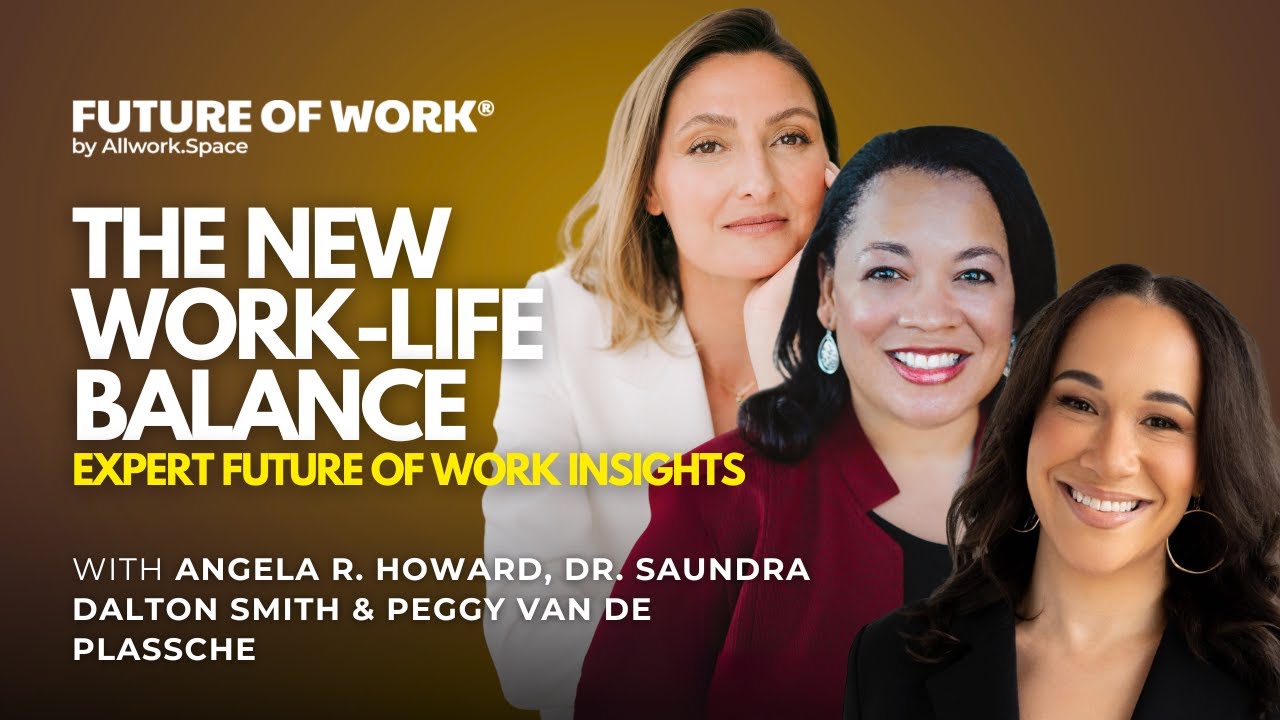
This article is based on the Future of Work Podcast episode “The New Work-life Balance” with Angela R. Howard, Dr. Saundra Dalton-Smith, & Peggy Van de Plassche. Click here to listen to the entire episode.
As stress levels rise and employee disengagement grows, companies are being pushed to think beyond surface-level benefits and address the deeper forces influencing how people feel at work.
In our most recent edition of The Future of Work® Podcast, we analyzed how workplace wellness is being redefined by emerging cultures, clinical research, and even alternative tools like microdosing. What was once a personal struggle is now seen as a systemic issue that companies can’t afford to ignore.

Three experts from very different backgrounds — culture strategist Angela R. Howard, physician and burnout researcher Dr. Saundra Dalton-Smith, and entrepreneur Peggy Van de Plassche — shared how work is evolving, and what it means to truly create a healthy work environment today.
A Culture Built for People, Not Just Productivity
Angela R. Howard, founder of Call for Culture, believes that we are already living through a slow but undeniable revolution in how people experience work. More employees are pushing back against outdated workplace systems that prioritize output over well-being.

“I do think organizations are going to fail if they continue to trust in paradigms that are no longer working, or they’re using tactics around…exploitation,” she said during the podcast conversation.
Howard argues that too many companies still rely on systems built around control, extraction, and burnout. She sees a future where workplace culture focuses more on partnership than pressure, and where leadership is measured by how it enriches employees — not just how it drives results.
Understanding Burnout Before It Becomes a Breaking Point
Dr. Saundra Dalton-Smith brings a clinical lens to the conversation, emphasizing that burnout isn’t just emotional exhaustion — it’s a diagnosable condition with clear warning signs. And even if someone isn’t officially burned out, they may still be functioning in survival mode, which impacts performance and morale over time.
“Most people aren’t clinically burned out, but they’re living on the edge of it every day,” according to Dalton-Smith.

She explains that the core signs include constant fatigue, a growing disconnection from work, and a sense that your output no longer reflects your true capabilities.
These issues are especially common in fast-paced, high-pressure industries, and they often go unnoticed until they begin to affect a person’s health, relationships, and long-term career satisfaction.
Microdosing, Empathy, and New Models for Focus
While cultural change and clinical awareness are key pieces of the puzzle, Peggy Van de Plassche introduces another tool gaining attention: microdosing.
As founder of The Microdose Diet, she explores how low-dose psychedelic use is being adopted not only for mental wellness but also for improving work performance and emotional intelligence.
According to Van de Plassche, microdosing reduces anxiety, deepens empathy, and sharpens focus — three things work desperately needs.
Van de Plassche says these small shifts in emotional and cognitive state can make a meaningful difference in how people show up at work. She sees increased clarity, creativity, and connection as powerful outcomes, especially for leaders looking to cultivate healthier, more human workplaces.
The Future of Wellness at Work
Each expert brings a different perspective, but they all agree on one thing: the way we define and support wellness at work is changing, and needs to include rethinking the systems, habits, and expectations that define the employee experience.