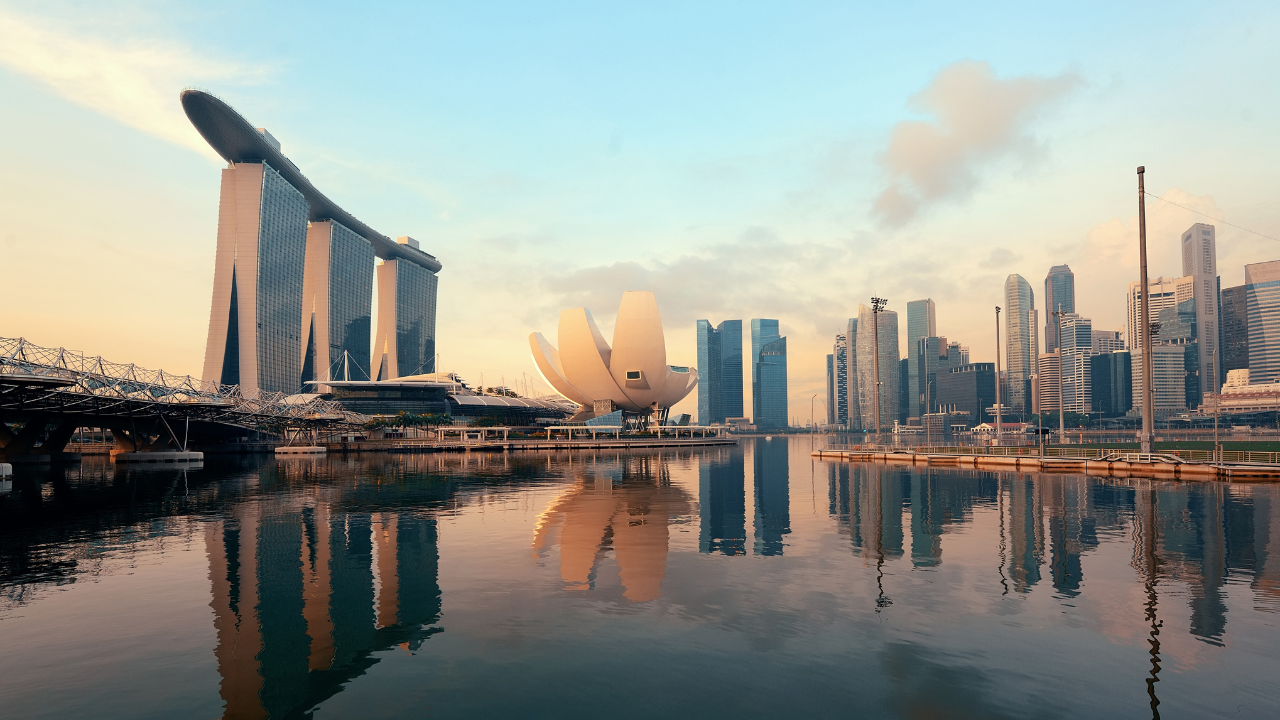
Singapore has emerged as the most expensive flexible office market in Asia Pacific, according to Workthere’s newly released Flexmark 5.0 report. Prime desks in the city-state average about US$800 per month, reflecting strong demand linked to its role as a regional headquarters hub and the concentration of premium, centrally located workspace.
Globally, Singapore stands in 12th place, far behind the world’s most costly markets.

London remains the priciest flex destination at roughly US$1,320 per desk per month, followed by New York (US$1,240), Los Angeles (US$1,100), Dubai (US$1,089), and Riyadh (US$1,066), according to Edge Prop.
Across Asia Pacific, Tokyo and Sydney trail closely behind Singapore, both posting desk rates just under US$800. Hong Kong and Beijing rank next, averaging around US$700 and US$600 respectively.

At the more affordable end, emerging Southeast Asian cities such as Ho Chi Minh City (US$315), Kuala Lumpur (US$242), and Bangkok (US$200) offer significantly lower price points.
Occupancy Normalizes but Attendance Climbs
Workthere’s survey (spanning 149 providers and Savills professionals) shows global flex occupancy stabilizing after post-pandemic highs.
Private offices averaged 81% occupancy in 2025, while shared coworking spaces reached 65%, easing from 2022 levels when firms sought short-term space amid uncertainty.
Despite this moderation, operators anticipate steady demand heading into 2026 as companies continue to seek flexibility in an uneven economic environment.

Attendance patterns tell a different story: members are showing up more frequently. Time spent in flexible offices has increased roughly 20% since 2022, driven by stronger return-to-office policies.
Asia Pacific stands out, with users present an average of 4.13 days per week — higher than any other region.
Multinationals Dominate APAC Flex Footprint
In Asia Pacific, global corporates account for 41% of flex office occupants, the largest share of any user group. Workthere’s research attributes this to multinationals using flexible space to secure a foothold quickly without locking in long-term leases.
Start-ups and SMEs represent 25% of APAC’s flex users, followed by scale-ups at 16% and national corporates at 15%.
Meeting Rooms, Phone Booths, and Collaboration Areas Rise in Importance
Amenities have become a critical differentiator as operators compete for members. Across global markets, meeting rooms and collaboration areas rank among the most essential features — mirroring the move toward hybrid and team-driven work.
Phone booths also remain highly valued, alongside flexible access options such as guest passes.
Regional tastes, however, diverge sharply. North American respondents place heavier emphasis on practical conveniences like parking and on-site gyms. In contrast, sustainability features carry significant weight in Asia Pacific and Europe, where most occupiers see environmental credentials as a key factor in location choice.
Operators Plan Expansion, but Strategies Split by Region
Eighty-five percent of providers surveyed intend to expand within the next year, reflecting ongoing confidence in the sector. The way operators grow, however, is changing.
In Asia, lease-led expansion is still the dominant model, with 56% of operators relying on traditional leasing to move quickly in markets like India, Vietnam, and Malaysia — areas seeing rising demand for global capability centers.
Europe is heading in the opposite direction. Providers there are increasingly adopting management agreements, allowing landlords to retain ownership while operators run the workspace for a share of revenue.
Use of these agreements has jumped from 45% in 2023 to 63% in 2025, and Workthere expects this model to spread further as both landlords and operators prioritize flexibility amid economic uncertainty.
Premium Design and Lifestyle Features Shape the Next Phase
Looking ahead, the sector is trending toward a “flight to quality.” High-end design, strong amenities, and lifestyle-focused offerings are becoming critical to attracting occupiers — especially companies trying to draw employees back into the office.