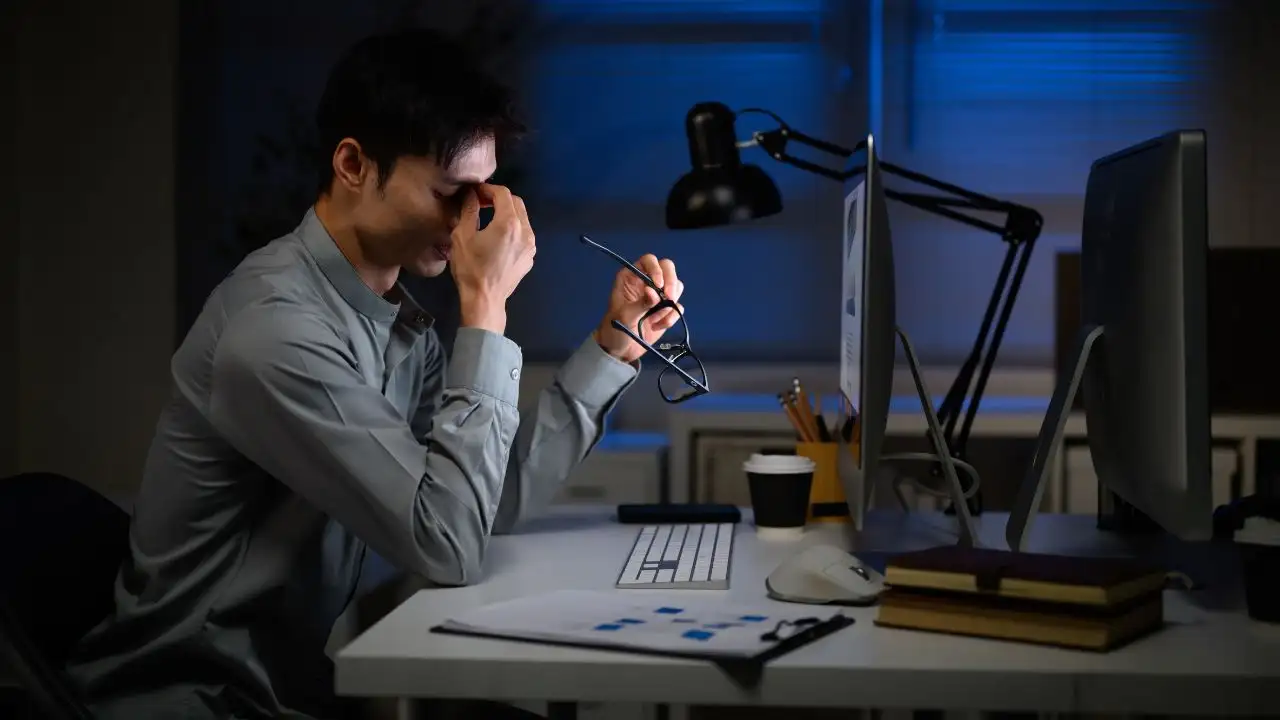
American workers are spending unprecedented time in front of screens, and the strain is showing up in productivity, absenteeism, and workforce well-being.
A survey from VSP Vision Care finds desk workers average 99.2 hours of screen time per week, up from 97 hours last year. On weekdays, they report spending 93% of their waking hours looking at screens. Non-desk workers are not far behind, logging 87.6 hours weekly, including more than 21 hours on a computer for work.

The findings point to a growing workforce health challenge as digital demands intensify across industries.
Digital Eye Strain Becomes a Productivity Issue
With screen exposure climbing, 67% of workers say they struggle with digital eye strain. The rate is higher among desk workers at 71%, compared with 59% of non-desk employees.

Symptoms include eye fatigue, blurred vision, headaches, and difficulty maintaining focus. Workers who report screen-related visual discomfort say it reduces their productivity by 18.6% on average, or 7.4 hours per week, nearly a full workday.
Absenteeism is also rising. One in four employees say they have taken time off due to digital eye strain, averaging 4.5 days per year.
The strain extends beyond work output. Nearly half of affected workers say it reduces their overall quality of life and contributes to irritability and fatigue.
Eye Health Concerns Are Increasing
Two-thirds of employees report having at least one eye issue. Among desk workers, the rate has risen steadily year over year, increasing from 50% two years ago to 63% last year and 67% this year.

Nearly half of workers believe their job negatively affects their eye health. Excessive screen time, poor lighting, and improper workstation setup are frequently cited factors.
The impact is not limited to office settings. Non-desk workers also report high levels of screen exposure, driven in part by mobile device and television use.
Late-night screen habits add to the problem. Ninety-six percent of employees look at a screen before bed, and 73% believe it disrupts their sleep, with more than half saying it affects next-day productivity.
Leadership Awareness Lags Behind
Despite the scale of the issue, only 25% of employees believe their employer cares deeply about their eye health. While 82% of leaders describe their workplace as eye-friendly, just 56% of employees agree.
Basic preventive measures are not widespread. Only 34% of workers say their employer encourages eye breaks, and 32% report receiving guidance on minimizing visual strain. Less than half say their company promotes protective eyewear.
At the same time, HR leaders acknowledge the problem. Ninety-five percent believe digital eye strain reduces productivity, and 87% say their company should do more to address it.
Workforce Strategy and Benefits
Vision coverage is emerging as both a health and talent issue. Ninety-four percent of employees say vision benefits are important, and 78% would be more likely to accept a job with an employer that offers them. Among workers without vision coverage, 60% say they are considering leaving for a company that does.
Most employers report offering vision plans, and nearly all organizations that do not currently provide coverage say they plan to add it.
The Future of Work and Digital Exposure
As hybrid and technology-driven work models expand, screen exposure has become a structural feature of modern employment rather than a temporary condition.
The data suggests digital eye strain is no longer a personal inconvenience but a workforce performance issue. With productivity losses approaching a full day per week for affected employees, organizations face mounting pressure to address screen-related health risks as part of broader workforce strategy.
In an economy increasingly dependent on digital labor, visual health may become a defining factor in sustaining performance and retention.