
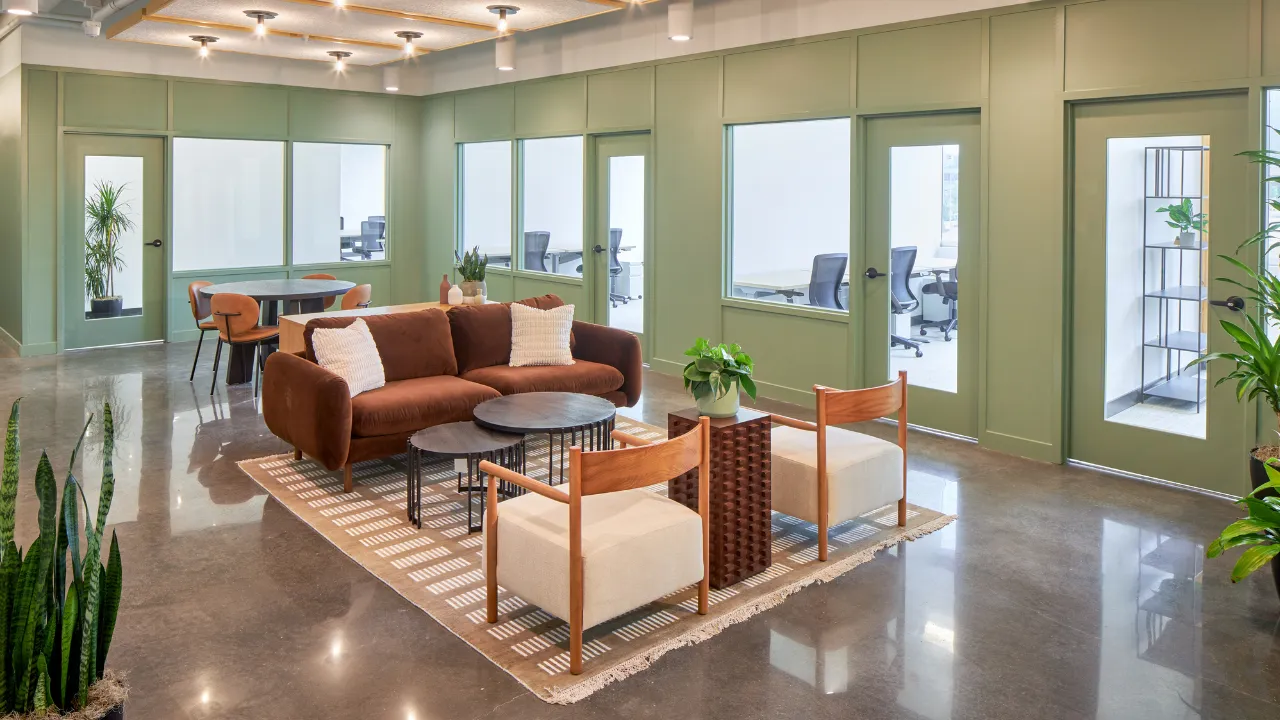
The physical office must provide what the screen cannot: a sensory depth that is fundamentally human. When an organization aligns its physical environment with these natural human senses, it stops treating design as an aesthetic luxury and starts utilizing it as a critical business tool.
Achieving this requires addressing our current digital saturation. People are constantly inundated with screens, and the public is waking up to the drawbacks of an entirely digital existence.

Data from the Pew Research Center reveals 41% of U.S. adults now report being online “almost constantly,” driving a widespread cultural wave of tech burnout, digital exhaustion and information overload.
This exhaustion indicates a broader cultural fatigue. Across the globe, consumers are actively pushing back against screen addiction. Demand for app-blocking software has surged, and sales of basic “dumbphones” have risen as people try to unplug from constant notifications and reclaim their attention spans.

People are craving analog experiences that engage their human senses and keep them present in the moment. The physical workplace has an opportunity to step into this void, transforming from a destination of mere administrative obligation into a sensory sanctuary.
Workplace metrics strongly support this. Gensler’s Global Workplace Survey revealed that just 14% of the global workforce desires a traditional corporate workplace experience. Instead, employees are craving spaces that feel like “nature retreats,” “creative labs” and “residential experiences” rooted in varied sensory textures.
To close this gap, a true return to the physical office requires an environment that honors human diversity. A human approach to workplace design means moving away from a single, standardized floor plan and instead offering distinct sensory landscapes. By providing high-sensory energetic hubs alongside low-sensory, dimly lit, tactically muted sanctuaries, companies create an inclusive ecosystem where all employees can thrive.
Ultimately, when people feel physically and cognitively supported by their surroundings, the corporate dividends naturally follow. Aligning space with human biology is the mechanism that unlocks deep focus, increased productivity, talent retention and that elusive, vital sense of genuine belonging.

Sight: The Office as a Cognitive Cleanse
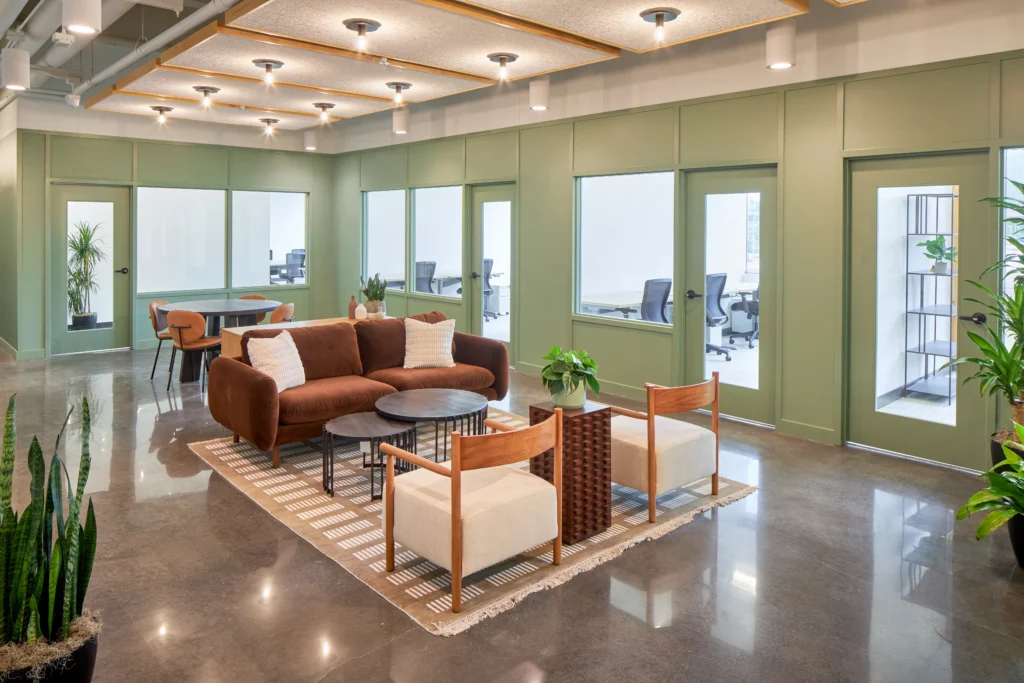
While common workplace narratives suggest the office must simply look pretty or feel more residential to compete with the home, the reality is more complex. The domestic environment is often a minefield of distractions that constantly interrupt deep focus. Visual beauty is important, but a true cognitive cleanse requires an environment designed to lower overall mental fatigue.
Visual design in the office has moved past corporate branding colors and uniform lighting. Today, visual strategy focuses on human biology, specifically supporting circadian rhythms, user-controlled lighting levels and a connection to nature. Exposure to appropriate color temperatures throughout the day improves sleep quality and daytime alertness.
Offices are replacing harsh, uniform grids with layered, intelligent lighting systems that mimic natural daylight shifts and incorporate specialized dimming components. Additionally, embedding diverse greenery, varied textures and views of nature can reduce cognitive fatigue. When these environmental elements are balanced, the office ceases to be a destination of obligation and becomes a curated landscape engineered to restore deep focus.
Touch: Prioritizing High-Touch Surfaces
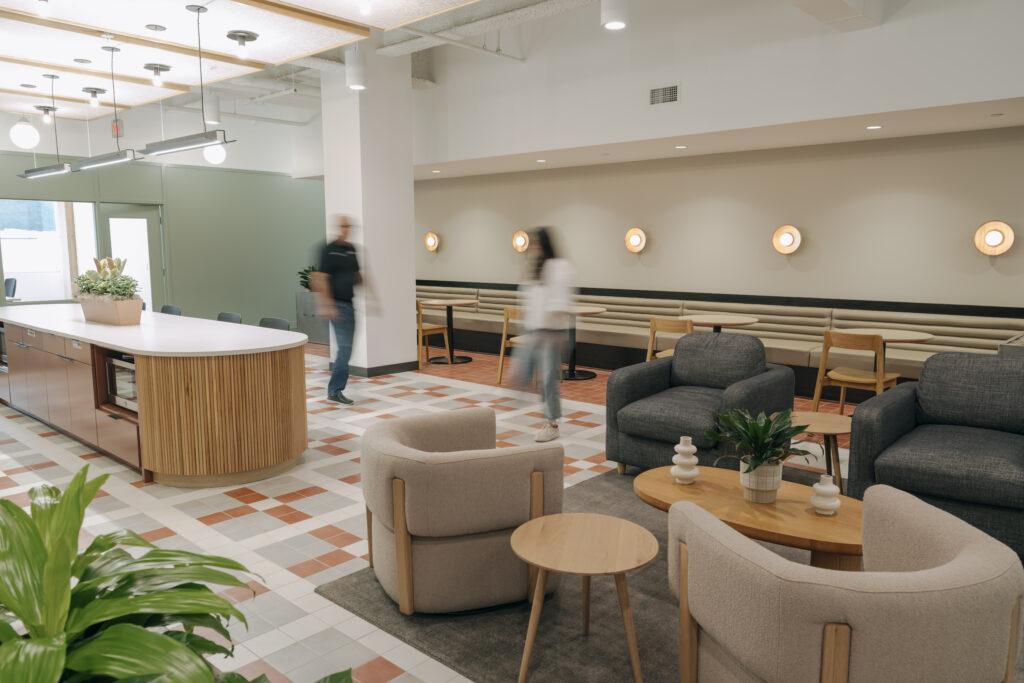
Commercial real estate can easily skew sterile, dominated by cold synthetics, laminate surfaces and rows of uniform drywall designed purely for durability, cleanability and efficiency. While functional, prioritizing these elements alone strips away the human context. In a world dominated by smooth glass smartphone screens and plastic keyboards, tactile variety has become a premium commodity.
The workplace provides an opportunity to reintroduce analog touchpoints that ground employees in their physical surroundings.
Designers are prioritizing high-touch surfaces in communal areas. This includes elements like real wood conference tables, leather-wrapped door hardware, textured bronze toggle-style switches, natural stone elements and embroidered patterns on soft seating upholstery.
Dedicated spaces, such as device-free libraries or analog brainstorming rooms with physical whiteboards, paper journals and natural wood finishes in designated Zen rooms, offer a tactile break from digital saturation.
These materials feel substantial, signaling quality and permanence to anyone interacting with the space. Touch can bring us back to the present and signal a shift to ideation, collaboration and focus on the actual task at hand.
Sound: Acoustic Zoning
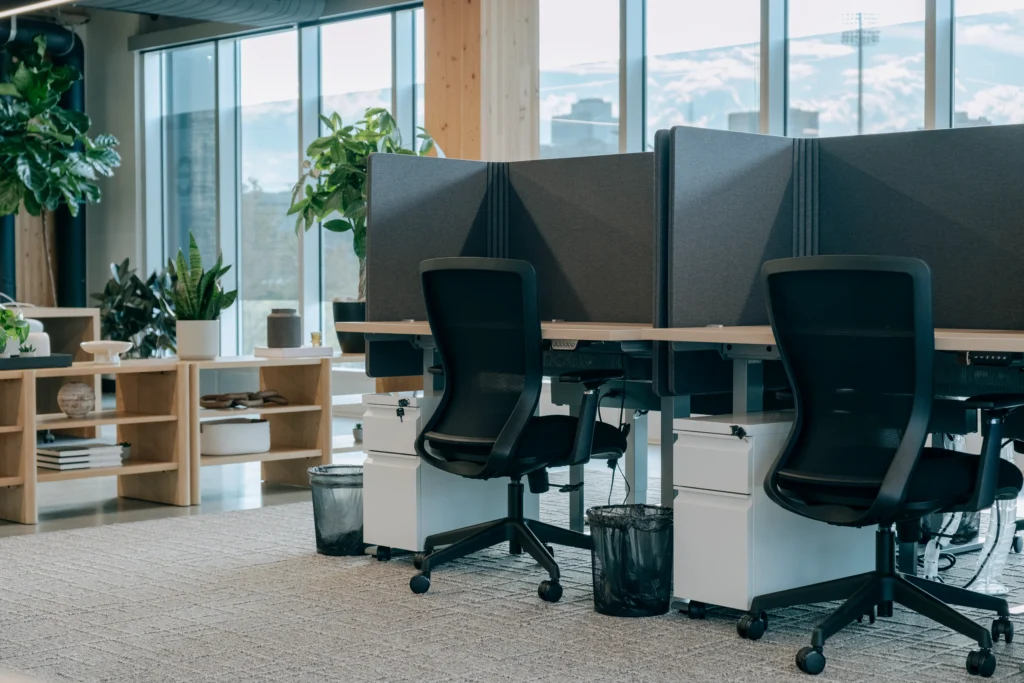
The open-plan office has long suffered from acoustic issues, usually swinging between distracting noise and eerie silence. The modern approach abandons the quest for absolute quiet, aiming instead for intentional soundscapes.
Human focus is deeply personal. For instance, when I write, I often need to be in a coffee shop with a vibrant, energetic buzz all around me, yet I pair that with lyricless classical music in my headphones to anchor my attention. The takeaway is that we cannot design an office around a single auditory standard. We must build a spectrum of spaces that offer autonomy, and that explicitly includes acoustics.
Acoustic strategy can also include matching sound to the specific function of a zone. In focus areas, sound-masking technology introduces pink noise to muffle ambient speech and signal the nervous system to settle into deep work. In collaborative zones, biophilic audio, such as the subtle sound of running water or soft birdsong, creates a calming backdrop.
This variation allows employees to intuitively navigate the office based on their immediate tasks, providing true choice in how they use their environment.
Taste: Not Gimmicks
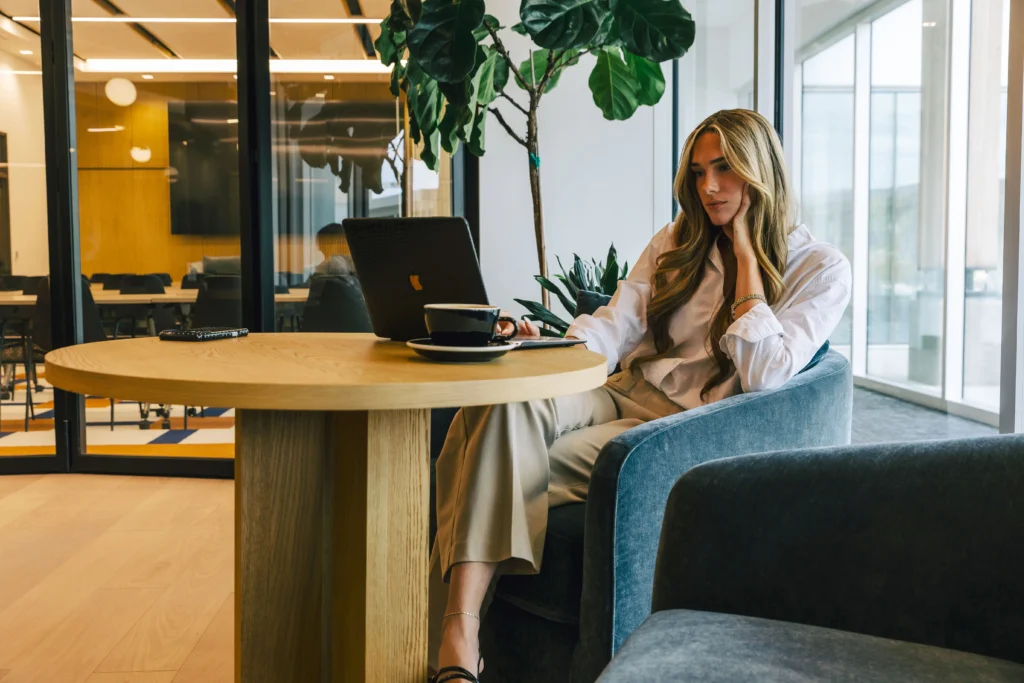
Food and beverage offerings have evolved far beyond the standard office coffee pot and a vending machine in a back room. Today, the culinary experience is a primary driver of office attendance, and food has long been a backbone of community.
However, treating food and beverage options merely as bait to drive up badge swipes is a short-term gimmick that fails to build long-term culture. The true value of corporate hospitality lies in facilitating the sensory ritual of a pause.
Premium espresso bars staffed by baristas serve as natural collision points for spontaneous collaboration, while automated, curated vending options provide healthy, high-quality meals for hybrid workers. Additionally, programmed community food events, such as pop-ups featuring local chefs or seasonal tastings, turn the office into a cultural hub.
The value of these experiences is the physical act of stepping away from a desk, holding a warm ceramic cup, changing physical posture and watching a craft take place. It provides a necessary mental circuit-breaker, pulling employees out of digital loops and returning them to their work refreshed.
Smell: The Subconscious Anchor
Olfactory design is a powerful yet frequently underutilized tool for workplace engagement. Smell connects directly to the brain’s limbic system, which governs memory and emotion.
Deploying a high-end, hospitality-style signature scent in the main reception or elevator lobby is a fantastic option for immediate brand connection. However, workplace strategists must look beyond the front door and extend subtle ambient scents into distinct zones, while simultaneously utilizing advanced air purification to guarantee excellent indoor air quality.
Executing this successfully requires careful calibration, and getting the diffusion percentage exactly right is critical. Overloading a room can trigger scent sensitivities. The goal is to provide a subtle ambiance that works on a subconscious level.
If a crisp citrus or eucalyptus scent is kept faint but localized to active collaboration zones, it promotes mental alertness. Conversely, pairing quiet focus areas with softer, grounding scents like subtle cedar or amber gently guides the nervous system through different cognitive mindsets throughout the day.
Personally, I have found burning palo santo wood right before diving into a deep focus session creates a ritual that helps frame the intention of the time and space.
The Workplace Differentiator
Ultimately, a physical workspace succeeds when it stops trying to compete with digital tools and starts focusing on what it does best: housing human experiences. Investing in sensory design is not only for high-end hospitality; it is about engineering an asset that prioritizes health and wellness.
When an organization aligns its physical environment with the natural senses, employees feel supported, sustained and energized. The return on this investment is a thriving workspace that transforms real estate overhead into corporate dividends, unlocking measurable talent retention, maximized asset performance and a profound sense of human belonging.