




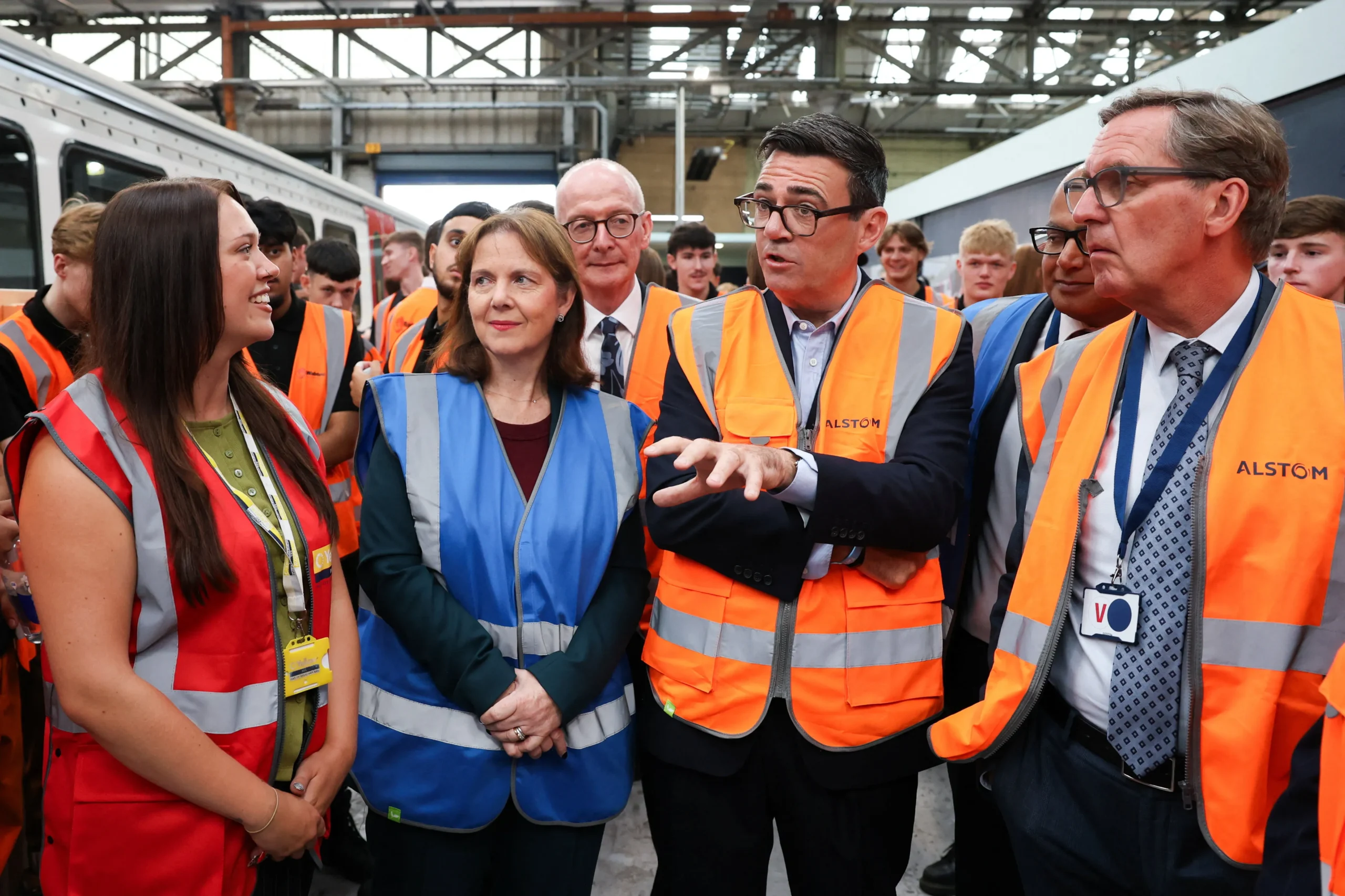
Britain’s new Prime Minister Andy Burnham on Tuesday outlined plans to align technical education and training for young people with local employment needs, seeking to tackle rising youth unemployment by preparing people for an AI-driven future.
Britain has faced a worsening youth employment crisis since the COVID-19 pandemic, with more than a million 16-to-24-year-olds not in education, employment or training.

For 18-to-24-year-olds, the percentage of so-called NEETs is 15.8%, more than triple that in the Netherlands, a country ministers have increasingly cited as a model for reform.
Burnham’s government, seeking to produce results quickly after a decade of political instability and stagnant living standards, says advances in artificial intelligence are changing the types of jobs available, increasing demand for new technical skills and giving “new life” to traditional trades.

As part of the overhaul, the government unveiled a new apprenticeship bursary worth up to £4,500 ($5,980) and £287 million of funding for more than 22,000 additional college places.
New Routes To Work
In an article for the Times, Burnham said Britain had become too focused on university as the main route to success.
Under his plans, pupils in England will be able to study core subjects such as English, maths and science alongside technical qualifications, work experience and employer-led projects. He hopes that regional authorities, schools, colleges and businesses will help design programmes around local labour market needs, with a national rollout planned from 2028.
Ministers said measures announced by Burnham on Tuesday, together with apprenticeship reforms unveiled earlier this year under his predecessor Keir Starmer, would help deliver 50,000 additional youth apprenticeships by the end of the parliament.

While several business lobby groups welcomed the announcement, the Institute for Fiscal Studies warned that repeated overhauls of technical education had created disruption and that securing employer involvement would be crucial to the plans’ success.
In May, a government-commissioned review had warned that Britain risked creating a “lost generation” of young people.
Last month, Work and Pensions Secretary Pat McFadden visited Dutch youth employment centres, known as Jongerenpunt, before announcing plans to open almost 180 new “Youth Hubs” to bring together employment, education, welfare and health support in a single location.
McFadden told Sky News on Tuesday the advance of AI meant that a country that had traditionally lagged its northern European peers in creating vocational routes into employment needed to change.
“Perhaps the assumptions about what was a safe and secure job in the past no longer apply today,” he told Sky News. “This is a general-purpose technology. It will both destroy jobs and create jobs.”
Burnham’s plans build on efforts by previous governments to strengthen technical education, including T-level qualifications introduced under Theresa May, skills and apprenticeship reforms under Boris Johnson, and measures under Starmer aimed at improving links between employers and education providers.
($1 = 0.7529 pounds)
(Reporting by Sam Tabahriti, additional reporting by David Milliken, editing by Andrei Khalip, Alexandra Hudson)