Key takeaways
- Hybrid working has raised the bar for the physical workplace, making experience increasingly important to attendance and engagement, with 86% of employees now working from more than one location, according to Leesman.
- The most effective offices combine functionality with spaces that support connection, collaboration, wellbeing and culture, an approach reflected in Area’s 360 Workplace data, which found 93% of employees felt their new office supported wellbeing and 78% said it supported company culture.
- As AI takes on more routine work, workplaces will need to support the human activities that become more valuable, from creativity to learning and relationships, with Gensler research finding the heaviest AI users are also among the most collaborative employees.
For most of the last century, offices were designed around one question: how many people can we fit in, and how efficiently can they work? Desks were arranged in rows, meeting rooms booked by the hour. The building was a container for output.

That question no longer holds up. Hybrid work has given employees a genuine choice about where they spend their day. When they choose the office, it isn’t because a policy requires it. It’s because something there is worth showing up for. If there isn’t, attendance erodes, no matter what the calendar says.
A different kind of competition
Employers now compete with something they can’t redesign: home. A spare room with good lighting and full control of the thermostat is a real alternative to a desk on an open-plan floor. To win that comparison, the office has to offer something home cannot, whether that’s spontaneous collaboration, mentorship, or simply a change of scene.

Workplace experience firm Leesman has found that 86% of employees now regularly work from more than one location, a sign hybrid patterns are the default rather than the exception. An office designed around a single mode of attendance is already out of step with how most people work.
What “experience” actually means
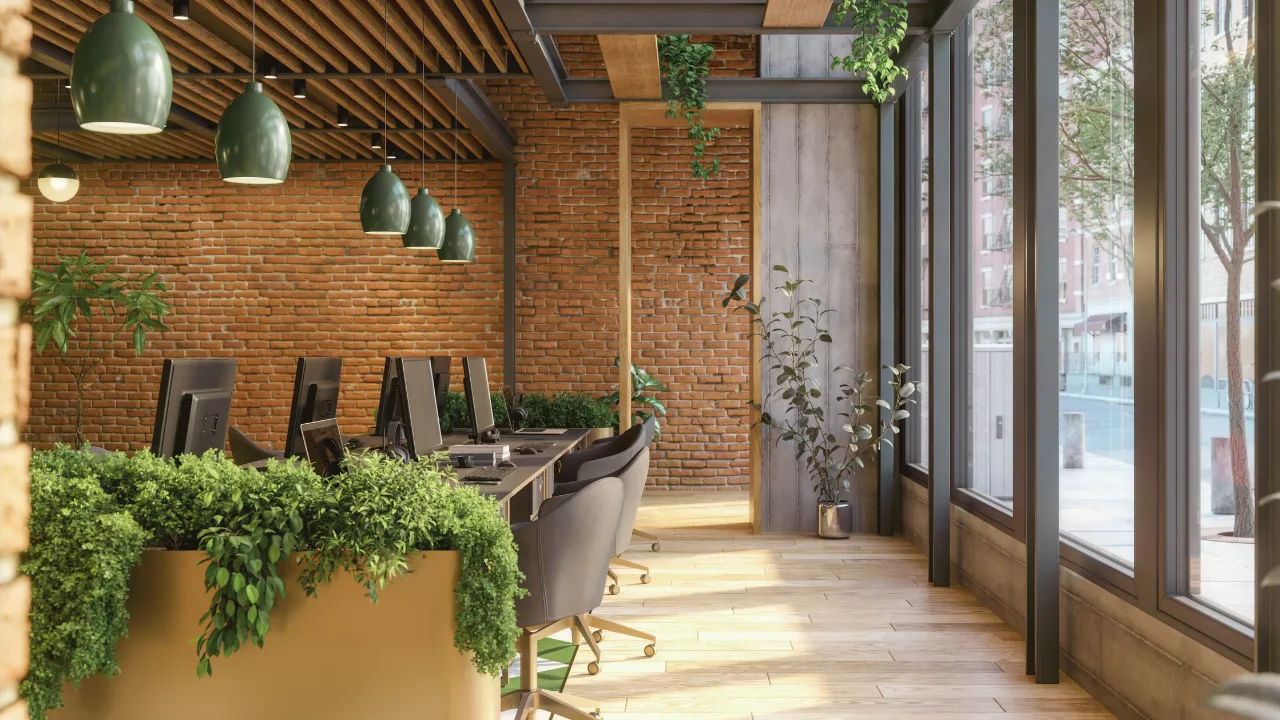
“Experience” can sound like a vague design buzzword, so it’s worth being specific. In practice, it means natural light, acoustics, materials, greenery, and the informal spots where people bump into colleagues rather than book time with them.
A recent project for Suntory Beverage & Food GB&I is a useful example. The brief wasn’t to make the office look impressive; it was to translate the company’s brand and Japanese heritage into a physical environment, using natural materials, warm timber and a social hub built around everyday interactions like lunch and informal catch-ups. The building’s job is to carry the culture, not just house the staff.
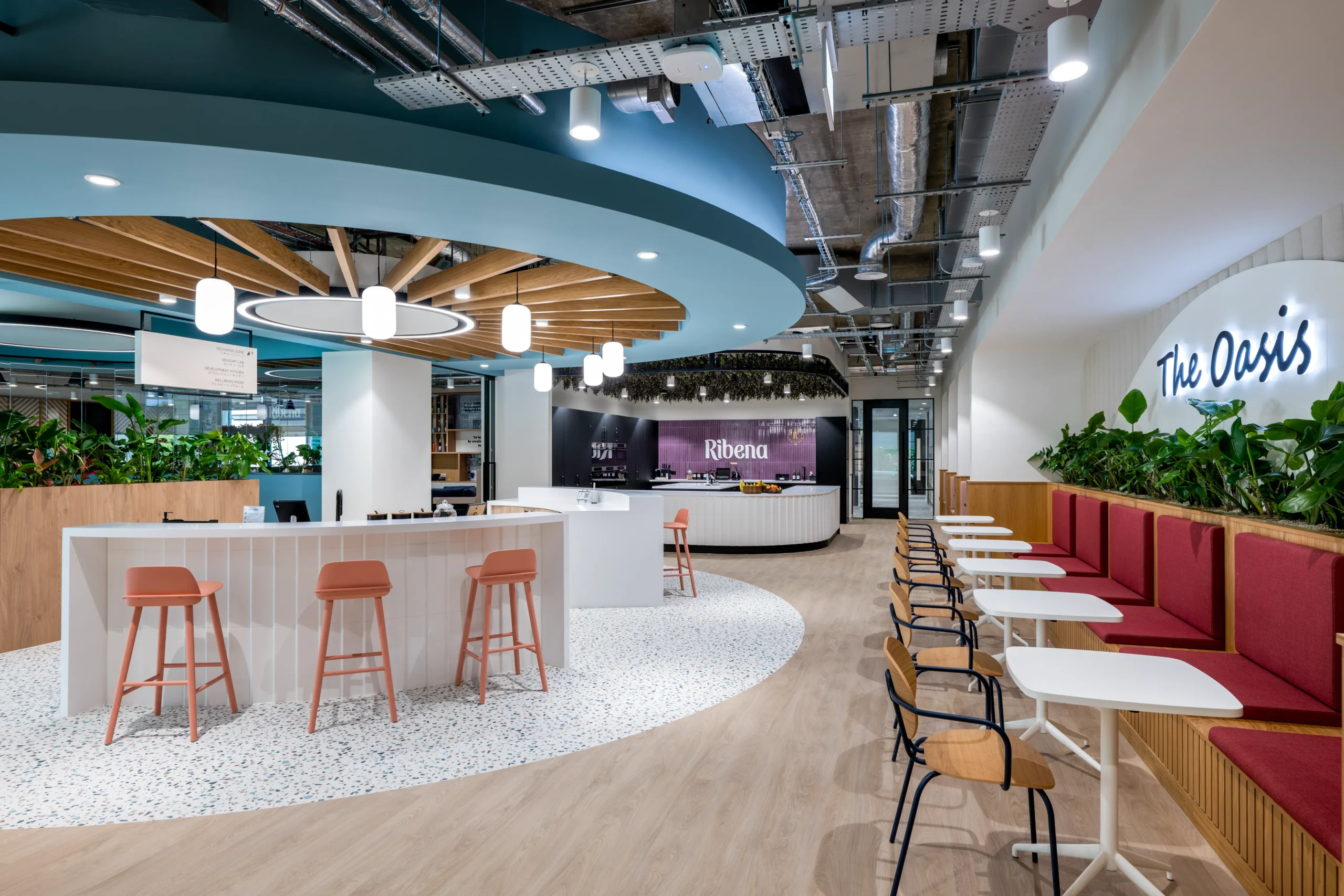
That kind of thinking has more in common with hospitality than traditional corporate real estate. Employees increasingly judge an office the way they’d judge a hotel lobby: does it feel considered, or left over from a previous era of work?

What the data shows
The link between office design and how people feel about their work isn’t just anecdotal. A recent survey from 360 Workplace found that 89% of respondents said that when their office space was designed around ways of working and team dynamics, it met their needs for working effectively, and 93% said the space made productivity easier. Offices designed around specific ways of working and team dynamics scored an average satisfaction rating of 4.5 out of 5 overall.
The wellbeing and culture numbers were similarly strong: 93% said their new workspace promoted health and wellbeing, and 78% said it supported company culture. Sixty percent said they enjoyed coming into their new office more than their previous one.
There’s a reputational dimension, too. 75% of respondents believed their new workplace would improve how the business was perceived, and 67% said it would make the company a more attractive employer, suggesting design now functions as an external signal as much as an internal amenity.
AI is raising the stakes, not lowering them
There’s a temptation to assume that as AI takes on more routine and analytical work, physical space matters less. The opposite looks to be true.
Research from Gensler in 2026 found that employees who make the heaviest use of AI tools are also among the most collaborative, suggesting AI is increasing the need for human interaction rather than replacing it. As repetitive tasks get automated, the office becomes the place where judgment, mentoring and creative problem-solving happen, work that still depends on people being in the same room.
Area’s work with organizations such as Databricks and AMD highlights this. These projects combine focused work settings, collaborative project spaces, social environments and client engagement areas within a single workplace ecosystem, recognizing that high-growth AI businesses operate across multiple modes of work simultaneously.
Gensler’s research also points to a business case: employees in workplaces they rate highly are nearly three times more likely to say they intend to stay with their employer than those in poorly rated environments. Design is no longer just a facilities line item; it’s a retention lever.
Culture can’t be scheduled
The harder challenge for organizations with distributed teams is that culture doesn’t build through policy memos or all-hands meetings. It builds through small, unplanned moments: a conversation over coffee, help offered on a tricky problem, people staying an extra ten minutes because the conversation was worth having.
Space plays a direct role in whether those moments happen. Shared amenities and areas that give people a reason to linger, rather than pass through, create more chances for that kind of connection than a floor of identical desks ever will.
The measure of success is changing
Occupancy rates and desk counts will keep getting tracked, but they’re a poor proxy for whether a workplace strategy is working. The better question is whether people who could work from anywhere are choosing to come in, and whether they leave better off for having done so.
That’s a change in how organizations need to think about real estate: not as square footage to be filled, but as a tool for building the culture and connection that’s increasingly hard to manufacture any other way.