



I’ve said this before on the show: the future of work isn’t only about AI, policy, or office design — it’s about nervous systems. If our people are fried, none of the “future” happens.
That’s why I invited Kurtis Lee Thomas, founder of Breathwork Detox and the Just Breathe Foundation, to the Future Of Work Podcast. He works with teams from NASA to Nike and was voted #1 Employee Wellbeing Provider by HR Magazine.

I came in curious, and a little skeptical.
I left with a toolkit and a new belief: wellbeing is business infrastructure.

Here are five science-backed ways that I learned breathwork can help you reset, recharge, and rethink what well-being at work really means.
Don’t forget to pick up your micro-toolkit, or watch the episode video at the bottom of this article, where you can learn a few breathing techniques to help relieve stress.
1) Burnout isn’t a vibes problem — it’s an operations problem
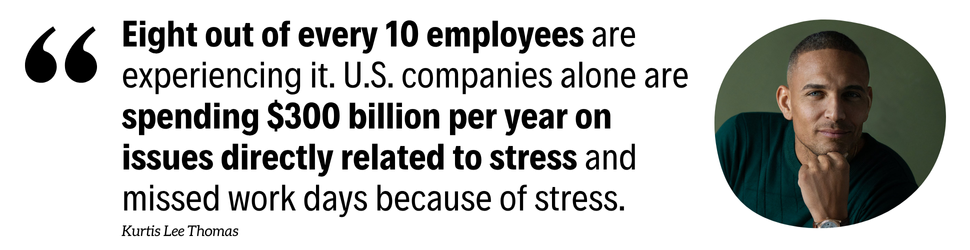
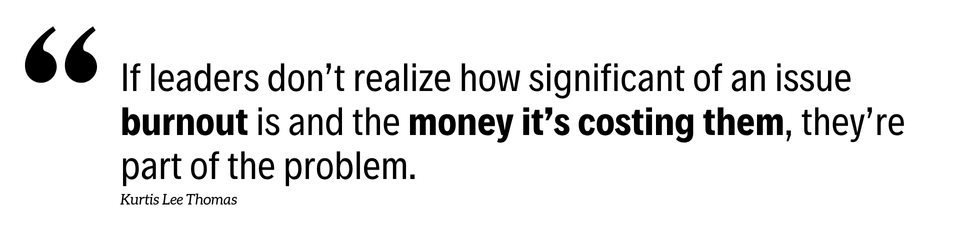
We talk about burnout like it’s a personal failure. It isn’t. It’s a systems issue that shows up in people. Kurtis reminded me of a brutal stat: stress costs U.S. companies hundreds of billions every year in absenteeism, turnover, and reduced performance. Add downsizing, “do more with less,” and the infinite workday — and you’ve got a perfect storm.
My takeaway: Leaders who treat burnout like a private struggle will lose talent. Leaders who treat it like a business risk will build loyalty, creativity, and retention.

Try this (today): In your next team meeting, ask one operational question: “What process or expectation is burning us out?” Change one thing you control this month.
 2) Trauma hides in the body and shows up at work
I used to think “trauma” was too big a word for the workplace.
Kurtis reframed it: our bodies store unresolved stress — from childhood slights to adult crises — and it leaks into focus, patience, and decision-making. You don’t have to believe in chakras to recognize shoulder armor, clenched jaws, and shallow breaths in a Tuesday standup.
My takeaway: If the body keeps the score, the workplace keeps the tab. Somatic tools belong in leadership training as much as feedback frameworks.
Try this (60 seconds): Do three deliberate sighs. Inhale through the nose, long audible exhale through the mouth. Repeat x3. Each sigh releases a layer of pressure. It’s the body’s built-in pressure valve — use it.
 3) Breathwork is the on-ramp, not the circus
A lot of “wellness” at work has been beanbags and slogans.
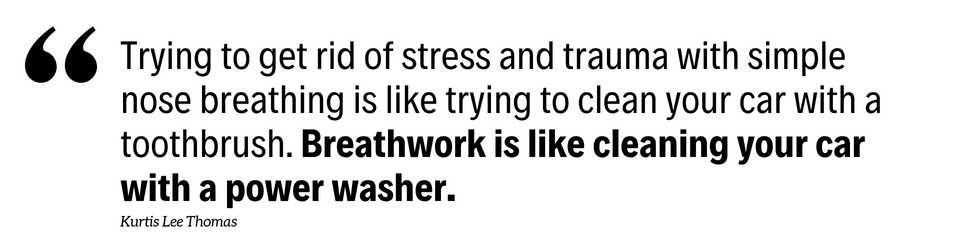
Breathwork is the opposite: simple, physiological, measurable. Kurtis calls his method Breathwork Detox: a deep clean first, then lighter “maintenance” techniques. Think power washer, then toothbrush.
My takeaway: Start with the least one thing that actually changes state fast.
Try this (anywhere, quietly): Box Breathing (4-4-4-4)
- Breathe in through the nose for a count of 4
- Hold for 4
- Exhale for 4
- Hold empty for 4
- Repeat for 1–2 minutes.
Navy SEALs use it to regulate stress. Your team can, too.
 4) Wellbeing must be modeled at the top
Manager burnout is at an all-time high, with nearly half of U.S. middle managers experiencing it, according to LinkedIn’s recent Workforce Confidence survey.
This impacts both managers and their teams, as 30% of employees report their bosses are too stressed to offer adequate support.
If leaders don’t regulate themselves, the team inherits their urgency, anxiety, and reactivity. Kurtis told me about C-suite skeptics who became champions after feeling the reset. When leaders shift, cultures follow.
My takeaway: Policy without modeling is theater. If you want people to breathe, breathe in public.
Try this (meeting hygiene): Start the next all-hands with 30 seconds of guided breaths. It’s awkward the first time. By week three, it’s just how you begin — calm, present, human.
 5) The future workplace will measure recovery — not just output
We’ve optimized calendars, tools, and floor plans.
The next edge is nervous system literacy: HRV (heart rate variability), recovery windows, and psychologically safe “reset zones.” Kurtis predicts breathwork booths will be as common as phone booths. I’m here for it.
My takeaway: If we can instrument sales funnels and server uptime, we can instrument recovery habits. Output follows recovery.
Try this (pilot): Create a “Reset Menu” on Slack or a wall poster:
- 60-Second Sighs (x3)
- Box Breathing (2 minutes)
- 5-Minute Walk & Water
- 10-Minute Silent Room / Breathwork Booth
Track voluntary usage and pulse-check mood/clarity afterward. Share wins.
What changed for me
I walked into this episode wanting a tactic.
I walked out with a standard: wellbeing is infrastructure. It’s not the soft stuff; it’s the stuff that makes the hard stuff possible.
And yes — I’ve started sighing on purpose. Loudly.
Micro-Toolkit You Can Screenshot
- Three Sighs: Nose in → loud mouth out, x3
- Box Breathing: 4 in / 4 hold / 4 out / 4 hold, 1–2 minutes
- Team Ritual: 30-second breath at the start of meetings
- Weekly Habit: One walking 1:1 — no agenda, just decompression
🎧 Listen to the full episode: How To Catch a Breath in the Age of Burnout with Kurtis Lee Thomas — on Apple Podcasts, Spotify, and everywhere you listen.
📰 Get more like this: Subscribe to The Future of Work Newsletter — exclusive expert insights, practical playbooks, and the human side of progress, every week.