

Advertisements
Your Brand Deserves The Spotlight - Advertise With Us - Allwork.Space
  • Marketplace
  • Resources
  • Business Directory
  • Events
  • Advertise
  • Publish a Press Release
  • Submit Your Story | Get Featured
  • Get the Newsletter
  • Contact
  • About Us
The FUTURE OF WORK® since 2003
Allwork.Space
No Result
View All Result
Subscribe
  • Submit Your StoryNew
  • More
    • Columnists
      • Dr. Gleb Tsipursky – The Office Whisperer
      • Nirit Cohen – WorkFutures
      • Angela Howard – Culture Expert
      • Drew Jones – Design & Innovation
      • Jonathan Price – CRE & Flex Expert
    • Get the Newsletter
    • Events
    • Advertise With Us
    • Publish a Press Release
    • Brand PulseNew
    • Partner Portal
  • Latest News
  • Business
  • Leadership
  • Work-life
  • Career Growth
  • Tech
  • Design
  • Workforce
  • Coworking
  • CRE
  • Podcast
  • Submit Your StoryNew
  • More
    • Columnists
      • Dr. Gleb Tsipursky – The Office Whisperer
      • Nirit Cohen – WorkFutures
      • Angela Howard – Culture Expert
      • Drew Jones – Design & Innovation
      • Jonathan Price – CRE & Flex Expert
    • Get the Newsletter
    • Events
    • Advertise With Us
    • Publish a Press Release
    • Brand PulseNew
    • Partner Portal
  • Latest News
  • Business
  • Leadership
  • Work-life
  • Career Growth
  • Tech
  • Design
  • Workforce
  • Coworking
  • CRE
  • Podcast
No Result
View All Result
Subscribe
Allwork.Space
No Result
View All Result
Advertisements
Nexudus - Waste of Space? (Orange)
Home Work-life

Why Burnout Is A Workplace Design Problem, Not A Personal Weakness

Working parents and caregivers are reaching their limits, but new approaches to flexibility and belonging could redefine what healthy work looks like.

Emma AscottbyEmma Ascott
November 4, 2025
in Work-life
Reading Time: 4 mins read
A A
Why Burnout Is A Workplace Design Problem, Not A Personal Weakness

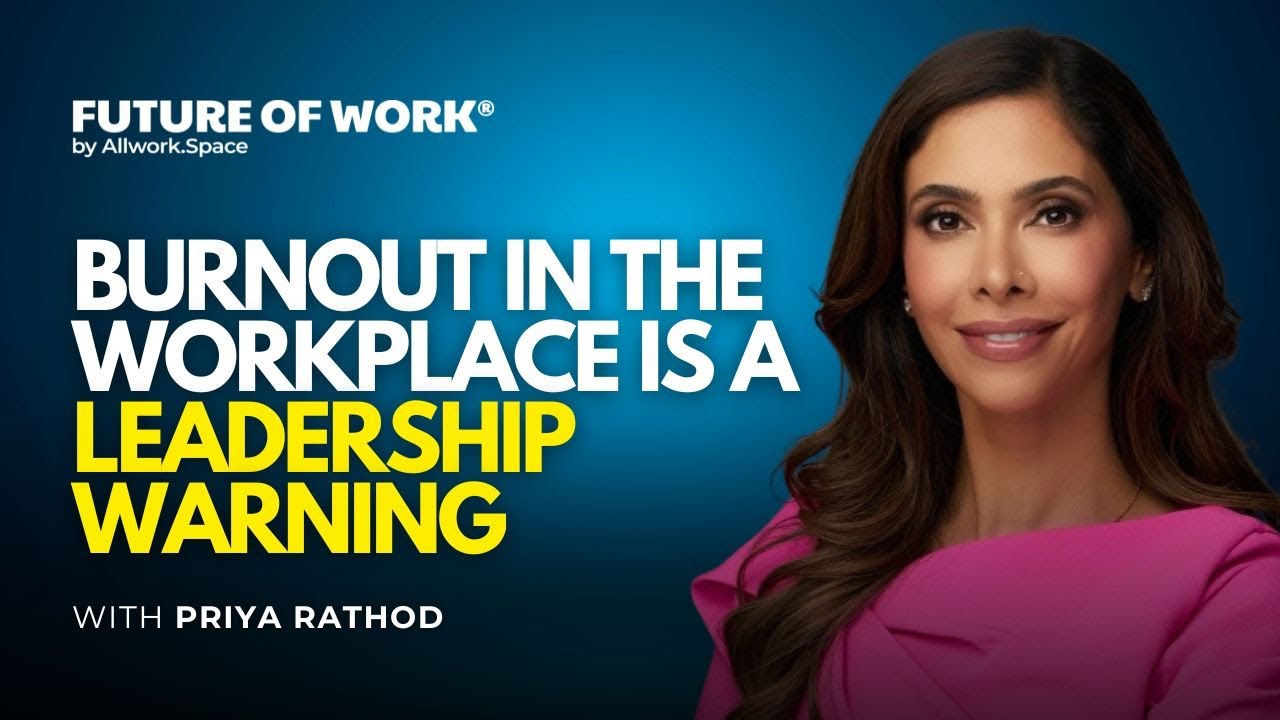
Priya Rathod says the key to ending burnout is redesigning work around trust, flexibility, and belonging — where people feel supported, energized, and able to thrive every day.

For years, burnout has been treated as an individual problem. Employees are told to build resilience, take yoga classes, or improve time management. 

Indeed Workplace Trends Editor Priya Rathod, who is also Co-Chair of Indeed’s Parents & Caregivers Inclusion Resource Group, believes this view misses the real issue. She joined us on The Future of Work Podcast to say burnout reflects a system that fails to support the realities of modern work and family life.

Advertisements
HUBS - Live Life, Work From Anywhere

“Life is hard right now,” she said during the podcast conversation. “We are trying to work hard, but also trying to raise families and be caregivers without a lot of systemic support.”

Her point aligns with Indeed’s Work Wellbeing data, which shows that only 26% of employees feel they are thriving at work. Employees who report low wellbeing are seven times more likely to experience regular stress. That stress translates into absenteeism, reduced productivity, and higher turnover.

Advertisements
Yardi Kube automates flex & coworking operations

The Real Drivers of Wellbeing at Work

Rathod’s research and experience show that employees thrive when they feel energized, included, and trusted. These three factors consistently outperform traditional perks or one-time wellness initiatives.

She says executives need to think about how they build trust, belonging, and energy into everyday management practices.

According to her, this means equipping managers to lead with empathy, listening to employees regularly, and making data-driven changes based on feedback. When companies measure employee sentiment and act on it, they build workplaces where people feel connected and valued.

Parents, Caregivers, and the Push for Flexibility

Rathod co-leads Indeed’s Parents & Caregivers Inclusion Resource Group, which launched just before the pandemic. The timing, she says, was “serendipitous.” As schools and childcare centers closed, the group became a vital support network for working families navigating a historic crisis.

Advertisements
Maximize Flexible Space Revenue

Since then, Indeed has expanded parental leave from four to six months and made it non-gendered, ensuring both parents have equal access. The company also provides backup childcare and virtual health services for families.

Rathod highlights flexibility as the single most important factor for caregivers. Many employees use “micro-shifting,” working in shorter blocks throughout the day to balance family and job responsibilities. This kind of flexibility, combined with hybrid or remote options, helps parents stay engaged and prevents talent loss. 

More stories for you

Leadership Expert Explains Why AI Can’t Save Teams From Bad Bosses — But EI Might

Leadership Expert Explains Why AI Can’t Save Teams From Bad Bosses — But EI Might

8 hours ago
Why Managed Workspaces Are the Future of Office Real Estate with Robert Schogger

Why Managed Workspaces Are the Future of Office Real Estate with Robert Schogger

9 hours ago
New Zealand Supreme Court Rules Uber Drivers Are Employees, Shaking Gig Economy

New Zealand Supreme Court Rules Uber Drivers Are Employees, Shaking Gig Economy

18 hours ago
Dyed hair and nail art ok! More Japanese firms relax rules in tussle for workers

As Talent Shortages Bite, Japanese Employers Relax Appearance Rules To Attract Young Workers

18 hours ago

During COVID, nearly two million women left the workforce due to a lack of flexibility. Policies like these can help close that gap.

Boundaries and Belonging as Everyday Practice

For Rathod, burnout prevention also involves intentional boundary-setting. She often blocks time on her calendar for school drop-offs, deep work, or rest. Indeed’s culture supports this by encouraging transparency around personal commitments, even at senior levels.

“It’s a type of boundary setting,” she said.

And when leaders model it, it gives permission for everyone else.

Small practices make a difference: short walks, quiet focus time, better sleep, and intentional breaks all contribute to sustainability. Rathod has even added a walking pad to her workspace to stay active during meetings.

These habits matter, but she emphasizes that they only work when the organization itself supports them. Burnout prevention, she says, must be a shared responsibility between employees and employers.

Advertisements
Build Your AI - Disaster Avoidance

How Employees Can Stay Engaged in a Shifting Market

In a slower labor market, many professionals are staying in their roles longer, a trend Rathod calls “job hugging.” While stability is valuable, she encourages workers to stay proactive by upskilling and developing AI literacy to stay competitive.

She also stresses the importance of soft skills such as adaptability, empathy, and emotional intelligence. These skills help employees succeed in an evolving workplace and remain relevant as technology advances.

A System Ready for Redesign

Burnout will not disappear through individual willpower alone. It requires workplaces that value human energy as much as output. Rathod’s perspective illustrates how flexibility, inclusion, and meaningful leadership can transform stress into sustainability.

When employees feel trusted and supported, they do more than stay employed. They grow, they innovate, and they thrive.


Advertisements
HUBS - Live Life, Work From Anywhere
Advertisements
Subscribe to the Future of Work Newsletter
Tags: FUTURE OF WORK® PodcastPriya RathodWorkforceWorklife balanceWorkplace Wellness
Share14Tweet9Share2
Emma Ascott

Emma Ascott

Emma Ascott is a contributing writer for Allwork.Space based in Phoenix, Arizona. She graduated from Walter Cronkite at Arizona State University with a bachelor’s degree in journalism and mass communication in 2021. Emma has written about a multitude of topics, such as the future of work, politics, social justice, money, tech, government meetings, breaking news and healthcare.

Other Stories Recommended For You

Leadership Expert Explains Why AI Can’t Save Teams From Bad Bosses — But EI Might
Leadership

Leadership Expert Explains Why AI Can’t Save Teams From Bad Bosses — But EI Might

byEmma Ascott
8 hours ago

Most employees would fire their boss, illustrating how badly leadership needs a human reset.

Read more
Why Managed Workspaces Are the Future of Office Real Estate with Robert Schogger

Why Managed Workspaces Are the Future of Office Real Estate with Robert Schogger

9 hours ago
New Zealand Supreme Court Rules Uber Drivers Are Employees, Shaking Gig Economy

New Zealand Supreme Court Rules Uber Drivers Are Employees, Shaking Gig Economy

18 hours ago
Dyed hair and nail art ok! More Japanese firms relax rules in tussle for workers

As Talent Shortages Bite, Japanese Employers Relax Appearance Rules To Attract Young Workers

18 hours ago
Advertisements
Nexudus - Tech Stack Lovers
Advertisements
Nexudus - Discount

Unlock your competitive edge in tomorrow's workplace.

Join a community of forward-thinking professionals who get exclusive access to the latest news, trends, and innovations that are shaping the future of work.

2025 Allwork.Space News Corporation. Exploring the Future Of Work® since 2003. All Rights Reserved

Advertise  Submit Your Story   Newsletters   Privacy Policy   Terms Of Use   About Us   Contact   Submit a Press Release   Brand Pulse   Podcast   Events   

No Result
View All Result
  • Home
  • Latest News
  • Topics
    • Business
    • Leadership
    • Work-life
    • Workforce
    • Career Growth
    • Design
    • Tech
    • Coworking
    • Marketing
    • CRE
  • Podcast
  • Events
  • About Us
  • Advertise | Media Kit
  • Submit Your Story
Subscribe

Welcome Back!

Login to your account below

Forgotten Password?

Retrieve your password

Please enter your username or email address to reset your password.

Log In
This website uses cookies. By continuing to use this website you are giving consent to cookies being used. Visit our Privacy and Cookie Policy.
-
00:00
00:00

Queue

Update Required Flash plugin
-
00:00
00:00