
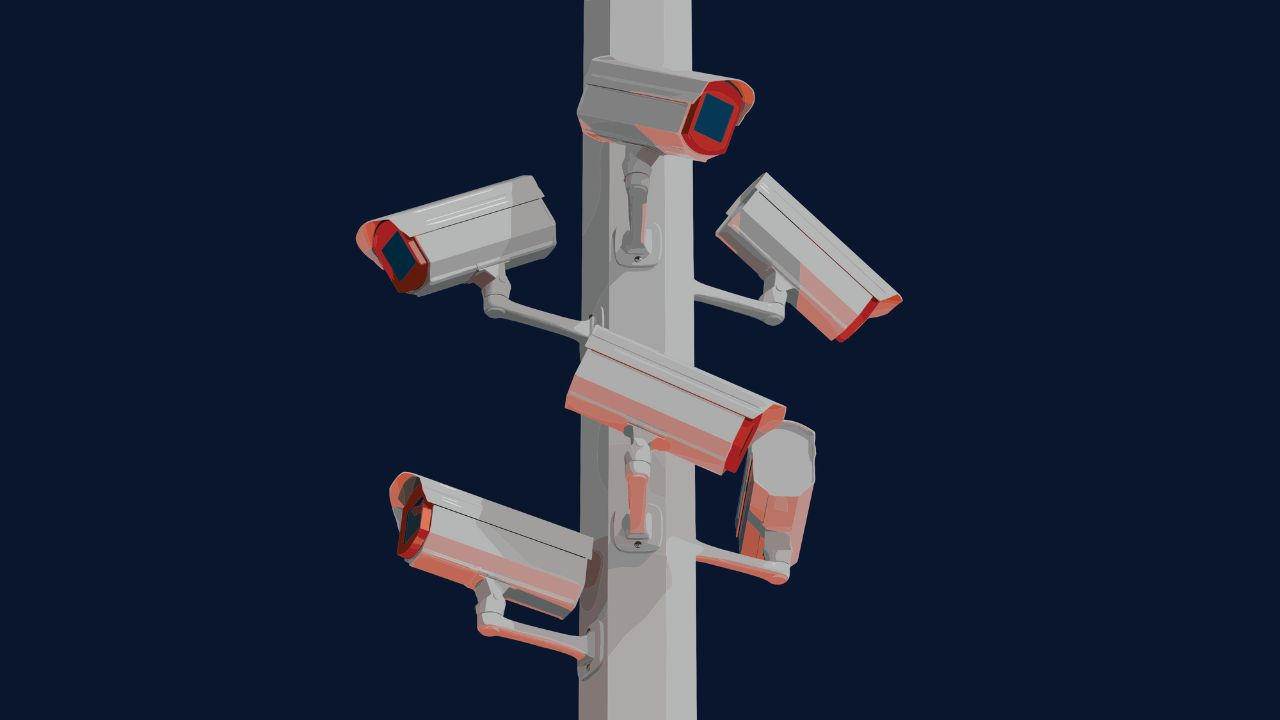
Leadership is getting exposed.
Not in the scandal sense, but in the systems sense.

The old playbook (authority, control, “do it because I said so”) might still get compliance, but it’s failing at the thing leaders actually need now: trust. And trust is the only “productivity metric” that holds up when teams are distributed, burned out, skeptical, and watching leadership decisions with a sharper eye than ever.
When I sat down with Selena Rezvani on the Future Of Work Podcast — a leadership speaker and bestselling author who trains leaders inside massive organizations — I walked away with a simple conclusion: the next era of leadership won’t be defined by how commanding you look. It’ll be defined by how human and useful you are.

Here are the lessons that stuck with me — the ones I’d bet on in 2026 and beyond.
1) The “boss image” is expired. Usefulness is the new authority
Selena put it bluntly: the days of “boss optics” and do it because I said so are over. What leaders are being asked to return to is “humanity and usefulness.”
That framing matters because it’s not soft. It’s functional.
A leader who is useful reduces friction. They remove blockers. They clarify priorities. They create conditions where people can do good work without playing politics just to stay safe. In a workplace where skepticism is high and optimism is fragile, usefulness becomes credibility, and credibility beats authority every time.

I also appreciated her reminder that many managers were trained to be a “stoic pillar,” unflappable, bulletproof. But people aren’t rocks. When leaders perform invulnerability, teams learn the wrong lesson: hide mistakes, don’t ask for help, don’t challenge the plan.
If you want stronger execution, you don’t need colder leaders. You need more human ones.
2) Psychological safety is built (or broken) in tiny moments
 One of the most practical parts of our conversation was how small the “safety signals” really are.
Selena described psychological safety as something you can feel instantly, especially when it’s missing. Her advice was deceptively simple: reward healthy challenge.
When someone raises a concern — even if you can’t change course — your response teaches the team what happens when they speak up. If your face tightens, if you roll your eyes, if you dismiss them, the room learns: don’t do that again.
If you affirm the thinking “thank you for pushing on that,” you train courage.
These micro-signals matter because the stakes are high. Research consistently shows that 69% of employees say their manager impacts their mental health as much as a spouse or partner. When you realize that, leadership behavior stops being “just management style” and starts looking like a real wellbeing factor.
That hit me, because I’ve lived the opposite. I worked under a boss who called questions “dumb” in meetings. It sticks with you. It’s the kind of moment that doesn’t just shut down one person; in fact it trains an entire team to go quiet.
I’ve tried to overcorrect ever since: there are no dumb questions, and I say it out loud. Not as a slogan, but as a norm. Because most of the time, the “dumb question” is the one half the room is afraid to ask.
3) “Ask 3 before you answer” — the fastest way to stop being the oracle
 This was one of Selena’s most useful frameworks, because it solves a common leadership trap: being the person with all the answers.
She called it “Stop trying to be the Oracle.” Instead of swooping in with solutions, build your team’s problem-solving muscle by asking three questions before you answer:
- What have you tried so far?
- What solution are you leaning toward?
- What do you think is the natural next step?
What I love about this is what it signals: trust.

It’s subtle, but it changes the dynamic. People stop coming to you for rescue and start coming to you for refinement. Over time, you create a team that can move without waiting for your approval on every micro-decision.
This is also how you scale leadership without burning yourself out. You don’t become less supportive; you become more sustainable.
4) The best leaders stop being the main character
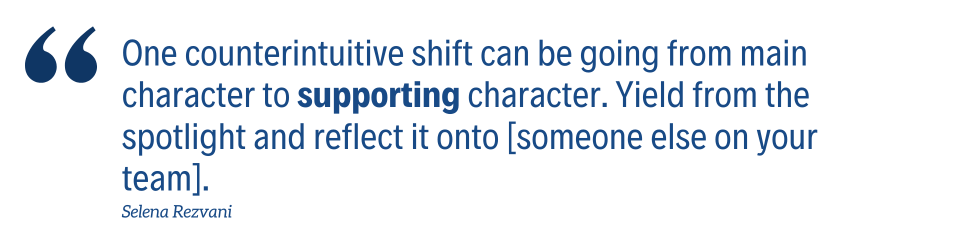 Selena challenged a belief a lot of managers carry (even if they don’t admit it): If I’m not taking up the most oxygen in the room, I’ll look weak.
Her counter was a mindset shift I keep thinking about: move from main character to supporting character.

In practice, that looks like publicly deferring to others:
“You’re closest to that project — you take this part.”
“You know this best — I’m handing it to you.”
Delegation here defines leadership itself. It redistributes visibility, voice, and ownership, the forces that determine influence and accountability inside organizations.
She also pointed out something I think leaders forget: managers often get “benefits” by default. Client lunches. Development opportunities. Being seen as the face of the work. One of the simplest trust-building moves is to share those benefits intentionally.
If you want a team to feel invested, you don’t just share credit after the fact. You should share opportunity in real time.
5) Meetings aren’t “calendar items” — they’re attention withdrawals
 Selena said something that reframed meetings for me: when you pull people into a meeting, you’re pulling them out of deep work and focus flow…repeatedly. That’s a major ask. So treat meetings as precious.
Her approach was blunt: have fewer meetings, for fewer minutes, with fewer people. Then audit recurring meetings quarterly to see what’s no longer necessary.
Once you’re actually in the room, she gave a few tactical moves that feel obvious, but most leaders don’t do them:
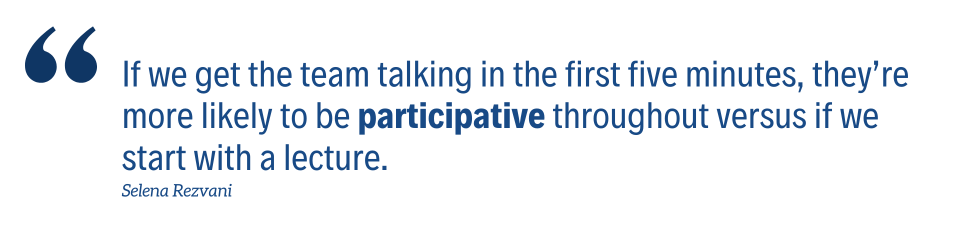
- Get people talking in the first five minutes.
Research backs this up. Studies show that when people speak within the first five minutes of a meeting, they’re far more likely to participate throughout, compared to meetings that start with long monologues. - Slice up the agenda.
Too many meetings are run by one voice (usually the manager) even when others are closer to the work. Rotating speaking roles creates inclusion without adding time. - Use round-robin prompts when airtime is uneven.
“One opportunity you see, one concern you have.”
It’s not fluffy. It’s structure — and structure is what protects quieter voices from being erased.
The bigger point: inclusive meetings are rarely a personality problem. They’re a design problem.
6) The future of leadership depends on one thing: trust (and we’re currently breaking it)
 One of the most concerning trends we discussed was the rapid rise of employee surveillance (Bossware), which is often framed as productivity optimization, but experienced very differently by workers.
The employee monitoring software market alone is forecasted to reach $4.5 billion by 2026, and roughly 60% of companies with remote workers now use monitoring tools to track activity, location, websites visited, and time spent working according to a survey by Digital.com as reported previously by Allwork.Space.
The tension in the data is hard to ignore. While 81% of employers report productivity gains after implementing monitoring software, 59% of remote and hybrid employees say it causes stress or anxiety, and 88% of employers have fired workers following its adoption, citing behavior or performance issues.
Unfortunately, there aren’t many legal protections for employees who are being monitored. Bossware might be intrusive, but it is actually legal.
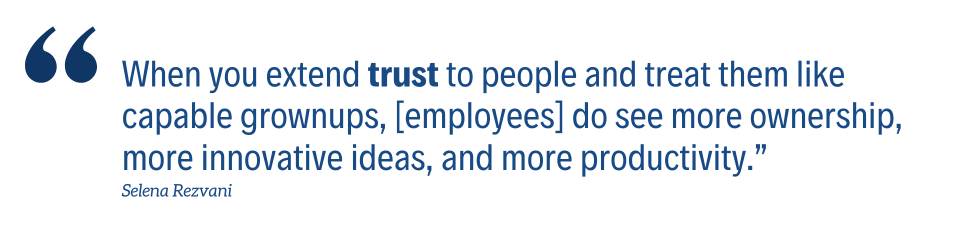
This is exactly the moment Selena pointed to when she said the future of leadership is about a return to trust. Surveillance may drive short-term output, but trust is what sustains ownership, candor, and innovation over time.
Tools can measure activity. Only leaders can create psychological safety and decide what kind of culture those tools ultimately serve.
What I’m taking into 2026
Leadership is becoming less performative and more interpersonal…whether companies like it or not.
The leaders who succeed will be the ones willing to:
- show humanity without losing standards,
- invite challenge without losing direction,
- design meetings and norms that protect participation,
- and replace surveillance with clarity, expectations, and trust.
It’s a more adult version of leadership, not a softer one.
And I’m convinced of this: the teams that thrive next won’t be the ones with the strictest control systems. They’ll be the ones where people feel safe enough to tell the truth — early, often, and without fear.
Because truth is what lets you adapt.
And adaptation is the only real advantage left.