



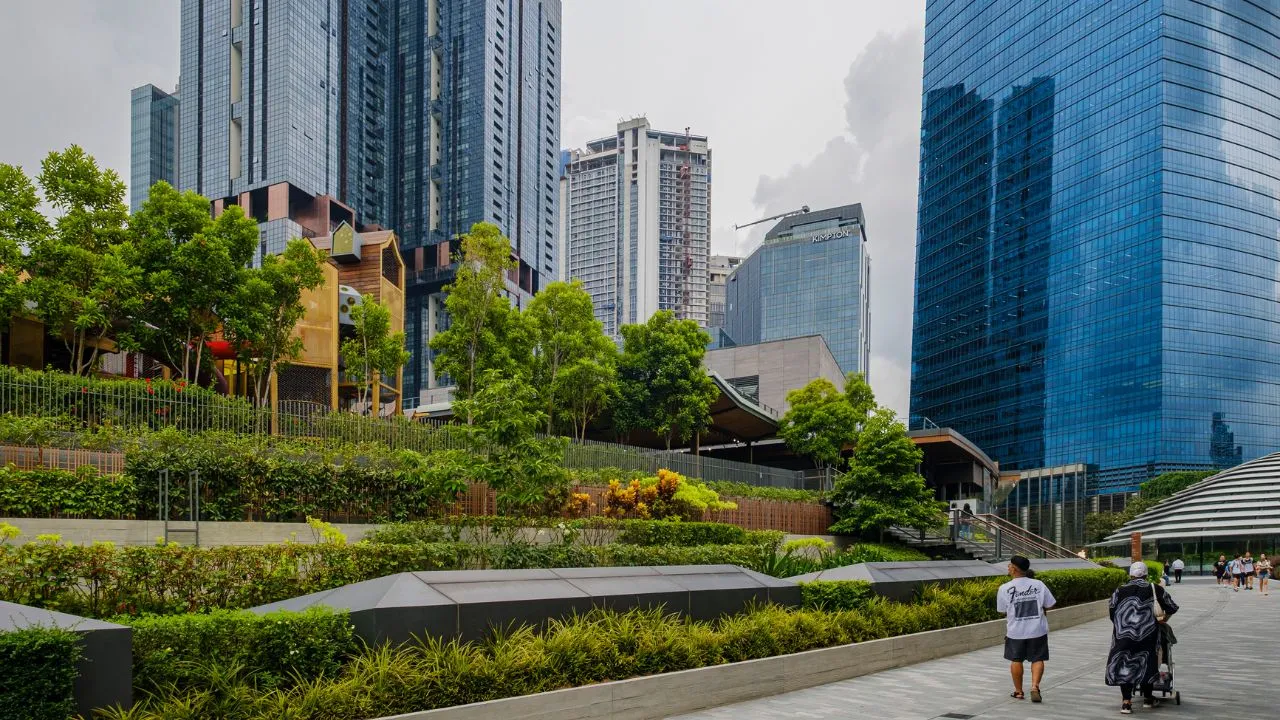
Mixed-use “live-work-play” buildings are gaining traction across the U.S., as developers respond to longer commutes and a workforce that no longer operates on a single schedule.
Between 2016 and 2025, 542 live-work-play developments opened nationwide, with dozens more in progress. Activity has accelerated in recent years, with 2025 marking a peak in new openings and continued momentum into 2026, according to Coworking Cafe.

These projects are heavily weighted toward residential use. Housing accounts for roughly 62% of total space, while offices and retail make up smaller shares. The model reflects demand for convenience, especially in cities where daily commutes can stretch close to an hour.
Coworking Moves In
As remote and hybrid work expand, coworking is becoming a regular feature inside these developments. The number of flexible office spaces in live-work-play buildings has grown sharply in recent years, tracking larger growth in the flex office sector.

More than 21 million Americans now work remotely at least part of the time, and companies are balancing return-to-office policies with limited space. That combination is pushing demand toward flexible, short-term office options embedded within residential environments.
Cities Take Different Paths
New York City leads the country with 119 live-work-play developments built over the past decade, far ahead of other markets. Miami, Chicago, Seattle, and several fast-growing Sun Belt cities are also expanding their footprints, though at smaller scales.
The mix of space varies by market. Some cities lean heavily residential, while others dedicate a larger share to office use. Coworking adoption is also uneven—strong in places like Seattle and San Francisco, but limited or absent in others despite large remote work populations.
What It Means for Work
Live-work-play buildings are becoming a physical response to how work has changed. With more people splitting time between home and office, demand is shifting toward spaces that combine both.
Instead of separating where people live, work, and spend time, these developments bring them together—reducing the need to commute while giving companies and workers more flexibility in how space is used.