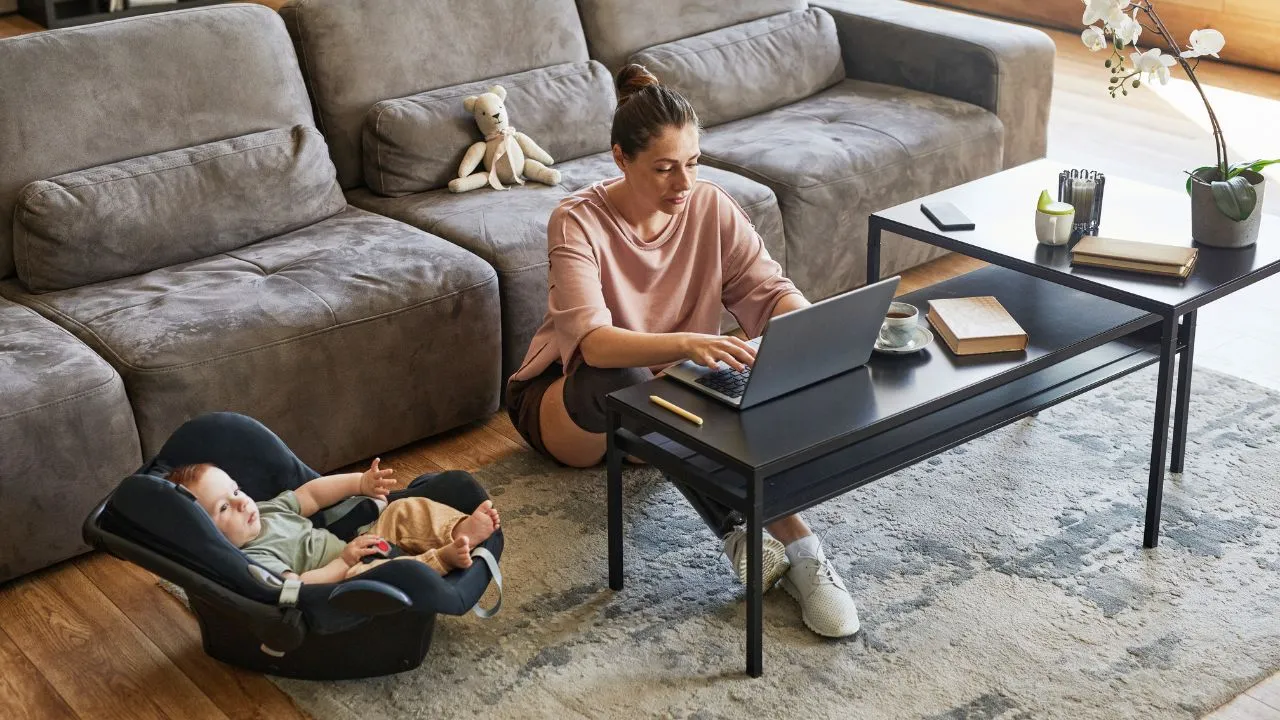
Remote work may be doing more than reducing commutes. New research from CEPR suggests it is also helping mothers remain attached to the workforce after having children, reducing one of the most persistent drivers of gender pay inequality.
The study, which analyzed administrative employment and earnings records between 2012 and 2024, found that mothers in jobs compatible with remote work experienced smaller earnings losses after childbirth and were more likely to remain in full-time employment than mothers in less flexible roles.

Flexible Work Reduces the Motherhood Penalty
Economists have long documented the “motherhood penalty”—the decline in earnings and career progression many women experience after having children.
According to the researchers, the expansion of work-from-home arrangements following the pandemic helped soften that impact. Mothers with access to remote work saw substantially stronger earnings outcomes in the year after childbirth compared to those in jobs requiring physical presence.

The findings suggest that remote work helped women maintain working hours and remain more consistently engaged in the labor market, rather than leaving employment altogether.
Full-Time Work More Likely to Continue
One of the study’s most significant findings was that flexible work arrangements helped mothers stay in full-time roles.
Researchers found that mothers with greater access to remote work were less likely to move into part-time positions after having children. They also worked more weeks during the year following childbirth and relied less on parental leave.
The benefits were particularly pronounced among younger mothers, lower-income workers, and women with longer commutes, suggesting flexibility may be especially valuable for workers facing greater time and financial pressures.
Fathers’ Remote Work Also Matters
Women whose partners worked in highly remote-compatible jobs also experienced smaller earnings losses after childbirth. Researchers say the finding points to the role of household dynamics, with greater flexibility allowing couples to share caregiving responsibilities more evenly.
Notably, the impact of fathers’ access to remote work was similar in size to the direct benefits mothers received from having flexible jobs themselves.
Potential Impact on Birth Rates
The research also found a link between remote work and family formation.
Women with access to work-from-home arrangements were slightly more likely to have additional children, while childless women were somewhat more likely to become first-time mothers. While the effects were modest, researchers argue they could have meaningful implications for countries facing declining birth rates.
Workplace Policies May Have Broader Consequences
As organizations continue debating return-to-office policies, the findings suggest workplace flexibility may influence more than productivity and employee preferences.
The researchers argue that remote work can affect earnings, labor force participation, gender equality, and even demographic trends. While they caution that remote work is not a universal solution and cannot replace childcare support or family-friendly policies, the study suggests flexible work arrangements can play a meaningful role in reducing career penalties associated with parenthood.
For employers reassessing post-pandemic work policies, the findings add to growing evidence that where work happens may have lasting consequences for workforce participation and career outcomes.