



About This Episode
Remote work has matured far beyond simply allowing employees to work from home. As organizations embrace distributed teams and artificial intelligence, the conversation is no longer about location—it’s about designing systems that enable people to work effectively from anywhere.
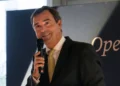
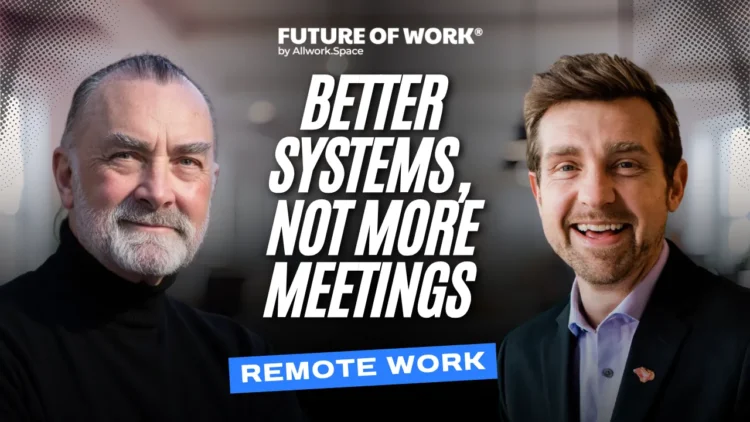
In this episode of the Future of Work® Podcast, Frank Cottle welcomes Darren Murph, recognized by CNBC as an “oracle of remote work” and former workplace strategy leader at GitLab. Together, they examine why successful distributed organizations don’t happen by accident. They discuss the importance of intentional workplace design, operational discipline, documentation, knowledge management, AI readiness, asynchronous collaboration, and the rise of small, globally connected companies.

The conversation also explores the future of entrepreneurship, the “manager of one” philosophy, coworking as an extension of remote work, operational fit, and why AI makes organizational knowledge more valuable than ever. Whether you’re building a startup, leading a distributed team, or preparing your organization for AI, this episode offers practical insights into creating resilient, scalable organizations.
About Darren Murph
Named an “oracle of remote work” by CNBC and recognized in the Forbes Future of Work 50, Darren Murph is one of the world’s leading experts on distributed work and organizational design. He is the founder of Page 52 Consulting and currently serves as Head of Culture at Lovie. Previously, he led workplace strategy and operations at GitLab, helping scale the world’s first fully distributed company to an IPO. He is the author of GitLab’s Remote Playbook and Living the Remote Dream, and his latest book, Distributed: Secrets to Building Healthy Remote Teams, releases in November 2026.
What You’ll Learn
- Why remote work requires intentional organizational design.
- How the “invisible skyscraper” explains successful distributed work.
- Why knowledge management has become essential for AI success.
- How documentation creates an “organizational brain.”
- Why asynchronous work improves productivity across time zones.
- The role coworking spaces play in distributed organizations.
- How AI builds on the operational discipline established by remote-first companies.
- Why “manager of one” is becoming a critical workplace skill.
- How small, AI-enabled teams are changing entrepreneurship.
- Why operational fit matters more than culture fit in distributed organizations.
Transcript
Darren Murph
[ 00:00:00,130 ] It’s impossible to run an effective team without structure and clarity. And I think that is more important now than ever. As a manager, you absolutely can go out and codify a team agreement: what are our online time expectations? What is our SLA? How often or how quickly do we respond to each other? What tools do we use? What project management tools do we use? How do we manage our tasks? How do we make sure that things don’t fall through the cracks? How do we make sure that people can interface with each other’s work without having to have a meeting?
Frank Cottle
[ 00:00:31,900 ] Darren, welcome to the Future of Work podcast. Really great to have you here today. And gosh, wow, CNBC calls you the Oracle of remote work. How did you get that title?
Darren Murph
[ 00:00:44,360 ] Thanks, Frank. Great to be here. Many, many years working across the distributed work spectrum. That title was bestowed during the GitLab run. The process of doing something that no company had done before, which was to take a fully officeless company all the way to IPO. And we built the playbook that made that possible.
Frank Cottle
[ 00:01:05,690 ] Well, that is a Oracle uh situation. I’m gonna call myself the old man on the mountain to match your Oracle for a second on everything. You know, you’ve used a skyscraper to explain what goes wrong with distributed work.
Frank Cottle
[ 00:01:22,290 ] Illustrated using that, in many cases. Can you share with us your thought on that illustration and why you think it’s so effective?
Darren Murph
[ 00:01:31,740 ] Yeah, during the post-COVID window, where a lot of companies were thrust into remote. So they didn’t choose remote, but they wound up remote. I began to hear that this was more difficult than it quote should be. And a lot of people couldn’t figure out why they couldn’t just send everyone home, open up their laptops, and everything just works swimmingly. And I use the skyscraper analogy to show that. Any office that you’ve walked into, any skyscraper that you’ve walked into, where you’ve had a comfortable and productive day. It was not by accident. It actually started many, many years before, probably a construction crew clearing the land. And then there was an architect and a plumber and so on and so forth. Many, many, many people were put together in a systematic way. In order to create a space that was perfect for workplace productivity.
Darren Murph
[ 00:02:27,380 ] And this same type of mindset is required for distributed teams. You truly do need an architect at the heart of this. Because even though everyone goes to their separate homes or co-working spaces, they actually work in what I call an invisible skyscraper. You can’t see the skyscraper, but you still need the plumbing. You still need the wiring. You still need the signage. And if you don’t put these pieces in place, it’s the same experience as walking into a derelict office with no signage, no HVAC, no ventilation.
Darren Murph
[ 00:02:58,040 ] You wouldn’t want to stay there very long.
Frank Cottle
[ 00:02:59,540 ] No, you wouldn’t. You know, it’s funny that you use that analogy. I think it’s accurate. I’m gonna go a step behind the design of the construction crew. When you choose the location, for a skyscraper. You not only look at how accessible it will be to the people that are going to be using that space overall, but what amenities are around it. You look and say, ‘Hey, is there a gym next door? Is there a good coffee shop that’s easy for quick meals and a nice restaurant for a business lunch and maybe a bar for after work?’ You look at all those amenities, a hotel nearby where business colleagues and guests can stay, a larger meeting room or assembly room for training. You look at all those amenities as well before you. should pick the location for your skyscraper. I think a lot of times when you go to the distributed workplace, people— if they use your skyscraper analogy—might not realize that analogy doesn’t include the amenities.
Frank Cottle
[ 00:04:05,050 ] Then you basically are putting a lot of people into a facility.
Frank Cottle
[ 00:04:12,060 ] That’s ill-equipped. For them to work remotely, and that’s where Third Workplace comes in.
Frank Cottle
[ 00:04:18,959 ] That’s where. The common use of business centers, co-working centers, et cetera, comes in for so much of what remote, which we think of as hybrid more for those. But hybrid is a form of daily remote. It’s just not a full-time dedicated use. What’s your feeling on my addition to the analogy? Or do you think, no, it doesn’t make any sense?
Darren Murph
[ 00:04:41,640 ] No, I dig it. Where it connects with me is just this notion of intentionality. Okay, good. What I have found is that the companies that do do remote well, but honestly do business well, are the most intentional, the most operationally disciplined, but also just the most present when you’re thinking about what other amenities or perks go along with kind of the bare bones of the office or the skyscraper, invisible or otherwise.
Darren Murph
[ 00:05:10,460 ] Yeah, I would look at what— when you’re building a distributed workplace and you’re thinking about what— are the extras you start looking at, things like culture, you start looking at things like the tool stack. There are so many extras that can help an organization go from allowing remote work to truly empowering people in remote work.
Frank Cottle
[ 00:05:32,770 ] Well, you know, and talk about remote work. Let’s take a crowded city, a very expensive city like Manhattan.
Frank Cottle
[ 00:05:39,390 ] Okay, let’s assume that everybody in your company lives on the island. They all live on the island of Manhattan.
Frank Cottle
[ 00:05:46,830 ] You send two-thirds of them home, they don’t have anything but a kitchen table to work at. because their apartments are so small.
Darren Murph
[ 00:05:53,700 ] Yeah.
Frank Cottle
[ 00:05:54,440 ] And so. Um, inappropriate for anything but just barely living. In my opinion, but there’s no extra space. That can be carved out for a remote workspace. What do you do in that case?
Darren Murph
[ 00:06:12,440 ] I think it usually solves itself in one or two ways or it can be solved in one of two ways. one is that if you truly enable people to work from anywhere even if it’s within a country there will be a lot of them that say, You know, I’m only in the city because my last company’s HR department told me I had to be here. but i’m actually not rooted here i’m not married to this place and given the option i’m actually going to optimize for something different maybe i want to live near a national park for example and so they can reorient their life and they can make house decisions based on do I want a home office here? How am I going to orient my life so that this fits in better? The other option is for employers to provide a coworking stipend, for example. Some people, they do prefer to live in a very dense city. and they don’t want to work in the same place that they sleep. And I think that’s perfectly acceptable. And I think this is where these third places come into play.
Darren Murph
[ 00:07:10,020 ] that I’ve worked with that do this really well. They offer a monthly stipend. When you were talking about extra amenities, this is one of them. You can tell the difference. If you go to work for a distributed company and right away they say, ‘Hey, we understand that not everyone wants to work from home. We’ll help you work. out of the home.’ That is a telltale signal that they have thought this through.
Frank Cottle
[ 00:07:29,680 ] Yeah, this is particularly important, I think, because remote working is the big thing—oh, we can’t work remotely. Uh, let’s go to uh JP Morgan’s leader. I can’t work remotely because it destroys the culture. The culture means we have to be around each other so we can talk to and see each other and work as teams. Matthew, I’m going to look at his team. Well, the third workplace, well organized, allows those teams to be well managed and I would venture to say at a much lower cost than a corporate castle in the middle of Manhattan.
Frank Cottle
[ 00:08:07,080 ] Um so, if you’re better to your shareholders, you’re better to your employees, and your product, probably, is better too. But that’s where third workplaces really shine, not just for the individual, but when you have teams that need to get together somewhere that’s common to where they live. Or common to a project. Those seem to be very, very well.
Darren Murph
[ 00:08:31,679 ] When I think of that, I think elements like that help make your organization more anti-fragile.
Darren Murph
[ 00:08:39,030 ] Organizations that force everyone to be in one place for business to move forward.
Darren Murph
[ 00:08:44,320 ] That’s a risk as I see it. You’re introducing fragility into the company. And by introducing things like you mentioned, it helps counteract that. It builds resiliency. And anything that what I’ve seen. anything that you do to give people more agency more flexibility more autonomy it feeds into the culture you mentioned culture and uh i i’ve heard for some of the companies that can’t get this right they’ll say something like you know distributed work kills culture and i don’t think so i think distributed work reveals culture it just shines a spotlight on what was already there i think you didn’t have any culture to begin with if you’re worried about that you know so you you had a bigger problem I would go with that.
Frank Cottle
[ 00:09:27,660 ] You know, as you drag it over to today’s AI, which is kind of sucking all the air out of the room in every conversation.
Frank Cottle
[ 00:09:38,230 ] You’ve said that. You think the companies that are doing the best with AI are the ones that went to remote work first?
Frank Cottle
[ 00:09:48,290 ] Explain that.
Darren Murph
[ 00:09:50,960 ] To get the biggest benefit from AI, you needed to already lean on remote first principles.
Frank Cottle
[ 00:09:58,470 ] And here’s what I mean. What were the principles that you needed to lean on?
Darren Murph
[ 00:10:01,570 ] So when I worked in fully remote organizations, there were certain things that we had to do in business that were non-optional. But for fully in-office companies, they remained optional.
Darren Murph
[ 00:10:12,960 ] Some of these things were building what I call an org brain or having a proper POV on knowledge management. And so the best distributed organizations look at knowledge as a product. They take it just as seriously as something like information security. It’s not optional to get this right. And so for organizations that are distributed, you can’t just have a synchronous meeting to convey information. You have to get serious about where do we codify how work happens, what our culture is, and it needs to be written down. And systematically documented such that it can be scaled to 50 or more countries across all of these time zones. It is required for fully global companies. But if you can force everyone into a room, you can kind of say, ‘We don’t want to do all of that hard work of centralizing our knowledge. We’ll just force everyone in here.’ And that works okay until the AI era arrives. And now what’s happening is, if you’re trying to layer AI tools, you have to sit it on top of your existing data.
Darren Murph
[ 00:11:19,650 ] And if you have spent the past five or 10 years kind of ignoring your data set, not centralizing company information, you see it very quickly when you plug AI into it. AI starts to hallucinate a lot and it’ll come back with outputs like, ‘Well, I think you want this, but when I went looking for it, I can’t find it.’ Or it’s stored in someone’s personal computer. It’s not in a shared repository.
Darren Murph
[ 00:11:45,170 ] And so, for companies that got serious about documentation and knowledge management, they layer AI on top of that. And guess what? AI has something to work with. And so what I’m seeing now is for companies that ignored this push towards knowledge management are now having to go back and do what I call the first mile schlep. which is they have to go back and do all the things that they didn’t want to do. just to have a baseline for AI to operate efficiently in.
Frank Cottle
[ 00:12:15,189 ] Well, it’s interesting because when you go remote first, um, and we have been a remote first and a very, very big proponent. This is one of the flexible workspace industry. sure, let’s see, I built um telecommuting centers the early 90s for the Clean Air Act. So you know, we get it. We did it. When you do that, one of the first things you do, and I think it’s analogous with AI, is you look at every single job description in the company, and you adjust it or rewrite it.
Darren Murph
[ 00:12:49,610 ] Yeah.
Frank Cottle
[ 00:12:50,440 ] You have to look at every person’s responsibilities and their job description, and say, can this be done remotely? Can this be done with AI now? You have the same thing or do it. And what we’re seeing in the most success in our own companies is. Those. early personal adopters of AI.
Frank Cottle
[ 00:13:09,150 ] Um, they name their agents. Mhm. I have Susie. Our CFO has an agent called Corey.
Frank Cottle
[ 00:13:17,730 ] Corey does all sorts of interesting things for him, and he identifies with Corey. Corey is his friend.
Frank Cottle
[ 00:13:24,090 ] It’s not Claude who’s ubiquitous to everybody. He has glory. Okay. And now Corey has a friend.
Frank Cottle
[ 00:13:32,070 ] And what we’re seeing is a spawning of AI agents into functional teams reporting to a single individual to support them in their work and so I’m going to take you to The building of Lovey.
Frank Cottle
[ 00:13:48,660 ] and your concept of a manager of one.
Frank Cottle
[ 00:13:52,120 ] The role of AI in that and why you believe the next unicorn, the next billion-dollar IPO, is going to be a one-to three-person company.
Darren Murph
[ 00:14:01,800 ] This concept of a manager of one, it actually started years ago for highly adept remote-first companies. And it was more of a cultural underpinning than anything else. It essentially said, ‘We’ve given you the tools. And now we’re going to trust you to be the manager of your own time and attention.’ And so practically, what did that look like? It looked like, if you were in a 60-minute call, but your attention was only needed for 10 minutes of that call. It was perfectly acceptable to spend the rest of that time looking away from the camera, working on something else. Shopping, sending your mother a message. You’re the manager of your own time and attention. And when you do remote work well, you can break out of that rigid nine-to-five. And so people can have more of a nonlinear day. So it’s totally feasible for them to.
Frank Cottle
[ 00:14:50,630 ] I want to interrupt there. If you do that, how disruptive is that to others on your team if you all have non-nine-to-five days? Even if you’re in the same time zone. And you need to get things and share things back and forth to each other. Isn’t that disruptive?
Darren Murph
[ 00:15:08,650 ] So one of the remote first principles that I didn’t mention was this notion of transparency. And so what is the prerequisite for highly effective asynchronous teams? It is highly effective communication and documentation. And so it’s only disruptive if something is unknown. But if you are working towards documented goals, you know when a certain sprint has to be completed by, for example, and you know what you are a contingency for, for example, then everyone is able to embrace this without breaking someone else’s day. But as you can imagine, this requires highly advanced operational discipline across the company. So if one team or one function kind of opts out of this way of working, you can imagine it’s going to fall apart.
Frank Cottle
[ 00:15:58,200 ] Terribly disruptive. It all falls apart.
Darren Murph
[ 00:16:00,140 ] Exactly. But it goes back to another point that I was making, which is: fully remote teams have to do things that are optional for others. So in that case, I was working with a team of people across 65 countries, almost every time zone in the world covered. And so, because of this extreme nature of where we were, it rendered synchronous meetings or nine to five completely irrelevant. And I loved it. I thought it was a forcing function for us to get really good at working asynchronously. Because it would have been foolhardy to just try to work synchronously. With people in 65 countries, absolutely and so we we threw in the towel early on and said, ‘If that way of working is impossible, what systems do we need to build? To make it possible for the team that we have.’
Frank Cottle
[ 00:16:48,230 ] In building those systems, and I can identify with that, my day starts in the Middle East and the Gulf states, ends up in Australia.
Darren Murph
[ 00:16:57,090 ] Yeah.
Frank Cottle
[ 00:16:57,680 ] Okay. So, um, when you’re managing 14 and a day time zones in your daily calendar, you learn to do a whole bunch of different stuff. You also learn, I think, that you don’t have meetings without purpose.
Darren Murph
[ 00:17:16,859 ] Yes.
Frank Cottle
[ 00:17:18,180 ] You don’t get as many people as you can to fill the screen, I think. Someone made a reference to those types of meetings as looking like Hollywood Squares.
Frank Cottle
[ 00:17:28,270 ] Um, you don’t do that sort of thing. You really like— you have intention and everything. And you usually have your agenda. Says.
Frank Cottle
[ 00:17:39,440 ] And this is the decision we will make. Before we break the meeting. And it’s that decision-making speed that can actually come from that. As opposed to just rolling meetings that aren’t as disciplined. So I think it’s the whole process of working remote. Um, accelerates a discipline of decision-making that accelerates a company’s momentum.
Darren Murph
[ 00:18:05,190 ] Completely agree. And that’s one component of being a manager of one, which is being respectful of other people’s time and attention. And it requires you to have great, what I call, meeting hygiene, which is a codified way of saying, if you’re going to have a meeting, here are the things that a meeting is acceptable for. And then here are the steps that you need to take to make sure that this meeting is as effective and as scalable as possible. For example, having a shared document agenda attached to every meeting invite. And so as soon as you send the invite to someone, they’re able to click into that link and see what the hopeful outcome is before the meeting ever happens. And then, even after the meeting happens, there’s a document there, there’s an artifact. That will go on. After. the meeting. And these are relatively small steps. I mean, these are steps that any leader listening to this could take starting tomorrow.
Darren Murph
[ 00:18:57,390 ] The real question is, are you going to have the discipline to put some of these steps in place? Or are you just going to fall back into the routines and rhythms you’ve always had, which is we’ll just have another meeting to solve it.
Frank Cottle
[ 00:19:07,950 ] Well, you know, it’s funny. I’m going to go back 100 years, maybe a little further, to Roger’s Rules of Order. The original. New business, old business— agenda structure that allowed people to speak at certain times and do things at certain times, etc. The philosophy of intentional meetings is not new.
Darren Murph
[ 00:19:30,230 ] Hmm.
Frank Cottle
[ 00:19:30,820 ] There are new books written about it, but there was an old book that basically illustrated every aspect of what a meeting, particularly a meeting with committees, is supposed to have and how you’re supposed to run it.
Frank Cottle
[ 00:19:47,340 ] Um, they didn’t have instant.
Frank Cottle
[ 00:19:51,510 ] They didn’t have even anything.
Frank Cottle
[ 00:19:55,390 ] And yet. They’re able to make decisions at the same speed or faster than we do today.
Frank Cottle
[ 00:20:00,790 ] So that intentionality and discipline.
Frank Cottle
[ 00:20:04,890 ] I think, is that I’m going into a meeting after this. I didn’t get the agenda till half an hour before this meeting.
Frank Cottle
[ 00:20:13,270 ] Yes. And I’m now ill prepared.
Frank Cottle
[ 00:20:16,830 ] Because of that, so you know, this is a huge problem that doesn’t have to do just with remote work.
Darren Murph
[ 00:20:24,190 ] No.
Frank Cottle
[ 00:20:25,170 ] Um, what what do you think? You know, you made a comment that… any formation data and we see a lot of that too. Shows a massive surge in solopreneurs, small companies. They’re easy to identify. The small companies. I mean, we’re in a virtual office business. We see this. Yeah.
Frank Cottle
[ 00:20:44,610 ] Every hour of every. But we’re watching this data very closely, especially as we see layoffs from large technology and financial institutions.
Frank Cottle
[ 00:20:53,960 ] When a big financial institution lays off a lot of people, guess what a whole bunch of private companies pop up. Same with the tech, etc.
Frank Cottle
[ 00:21:04,250 ] How do you see that managing remote? Issues of such small companies. And I’ll add a twist to it. We think every company today is international. That they have an international customer or an international employee or supplier.
Frank Cottle
[ 00:21:22,190 ] So add that to your remote structure thinking a little bit. And how do you think these small companies are going to do competitively?
Darren Murph
[ 00:21:31,240 ] Yeah, I like that. I’ve also said that Every company in the modern era is a distributed company, whether you want to identify it as such or not. And your logic checks out. We are living in a global society. And so, even if it’s just a one-person company interfacing daily with, and LLM. Those LLMs are being built, ratified, and verified by people all over the world, and so they are now plugged into the world’s knowledge. And so, whether they want to say, like, we’re a remote company or not, that’s what’s actually happening.
Frank Cottle
[ 00:22:05,120 ] You say the world’s knowledge. I’m going to say, oh, the world’s hallucination. I don’t know where.
Darren Murph
[ 00:22:09,660 ] Probably a bit of both. Thank you.
Darren Murph
[ 00:22:11,610 ] And the real dark horse skill of the future is taste, being able to see the outputs of these models and knowing what is valid, what isn’t, and then how to iterate and correct from there. But to the point about solo builders, I think this is an extension of the manager of one. And so what used to be— a lot of rigor, operational discipline, and culture— now with AI has been extended to: if you are an expert in one thing but dangerous in a lot of other things. If you pair yourself with LLMs and you know how to prompt it in a way to rapidly learn, you can do extraordinary things that in the past would have required a team of some description. And so the barriers are falling left and right. And so, when you have this confluence of events where a lot of these megacorp companies are laying people off in hopes of replacing them with AI. The people that are being laid off are now a bit jaded by the system. And they’re opening their eyes and saying, ‘There’s a new pathway for me now.
Darren Murph
[ 00:23:14,390 ] Maybe some people just go back into the interview loop and they just go back into a W2 job. But there will be a- significant subset that say, ‘Enough’s enough.’ I think technology is going to help me build my dream and I’m going to try my hand at this. And we’re seeing the data. There are so many new incorporations and LLCs being started because people are saying, ‘If not now, when?’ This is a bit of a gold rush opportunity for me to see just how adept I am.’ When I pair myself with ambition and AI, I agree with you.
Frank Cottle
[ 00:23:49,540 ] Historically, there are about 35 million entities in the United States. A bit of— formed here right now— About half of them are big guys, Microsoft and Scott. 50,000 entities, etc. And the other half are smaller organizations.
Frank Cottle
[ 00:24:06,870 ] Let’s call them small to medium enterprises, less than 500 people. Enterprises. What we’ve seen in a variety of financial fluctuations— whether it was going back to the early 80s, when aerospace was bouncing all over the place, big layoffs of engineers, and all that sort of thing, or whether it’s today’s AI excuse for replacing over-hiring during the pandemic.
Darren Murph
[ 00:24:35,330 ] Yes.
Frank Cottle
[ 00:24:36,080 ] Which I think an excuse.
Frank Cottle
[ 00:24:39,540 ] It’s the wrong use of AI. Is to fire people. The right use increases their productivity. Yes.
Frank Cottle
[ 00:24:46,910 ] When you look at that overall and you think about it.
Frank Cottle
[ 00:24:52,670 ] Um, Of those. Remaining groups— the total number of entities in the US basically increases at about the same pace as the US economy. So we have 3% growth in the U. S. economy, that $35 million turns into $36,750.
Frank Cottle
[ 00:25:10,050 ] Whatever. We have a little shrinkage. It goes down back to 35 million. Okay, that’s about how that runs. In the last.
Frank Cottle
[ 00:25:18,680 ] 12 months that half. Represented by the smaller companies. Has grown at double the pace of the US. Thank you.
Frank Cottle
[ 00:25:28,530 ] So that right there tells you where we’re going.
Darren Murph
[ 00:25:32,450 ] I would agree with that. And it’s not just solo builders. I think it’s going to be— small teams as well. And so, it used to be a bit daunting as a founder, especially VC-backed founders, where you had to think about how am I going to scale this company to hundreds of people? How do I build the cultural infrastructure to do it? It’s daunting. But now you’re seeing companies reach massive revenue with one to 10 people.
Darren Murph
[ 00:25:59,080 ] And they’re building playbooks on how to do this, just like we built playbooks on how to run remote teams. And.
Darren Murph
[ 00:26:07,080 ] I absolutely love this because I think it’s going to give people more opportunity than they’ve ever had before to do something that they uniquely want to do. And there’s just something magical about small teams. It’s easier to galvanize people around a mission. And if there can be more of these, I think there’s going to be more sparks of innovation that happen. I looked when remote work kind of went mainstream.
Darren Murph
[ 00:26:31,970 ] I would hear people, they would try to turn it into a binary argument, like a zero-sum game. And I said, no, no, no, it’s not about that. The skyscrapers will always be there. At least for our lifetime.
Darren Murph
[ 00:26:43,680 ] What’s happening is: here is a net new way to work is emerging. The pie is getting bigger. So if you want to work full time in an office, you’re going to have plenty of opportunities to do that. It’s not like remote work is taking those away. But what’s happening here is this new way of working is going to enable people to spin out of the things that they weren’t really a fit for.
Darren Murph
[ 00:27:06,390 ] And build entirely new teams and companies in an environment that’s much more suitable for them. It’s just going to create more opportunity. And I think the same is true with this manager of one concept where more and more people are going to be able to start solo or small teams, small businesses. To serve niches more intimately. When you have a one-to-10 person team, you don’t have to reach a hundred billion in revenue. You can stay small. I know that lifestyle businesses used to have this negative connotation. I think that’s over and done with. I think this opens up an opportunity to run a business that’s just big enough to support the families that are involved with it. And I think that that really hasn’t been as easy in the past as it is now.
Frank Cottle
[ 00:27:48,540 ] Well, you know, it’s funny. Before I was in the flexible workspace industry, which was started in about 1980. I was a professional yachtsman. I was in the yachting industry.
Frank Cottle
[ 00:28:00,170 ] and among us, and we were basically the largest yacht brokers in the world. A company called Ardell back then. and When I look at and I think about what you just said, lifestyle businesses, and I think, ah, the customer base. Well, we had our big industrialists, the guys that were the big heads of large well-known companies.
Frank Cottle
[ 00:28:23,510 ] But most of the people that bought a vessel, that was pretty darn big. Like you would say today in the $1 to $5 million.
Darren Murph
[ 00:28:34,210 ] Yeah.
Frank Cottle
[ 00:28:35,070 ] We’re lifestyle company, family company owners.
Darren Murph
[ 00:28:37,230 ] Peace.
Frank Cottle
[ 00:28:38,390 ] The people that were.
Frank Cottle
[ 00:28:40,760 ] enjoying the lifestyle of their business rather than just worried about their shareholders and the next investor meeting. Were people that were lifestyle businesses. So when it comes back to a quality of life and work-life balance and all of that. Maybe that is the solution. It’s not. There’s always going to be somebody that’s got something bigger than you do. I don’t care what it is. You know, um, but is it better than what you have?
Darren Murph
[ 00:29:10,220 ] Yeah, I would agree with that.
Frank Cottle
[ 00:29:12,160 ] Really, where we may be going towards. And so I’ll ask.
Frank Cottle
[ 00:29:15,940 ] Kind of a leapfrog question. Technology doesn’t understand borders, tariffs.
Frank Cottle
[ 00:29:22,080 ] I won’t say wars because it does that, but it’s not limited by anything.
Frank Cottle
[ 00:29:28,380 ] People’s imaginations aren’t limited by anything, especially when they can access all the knowledge in the world.
Frank Cottle
[ 00:29:35,840 ] Will the next one to three-person unicorn come out of, um, Uganda?
Darren Murph
[ 00:29:46,060 ] I think the answer is yes. It’s going to come out of places that were not historically tied to being in the cradle of Silicon Valley, for example.
Frank Cottle
[ 00:29:55,710 ] That’s my belief too. Wow. Very much so.
Frank Cottle
[ 00:30:01,810 ] The capacity we have today to equalize wealth. If you want to become social warriors for a minute, to equalize wealth and equalize productivity has never been greater. And you don’t need to go somewhere to be or do something anymore.
Darren Murph
[ 00:30:22,360 ] Yeah, it has, well, remote work democratized access to opportunity in an extraordinary way. And I would argue that AI takes that and accelerates it. It is another layer, another level of democratizing access. If you have the right ambition and you have an internet connection and a solid connection to electricity, you can do things that were impossible just a few years ago.
Frank Cottle
[ 00:30:51,120 ] No, I completely agree. When we talk about culture, because we’re kind of migrating that direction a little bit.
Frank Cottle
[ 00:30:59,160 ] We ran a large network management company, not technology network, but a network of business centers. You, Ren. Uh, GitLab and you were in 60 countries— we’re in 54. So similar footprints, probably yeah. Um, one of the things that we repeated to ourselves, because of the variety of cultures.
Frank Cottle
[ 00:31:20,700 ] Involved, uh, it wasn’t just all one culture that moved to 54 cities. Yeah, before cultures, uh, or about, probably 30 cultures, I guess overall. We used to say that our differences. was one of our main strengths.
Frank Cottle
[ 00:31:37,960 ] One culture wasn’t. What was ideal. Multicultural and knowledge of decision-making processes from different types of cultures. Was a strength that gave us a huge competitive advantage. How do you see, or do you see, that rolling out with where we’re going today? It’s a form of remote work. As uh, overall, um, but what’s your your thought on the concept of our differences are our strengths when it comes to culture.
Darren Murph
[ 00:32:11,120 ] Yeah, I’ll take this one from two different angles. The first is this notion that I think in the here and now and also in the future, culture will predominantly come from outside of the workplace and then find its way in, which is inverted from.
Darren Murph
[ 00:32:26,899 ] companies that used to say, we’re going to put onsite daycare and have a lot of foosball tables and we’re going to create the culture. and embed you into it. I think it’s going to be almost exactly flipped going forward. The other thing that I’m seeing is that companies that are hiring for AI-first minds are looking less at culture fit and more at operational fit. And so I’ll take the first one. What does it mean that culture comes from outside? When the pandemic happened, a lot of companies tried to stand up these Zoom happy hours because they thought they could just manufacture good vibes by getting everybody in a Hollywood Squares type of window. And what I heard from leaders is that everybody came to the first one because it was novel and then no one came to the next one. And I developed this rubric called a community impact outing, and I shared it with leaders. And I said, look, that same sunk cost, that same hour of sunk cost where everyone is not doing anything productive, they’re just building rapport. Instead of forcing them into a Zoom box at the same hour every week, let them choose the hour and deploy them into their own communities to go do something meaningful to them, whether it’s volunteering at a food bank or Habitat for Humanity, whatever the case may be.
Darren Murph
[ 00:33:37,620 ] And ask them to wear company swag and take a selfie of themselves while they’re out and about. And then, the next time you come back for a company, all hands have this amazing montage of where everyone went. That will do more for your culture and building authentic, genuine bonds than any manufactured Zoom happy hour ever would. And why is that? Because it allows people to be their authentic selves in their unique communities around the world. Capture that culture in a picture. And then feed that back into the company. And it just creates this diversity and richness that you could never manufacture otherwise.
Darren Murph
[ 00:34:13,350 ] The other point about not hiring for culture fit but for operational fit. AI-first and remote-first companies, they have to be elite level disciplined when it comes to meeting hygiene and agendas and team agreements and documentation. There’s a lot more expected of you operationally, if you want to enjoy the spoils of being able to work from anywhere and leverage AI as a colleague. And so, when you’re interviewing, it’s less about, ‘will you get along with the culture that’s here and more about: ‘Do you want to operate in the way that we operate? That fit has become exponentially more important.
Frank Cottle
[ 00:34:53,239 ] It has to be earned.
Darren Murph
[ 00:34:54,870 ] Hmm.
Frank Cottle
[ 00:34:55,790 ] You know, It has to be.
Frank Cottle
[ 00:34:59,250 ] I’ll just say ‘earned’ again.
Frank Cottle
[ 00:35:02,010 ] The right to work remotely. And manage yourself as your primary employee.
Frank Cottle
[ 00:35:08,730 ] Um, is a different right. Than showing up at the office.
Frank Cottle
[ 00:35:14,960 ] You know, so I think that’s good. You know, we’re sort of running on time here, but if you look at a founder, you look at a team or an executive trying to figure out where to start. With remote first.
Frank Cottle
[ 00:35:29,500 ] You are the Guru. I’ve got that in writing.
Frank Cottle
[ 00:35:34,410 ] What’s the one thing they should do this week?
Frank Cottle
[ 00:35:38,360 ] Start to launch. To get on this path. That will lead them successfully.
Frank Cottle
[ 00:35:44,250 ] To this change in management stuff.
Darren Murph
[ 00:35:47,020 ] I would say get serious about knowledge management.
Darren Murph
[ 00:35:50,680 ] Information security probably matters in your company. There’s probably someone in charge of it. You don’t just trust everyone to learn what they can learn about security and then don’t get. Fished. You know, don’t get scammed.
Darren Murph
[ 00:36:05,340 ] It’s more important than that. You put a leader in charge, you put training, you put guard rails in place. The same is true for knowledge management, whether that’s hiring a head of remote, whether that’s hiring a chief documentation officer, whatever the title may be. It needs to be a centerpiece of your future organization. You have to get serious about it. We have to document and archive things as if our company depends on it, because the more you scale, the more people across more time zones, it’s going to become impossible to scale that company using synchronous meetings. If it’s in one ear and out the other, nothing is codified. How are you going to plug AI into it and expect it to help you make better decisions in the future? So for me, it begins and ends with creating an org brain. If you’ve pushed off the idea that it’s too much work, I think now with AI, it’s non-negotiable. Your results of AI are going to be very closely correlated to the effort you put into knowledge management.
Frank Cottle
[ 00:37:08,860 ] So what you’re really saying is: If you don’t do it, you’re bust.
Darren Murph
[ 00:37:14,720 ] I think you’re going to struggle. You may be able to figure out a way to kind of white knuckle it and make it work. But I care a lot about efficiency. And I think you’re going to see a lot of efficiencies in your company if you take this step now. It’s one of those things that Who was it? Einstein that said that compounding is the eighth wonder of the world. And I think that applies here. If you start now in saying we’re going to become more serious about documenting and creating what I call a museum culture. We don’t just document for the sake of documenting, we curate. We’re trying to create a museum of worthwhile information. If you start that now, you might not see results over the first six months, but a year from now.
Darren Murph
[ 00:38:02,410 ] Inevitably, you will query something using AI and it will be able to reference something that happened a year ago and you’ll think, ‘Wow.’
Darren Murph
[ 00:38:09,020 ] I’m glad that we have a track record of that retrospective. Because now it’s feeding into helping us make better decisions today.
Frank Cottle
[ 00:38:20,380 ] I just bounced back and forth from the, I was going to end for a second there, but I’m bouncing back and forth. You made me think of something. We talked just a minute ago, you talked just a minute ago about the challenges of a company that has a multitude of people and a multitude of positions.
Frank Cottle
[ 00:38:38,970 ] No, bro.
Frank Cottle
[ 00:38:40,560 ] But that’s a big bounce from the one to three-person company. Are the requirements the same? For the two companies, if they’re going to succeed.
Darren Murph
[ 00:38:51,660 ] They will be different. And here’s how I would encourage you to embrace knowledge management if you are a multi-thousand or tens of thousands of people. Start with team agreements. And so you may not have the authority to say we’re going to build a central knowledge base for this entire company to honor. But, your span of control— you do have agency over that, and so if you are a manager and you have five or ten people reporting to you, you can go out and you can find a team agreement template and you can start filling one of those out.
Darren Murph
[ 00:39:25,010 ] Google did a survey this was I think 15 years ago now on the five elements of effective teams. And one of those layers was structure and clarity. Essentially, they said it’s impossible to run an effective team without structure and clarity. And I think that is more important now than ever. As a manager, you absolutely can go out and codify a team agreement: What are our online time expectations? What is our SLA? How often or how quickly do we respond to each other? What tools do we use? What project management tools do we use? How do we manage our tasks? How do we make sure that things don’t fall through the cracks? How do we make sure that people can interface with each other’s work without having to have a meeting? These are questions that you can audit yourself. And even though you might not be able to control the entire company, you absolutely can create operational rigor and discipline within your span of control. And what I have found is that when you start doing that, when other teams begin to interface with you, they notice that something is different.
Frank Cottle
[ 00:40:27,190 ] Yeah.
Darren Murph
[ 00:40:27,870 ] They’ll feel it. Don’t notice it and most likely they’ll be magnetized to it and then you can say, ‘Oh yeah, here’s the team agreement template we embodied that here. Why don’t you try it over there And so while it can work top down, it also can work bottom up, and you start small within your span of control and then hopefully people are magnetized to that.
Frank Cottle
[ 00:40:49,150 ] That’s a good ending. Because it’s specific. I like it. Can you contribute? The link to that Google team agreement structure. And we’ll post it at the back of the. Yeah, sure.
Darren Murph
[ 00:41:01,680 ] Absolutely.
Frank Cottle
[ 00:41:02,830 ] Good. Perfect. Well, Darren, thank you so much. I’m really grateful to you for your time today. You are the guru of remote. I’m going to second that.
Frank Cottle
[ 00:41:13,240 ] And I really enjoyed it. And gosh, I look forward to speaking again and learning more from you sometime.
Darren Murph
[ 00:41:20,320 ] Thank you, Frank. And for all that are listening, Godspeed.
Frank Cottle
[ 00:41:23,540 ] We’ll make it happen. Take care.
Darren Murph
[ 00:41:25,940 ] Thank you, Frank.