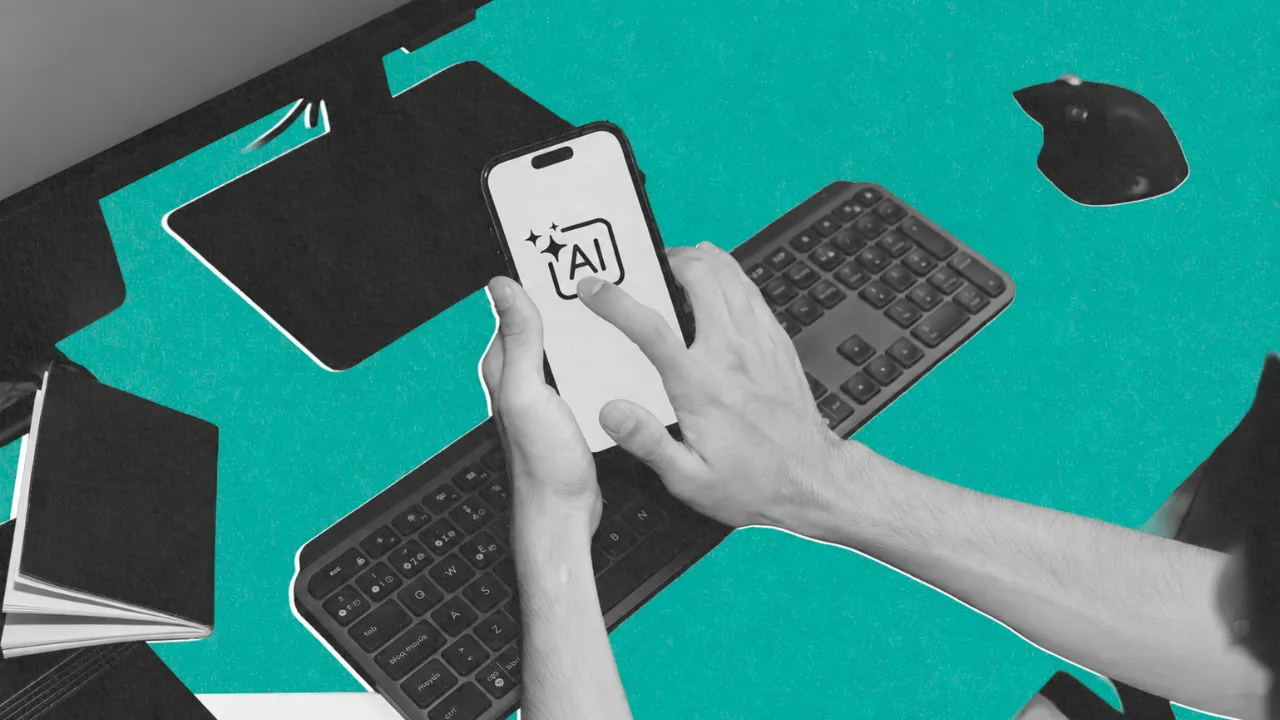
Give the same AI tool to an experienced professional and someone at the beginning of their career, and on the surface they may appear equally capable. Both can ask it to analyze data, summarize research, draft a presentation, write code or produce a recommendation.
But they are not actually handing AI the same kind of work.

The experienced professional is delegating execution they already know how to perform. They understand what strong work looks like, have made mistakes, encountered exceptions and developed instincts for recognizing when an answer does not quite make sense. AI can make the process faster while they continue supplying the judgment.
An early-career professional, by contrast, may be handing AI precisely the work through which that judgment would once have been developed.

AI can speed up execution without speeding up experience. That means identical AI usage can lead to very different career outcomes. Depending on where you are professionally, AI can either deepen your expertise or help you skip the process through which expertise is created.
How Experienced Professionals Should Use AI At Work
Once you have spent more than a decade in a field, much of your professional value is no longer based simply on what you know. It comes from context.
You know which questions should be asked before an analysis begins. You can spot assumptions hidden inside an answer that initially looks convincing. You understand the difference between an idea that works on paper and one that can survive inside a real organization. And you have probably made enough mistakes to recognize some of them before they happen again.
That is one reason experienced professionals can often get so much value from AI. They are able to hand over parts of the work because they already understand where the tools are useful and where they are limited. They may use multiple AI tools while developing an idea, challenge the responses, ask one model to critique another, push for what is missing and reject outputs that technically answer the question but still do not feel right.
AI can research, organize, challenge and accelerate their thinking. But the professional remains in control.
Imagine a VP of HR using AI to model a restructuring. The output flags one function as redundant based on cost, structure and overlap. But from experience, she knows that this is the team other groups depend on when decisions stall. The model sees the formal organization. She brings knowledge of the informal one.
That is increasingly what professional expertise looks like. A strong engineer, marketer, physician, financial analyst or HR leader is contributing much more than the visible deliverable. Beneath the task sits a collection of judgments, patterns and contextual knowledge built over years.
Some of that expertise has become so intuitive that the professional may find it difficult to put into words.
AI is making those hidden layers easier to recognize because when the technology begins handling part of the work, you have to ask what value you are still adding.
If you are an experienced professional, notice whether you continue to challenge AI-generated output or whether you have started simply approving it. Pay attention when an answer feels wrong even if you cannot immediately explain why. Ask whether you can identify what you contributed beyond reviewing the final result.
Those are the parts of your expertise you should be especially careful not to outsource.
Why Early-Career Professionals Need A Different AI Strategy
For people at the beginning of their careers, the challenge looks very different.
AI can help you produce surprisingly sophisticated work before you have developed the judgment required to assess how good it really is. That can feel like experience is accelerating. In some ways, it is. You can now perform tasks that once required years of practice.
But part of that capability may be more apparent than real.
Research from Harvard Business School suggests there are limits to how much AI can close the experience gap. In a study comparing experts with workers from adjacent and more distant fields, AI helped participants generate ideas and frame problems, but people without enough domain expertise still had difficulty matching expert performance when it came to execution.
The researchers describe this as “knowledge distance:” AI can narrow gaps when you already possess relevant understanding, but it cannot fully replace the lived experience needed to apply that knowledge effectively in context.
You may be able to generate an analysis without understanding why one assumption matters more than another. You may produce a polished recommendation without recognizing the organizational constraint that makes it impossible to implement. You may create functioning code without fully understanding what it affects elsewhere or when it is likely to fail.
The risk for early-career professionals is that some of the work that once seemed slow or inefficient was also teaching them how the profession actually operates. You made a spreadsheet mistake and learned how numbers can mislead. You submitted writing that came back covered in comments and started understanding how an experienced editor evaluates it. You sat through meetings and slowly learned what moves a group toward a decision.
AI can make practice, critique and learning faster. What it cannot completely replace are the lived experiences through which professional judgment develops.
Think about joining an organization and attending a meeting where two people make almost identical recommendations. One receives support and the other is ignored. If you are new, the reason may not be obvious. Someone who has worked there for years probably understands it. They know whose judgment carries weight. They remember which similar initiative failed before. They understand the relationships around the table, which constraints are fixed and which can be negotiated, and perhaps which issue everyone recognizes but nobody wants to say directly.
Most of that information will never appear in a meeting transcript or document that an AI system can search. You build that layer of professional knowledge through conversations, observation, questions, mistakes and repeated exposure to how work really gets done.
So if you are early in your career, pay attention to whether you are optimizing for polish or for understanding. Can you explain why the recommendation works? Do you understand the assumptions behind it? Could you defend the analysis to someone more experienced without reopening the AI chat? If one assumption turns out to be wrong, do you know what else changes?
If the answer is no, that gap is showing you what you still need to learn.
How To Decide What Work To Delegate To AI
The key question is simple: do you know enough about the work to recognize when AI is wrong?
And wrong does not only mean factually inaccurate. An answer can be technically correct while still being incomplete, strategically weak, contextually inappropriate, politically naïve or impossible to execute.
If you have enough experience to identify those weaknesses, you are in a stronger position to delegate more of the execution while still remaining accountable for the outcome.
If you do not, you may need more learning through doing.
There is an easy way to test this. If you are experienced, choose one task you gave to AI this week and identify the professional judgment you added beyond reviewing the generated output. If you cannot name it, watch more carefully the next time you delegate similar work.
If you are earlier in your career, take something AI recently produced for you and try to defend it to someone senior without relying on the tool. Wherever your explanation breaks down is probably where your learning still needs to happen.
Learning how to operate the tools themselves is becoming the relatively easy part of AI transformation at work. The harder career skill is knowing what to delegate, what to retain and whether you have enough experience to recognize the difference.
AI can accelerate execution. The goal is to make sure it is also accelerating your expertise instead of helping you bypass the process that creates it.