



There was a time when we knew when work started — and ended.
That’s no longer the case.

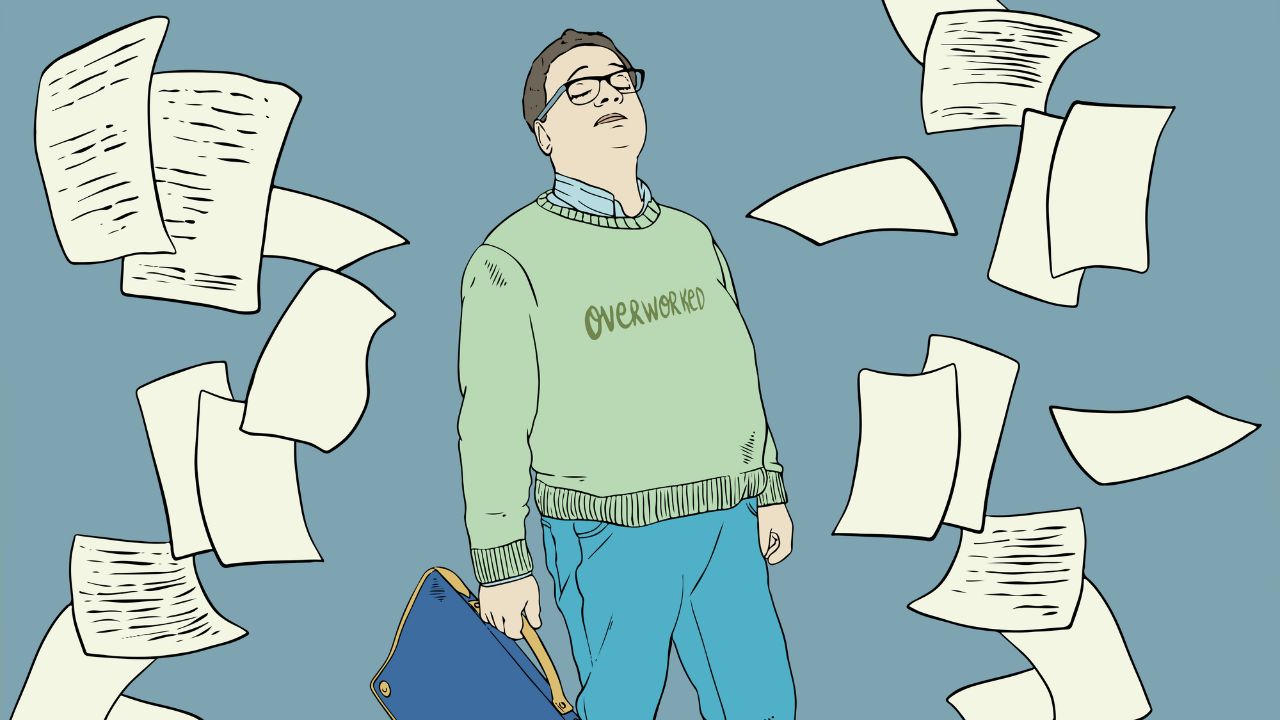
According to Microsoft’s latest Work Trend Index Special Report: Breaking Down the Infinite Workday, 40% of workers are online by 6 a.m. A third are still checking emails at 10 p.m. And 1 in 5 is working weekends.
This isn’t by company directive or deliberate design.
It’s just…happening.
When we decoupled work from a physical office, we also detached it from time itself.
The research shows we’ve gained significant freedom in how and where we work. But without shared boundaries or personal rules, that freedom has stretched across the entire day.
Rather than using flexibility to support better living, many of us are working around the clock, and often on tasks that don’t deserve our best hours.

Alexia Cambon, Microsoft’s Head of Research for Copilot and the Future of Work, captured it well on The Future of Less Work podcast:
“The blurring of those boundaries is leading to an infinite workday in which we just don’t have the signals anymore to stop working. And maybe we need to start reinserting some of those boundaries for ourselves into the workday.”
The problem isn’t a lack of flexibility. It’s that we haven’t figured out how to use it well.
The New Rhythm: Faster, Not Just Longer
It’s not just that our days are extended; they’re also sped up.
We might start the day with emails, but by 8 a.m., real-time chat takes over and things start to move fast. According to Microsoft, the average employee handles 117 emails and 153 Teams messages daily. Mass announcements are up. Individual exchanges are down.
Flexibility opened the door for asynchronous communication but it also created an environment where immediate replies are the unspoken rule. Everyone works on their own schedule, yet somehow, everyone expects instant feedback.
We’re not just putting in longer hours. We’re working in an always-interrupted state.
The Focus Breakdown
Somewhere along the way, we forgot how to protect our attention.
In theory, flexible work should let us reserve our best hours for deep, focused thinking. But the data shows otherwise. By 11 a.m. (supposedly our mental peak), meetings, messages, and app-switching all spike. Employees are interrupted roughly every two minutes.
We’ve allowed focus to be overrun by urgency.
Nowhere is that more evident than in our meetings. Before the pandemic, calendars and meeting room capacity naturally limited how often we met. Digital tools removed those constraints — and suddenly, everyone’s on every call.
Microsoft reports that over half of meetings are now unplanned, 10% are booked at the last minute, and meetings with more than 65 attendees are growing fastest. We often treat meetings as a coordination issue, but the real problem is the reactive culture behind them. As Cambon put it:
“We don’t have enough focus time, we don’t have time to really gather our thoughts and prepare. Everything feels like a scramble in a hurry.”
The result is that our most valuable time is spent in meetings we didn’t plan, reacting to decisions we didn’t make, without space to think ahead.
This shows up in the “triple peak day,” which is no longer a pandemic-era oddity. Evening meetings are up 16%. A third of employees go back to email after 10 p.m. Work on documents spikes over the weekend — when people finally find uninterrupted time.
Flexibility was supposed to support balance. Too often, it’s led to nonstop availability. And when individual rhythms don’t match, but expectations of instant response remain, we end up in a system with no off switch, no recovery, and no reset.
Can AI Fix This, or Just Make It Worse?
Enter AI — with a promise to help.
And yes, AI can be useful. It can take over the mundane: drafting emails, summarizing notes, scheduling. But if we simply use that saved time to take on more, we’re making the issue worse.
The power of AI is the potential to reshape how we work: to offload busywork and reclaim time for focus, creativity, or rest.
But that only works if we’re ready to rethink our pace. To let go of always-on. To make conscious decisions about when we’re online and when we’re not.
The good news? The tools are already in place. We already have the flexibility.
What’s missing is a rhythm that helps us use both well: a cadence that creates space for deep work, recovery, and real impact. And that doesn’t come from a handbook. It starts with us. With choosing what to prioritize. With building new boundaries. With creating space for what matters.
We might not control every variable. But we can get better at noticing what we need, and protecting it. That could mean blocking out hours for meaningful work. Letting AI take care of the noise. Redefining productivity as energy wisely spent, not just time filled.
And if we do this together with team norms, shared agreements, and mutual respect for one another’s time, we can turn flexibility into something sustainable. As Cambon pointed out:
“We need to be as inclusive as possible of as many work styles as possible… to trust people to establish working patterns, and then trust them to make those patterns work with everyone else’s.”
Technology will define the future of work. But it’s up to us to shape that future into something that actually works — for people.