



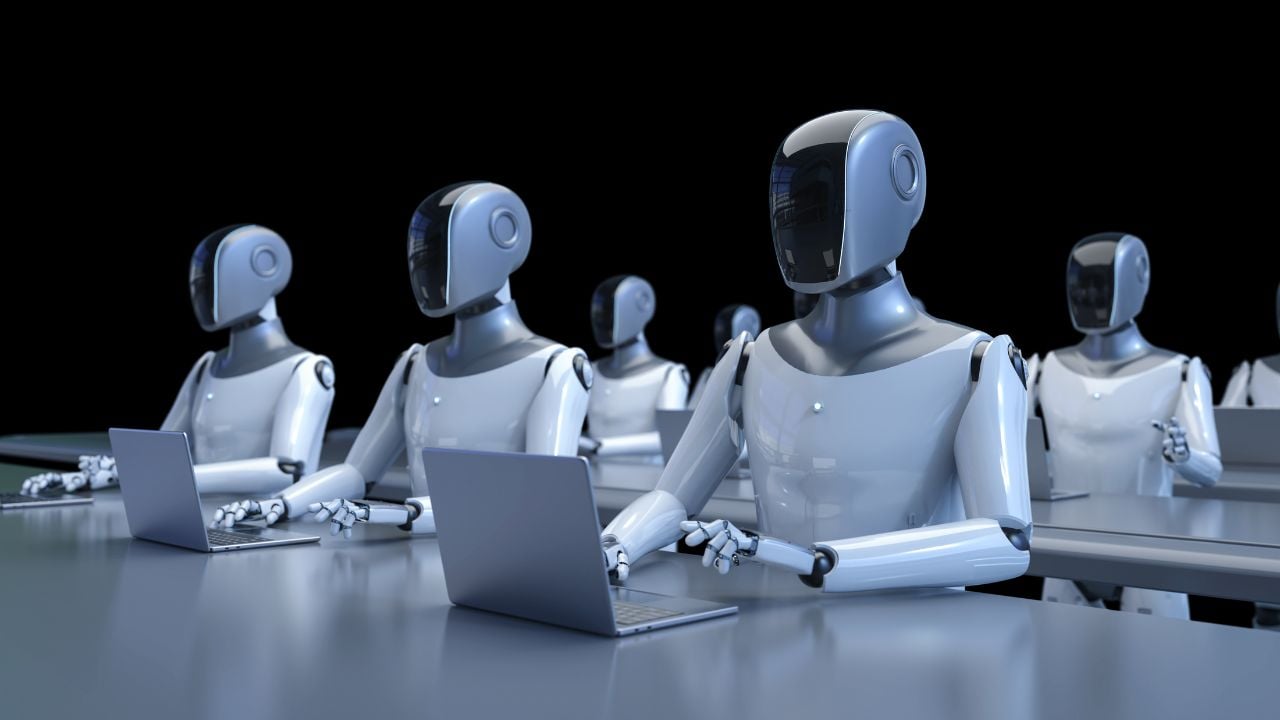
Goldman Sachs Research estimates that 6% to 7% of U.S. jobs could be displaced if AI adoption accelerates, but history shows that such technological disruption is often followed by a rebound in new types of employment.
Short-Term Shock, Long-Term Change
Job losses due to AI could push unemployment slightly higher — by about half a percentage point during the transition — but those effects tend to fade within two years. This mirrors past tech-driven disruptions where automation temporarily displaced workers, only for new roles to emerge in growing industries.

In fact, over 60% of current U.S. jobs didn’t exist in 1940, showing how innovation reshapes the job landscape over time.
Early Disruption Hits Creative and Tech Roles
While overall AI adoption remains relatively low — fewer than 10% of U.S. companies have implemented generative AI in production — early signs of disruption are already surfacing. Roles in marketing, graphic design, admin support, and customer service are seeing slowed growth.

Even the tech industry itself is feeling the squeeze, with employment dipping below pre-pandemic trends and young tech workers facing rising jobless rates.
Who’s Safe and Who’s at Risk
Jobs most vulnerable to AI automation tend to involve repetitive, rule-based tasks (telemarketers, proofreaders, legal assistants, and accountants). Meanwhile, positions requiring human judgment, decision-making, or physical presence — such as executives, radiologists, and clergy — face far less risk.