



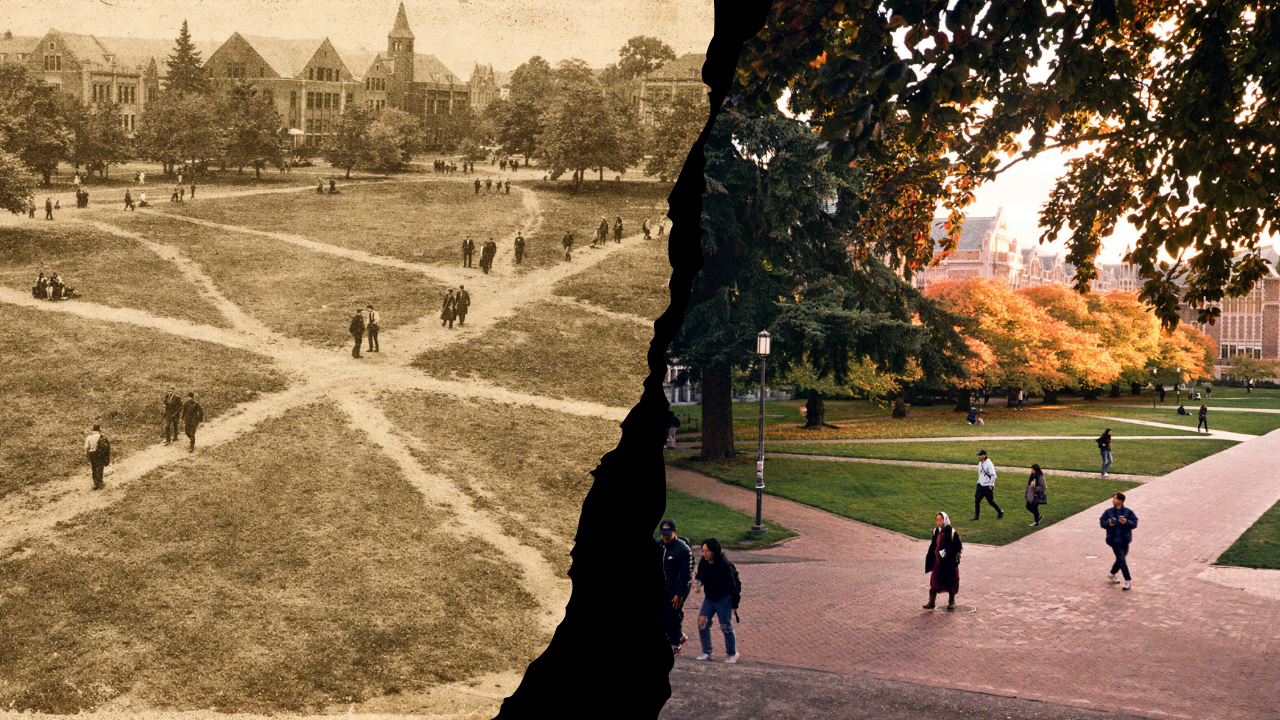
You may not be familiar with the term “desire paths,” but you’ve definitely seen them.
Desire paths are the paths people make where we wish there was a path. Or, as author Robert Macfarlane puts it, the “paths and tracks made over time by the wishes and feet of walkers, especially those paths that run contrary to design or planning.”

The above photo is a desire path at Ohio State University, and the resulting sidewalks that followed the desire paths of students rather than putting in sidewalks that students may, or may not, actually use.
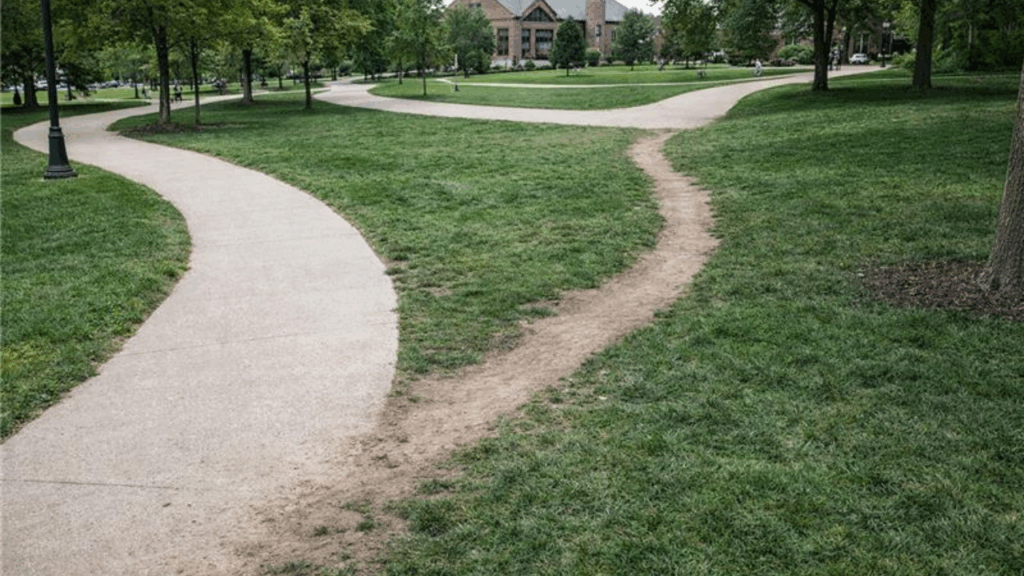
Here’s another example of a simple desire path like those you may see on a daily basis.

 So what do desire paths have to do with coworking?
A lot.
They are a visual reminder that you can’t build community — or a great coworking space — from the top down. Your members need to be part of the decision making and planning.
Programming, norms, common area layout, clubs, recurring events, etc.
Sometimes this member involvement will be overt: “What events would you like to see in the space this quarter?” or “What do you think about creating another quiet zone?”
And sometimes it will be through listening and observation.
What are people talking about?
What type of events do they attend?
What norms are naturally emerging in the space?
Where are people making calls?
Where are they working heads-down?
When do they leave their desks?
When do they spend time in the kitchen?
What challenges are they facing?
What are they working on?
What are they struggling with?

Who are they connecting with?
Etc, etc, etc.
This is the community-building equivalent of desire paths.
Building a space and community that actually works for your members requires asking, observing, engaging, and knowing your members: who they are and what they do. As with a great park, pathway, town, or city, people should be included in the creation process of your community and your space.
As urban planning legend Jane Jacobs said, “There is no logic that can be superimposed on the city; people make it, and it is to them that we must fit our plans.”
So don’t try to build something you think your members might want. Ask your members what they want, observe how they use and engage with what’s already in the space and community, then do more of that.