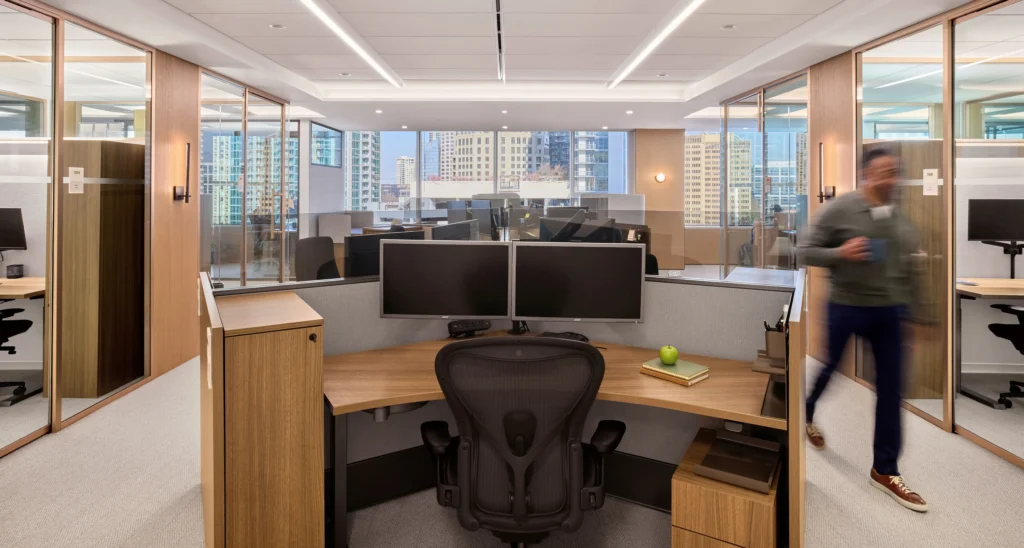

Unassigned seating, hoteling, hot desking, free address — call it what you want — an open office for people to work for a few hours during the day may seem like a workable solution for business environments, but be sure to understand the pros and cons before implementing this option.
The differences between assigned and unassigned desking
Unassigned desking can be an effective way to reduce square footage of space. It can be good for workers who travel a lot and for those who spend most of their time off site, visiting client spaces or out of the office on appointments.

Desk sharing protocols can be implemented for improved communication, behavior guidelines and to reduce the number of desks needed in the workspace. Unassigned desks are good to have for drop-in workers who may be from another office or location but need a place to work while traveling.
Unassigned desks are also a good option for workers, summer interns and contract workers who may only be in the office for a few months.

Workers, without assigned desks, lean more heavily into electronic or digital communication. While chats are great for quick back and forth dialogue, many workers are hungry for in person engagement and collaboration opportunities.
A high volume of emails and chats to resolve an issue can lead to frustration among team members, inefficient work, and poor communication. When workers spend unnecessary time trying to track down those they need to get direction from, it can lead to frustration, headaches, disorganization, and stress.
Based on the Gensler Workplace Survey 2026 workers who put culture, learning and innovation as high priority prefer to have an assigned desk.
Assigned desks provide better access to team members, enrich bonds with colleagues, and promote more mentoring. If workers know where to find colleagues, they will spend less time searching for them.

Workers with consistent desking spots build positive communities, promote more learning and culture together.
Consider reviewing team desk placement adjacencies periodically, to promote more effective workplace environments where teams and departments who work often together are strategically placed near each other. Look at re-evaluating desk assignments on an annual or semi-annual basis to ensure teams are placed in effective proximity to one another.
The workplace survey research also tells us people are still lacking in meeting space, and we are seeing assigned desking as a potential solution to the issue. Flexible options in the workplace matter and those options need to be meaningful. Provide choices in types of work settings, sizes of work areas and variety of seating postures for additional benefits.
Additionally, according to the Neurodiversity in the Workplace report, providing workers with more control over their environment can lower sensory thresholds and reduce effort to regulate and recover.
When we design spaces for neurodivergent workers, they overwhelmingly prefer an assigned desk because when made to work in an environment with all unassigned desks, it can create anxiety, unpredictable working conditions and make focusing more difficult.
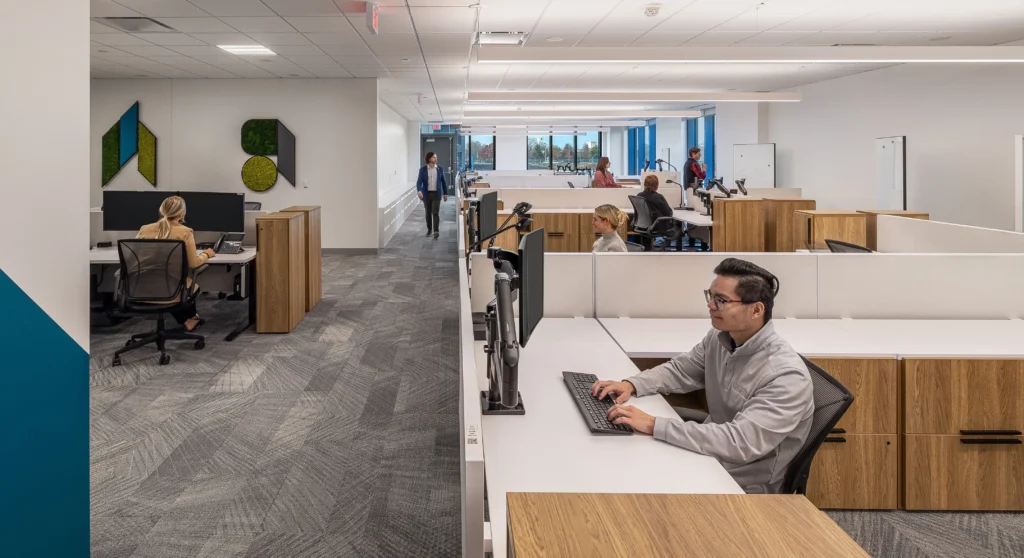
Personal preference for desk arrangements can vary among all workers and offering options can lead to more positive experience. Light levels, comfortable temperatures, acoustic properties, preferable views, all vary in the office environment. Wellness, inclusion, and belonging are important for today’s high performing workers and talent development.
Having flexible choices and options in the work environment helps build a more inclusive workplace. Gone are the days of one size fits all approaches. Avoid having the same desk solution and desk size for everyone.
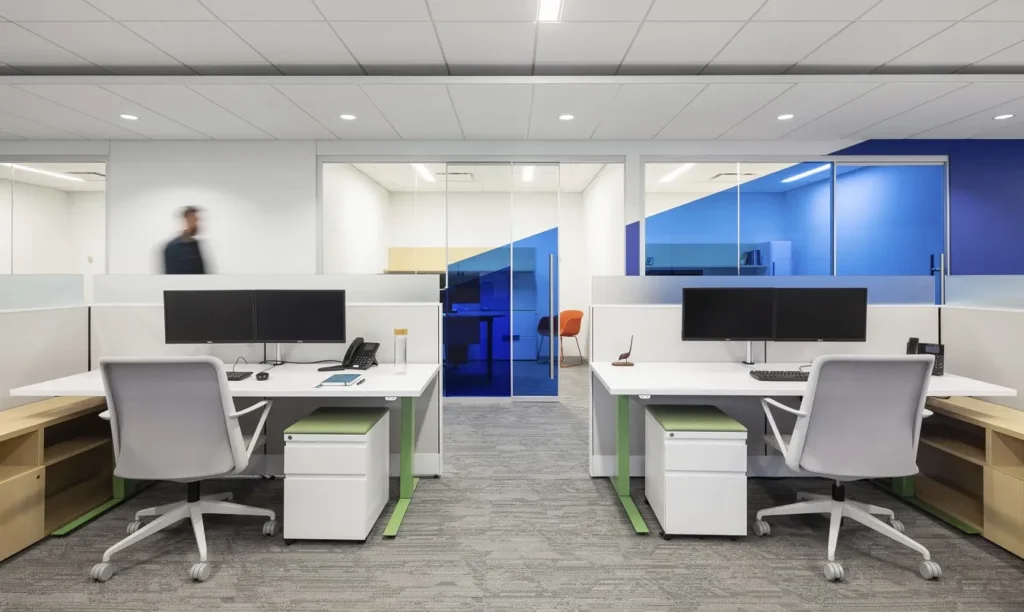
An effective approach is providing a mix of desk sizes and types, such as L-shaped surfaces for workers who need more layout space, and different storage options in the desking area. Some workers need little or no storage space, but most have a backpack, lunch bag, purse, and/or workout bag, so having accessible and secure areas for personal belongings is essential.
Different solutions for different needs
People’s needs and preferences are different. Giving workers the ability to adjust their work environment helps, so consider opportunities to adjust light levels throughout the day with individual desk lamps and adjustable window treatments.
Benching desks can also be a workable solution for some workers but may come with unintended consequences. These desks are typically smaller with a straight surface and limited or no storage and tend to have poor acoustic properties, especially if workers are on numerous calls during the day. Utilizing screens and spines between desks can improve audibility.
Energy saving opportunities in the work environment are also critical factors when determining assigned desking. At home, we often close rooms not in use and shut vents, close the window coverings to reduce heating, cooling, and air consumption. These steps may also be taken in the workplace. Perhaps you have workers who travel often or come into the office part time. Strategically planning for their desks to be in an area that can be closed off may cut down on energy costs.
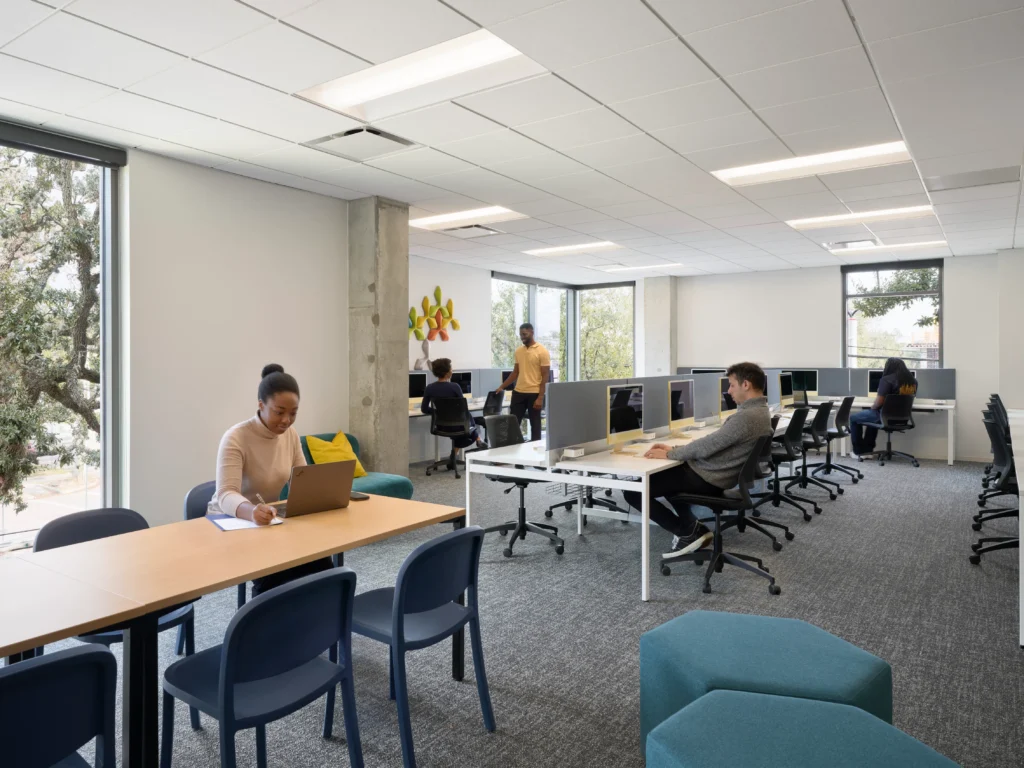
Regardless of whether you choose assigned or unassigned desks, avoid having a large sea of workstations. The noise and visuals are undesirable. Break up the areas with smaller numbers of clusters and create neighborhoods of desking areas.
Incorporating open shelving for accessories, pin up space, and areas for plants can be effective ways to break up space and offer areas for teams to add personalization. Vegetation, plants, and biophilia can bring positive enhancement to the work environment and overall health and wellbeing to workers.
It is important to continue to collect more data from workers to study the evolving needs and preferences. Occupancy surveys and workplace strategies can shed more light on user experiences and can be a productive way to hear and gather feedback from your employees. If you conduct regular surveys with your employees, consider including questions about their built environment and furniture solutions.
As the workplace is evolving, it is important to capture data and feedback from people. Consider offering a mix of unassigned and assigned desks in your space. Balance is key and is an effective way to give workers more choice, variety, and control over their space. As the needs of people are changing, we must provide workers with more effective and holistic work solutions.