

- Americans are increasingly neglecting to use their vacation days, leading to negative consequences for personal and professional wellbeing.
- The blending of business and leisure, along with remote work, has blurred boundaries, making it harder for people to take true breaks from work.
- Despite technological advances that can partially facilitate work in one’s absence, both employers and employees need to prioritize taking time off to enjoy the benefits of improved morale, job satisfaction, and overall productivity.
This article was written by PLASTARC’s Melissa Marsh for Work Design Magazine.
As summer comes to a close and fall creeps in, the time to lounge poolside with the latest episode of your favorite podcast, or slow down and catch a sunset, is behind us. For some, these summer vacation moments allowed them to step back, exhale, and enjoy time away from the grindstone.

For others, though, a lack of respite makes this a time when we, as Americans steeped in the myth of bootstraps and merit, must come face-to-face with our sometimes unhealthy obsession with work.
And the number of folks who don’t take a moment to decompress is growing quickly.

In the U.S. today, workers are about half as likely to take vacation as they were 40 years ago. And the younger the worker, the bigger the reluctance: whereas Boomers and Gen X still tend to take off at the same rate they always have, Millennials and Zoomers are letting their personal days pile up.
In 2018 alone, there were 768 million unused vacation days in the U.S., with more than 30% of those days being forfeited altogether.

But this collective tendency that many of us have to keep plugging away doesn’t make it any less vital that we find ways to take space from work.
Not taking vacation time can have a deleterious effect on both our personal and professional lives, the impacts of which have already been well-documented: fatigue, a lack of focus, decreased productivity, and reduced creativity are just a few.

With that in mind, we’ll break down this uniquely modern trend, and then include a list of brain-candies (books, podcasts, etc.) that just might entice you to actually cash-in on that pile of vacation days you’re neglecting to use.
If you do manage to pull yourself away from the office — and no, working from home doesn’t count — we’ve offered plenty of exciting materials for you to check out.
What Happened to Taking Downtime?
There are countless explanations for why many of us rarely take the vacation time that the activists of the Industrial Revolution and countless union reps fought so hard for: we worry that there’s no one to cover us, that we need to save our “personal days” for unforeseen family emergencies, that we won’t be able to relax or unplug in any case, so why bother going?
Sometimes we don’t feel like we have sufficient disposable income to travel, or we’d rather have cash if our company “buys” those days back from us.
Plus, the piles of work will probably build up during our absence — that prospect seems so daunting, we simply opt-out.
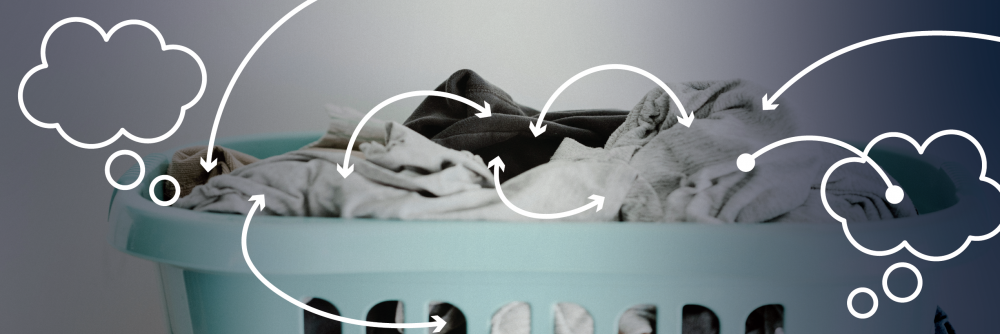
While this vacation-less trend dates back to the 2010s, the more recent rise of remote work has accelerated it greatly. The softening of the formerly hard boundaries between “the office” and “home,” or even “work” and “play” are making it more difficult to carve out time for ourselves.
In a world where you can easily fold your laundry while you brainstorm with colleagues, or attend a meeting on your phone from your glamping site, the idea of a true vacation starts to seem wishful, or even frivolous.
This has given rise to the mass adoption and acceptance of “bleisure,” a practice — perhaps even a lifestyle — wherein the boundaries between leisure and business are completely dissolved.
This extensive report from the folks at booking.com encapsulates the international rise of bleisure trips, wherein workers extend their business trips so that they can take in the local scenery.
Don’t get me wrong, it’s great that we have more choices about when we work and where we work from. But that doesn’t mean that we shouldn’t “take off” as a result.
Though Americans may be less willing to step away from “real life” in order to decompress, it still behooves employers to incentivize these much needed breaks. In this article, SHRM, the world’s largest human resources community, demonstrates how employers see “improved employee morale and job satisfaction, decreased absenteeism and turnover, increased productivity and lower health care costs” when their workers actually take advantage of their available vacation days.
And while certain innovations like video conferencing have made vacations seem less essential, perhaps others are making it more possible. Although it can’t yet offer the creative contributions that a human being can, a new bot, Otter Chat, can attend your meetings in your stead, take notes, send follow-up emails, and even write a blog post about the content covered. With this kind of technological prowess at our disposal, we should have fewer qualms about taking a few days away from work.

Some Fun Diversions
If you’re too nerdy for true leisure — meaning, like us, you think about work for fun — we’ve got a few reading suggestions that could offer some distance from the office.
To start off, here’s another gem from our friends at SHRM: a reading guide with you in mind. For the even nerdier, here’s a guide to appendices that I recommend for the social scientists in the room.
Amy Rosen, a sociospatial designer for PLASTARC, offers an array of work-related resources, including this New Ways of Working Playbook, which features an array of insights grounded in both theory and practice. They’re also a fan of The Data Viz Project, a handy and comprehensive digital toolbox of data visualization typologies that can be used in a number of professional contexts.
They also appreciate how this Future Forum piece, “What is a Personal User Manual,” positions employee-crafted manuals as a tool for optimizing distributed culture while guiding teammates on the best ways to work and genuinely connect with one another.
If you’re looking for a flight of fancy, this article helps to constructively ponder how one might live differently if they had $10 million.
The story of Morgan Curtis, who chose to opt-out when he had plenty of money, offers a great parable for those of us who can’t imagine an alternate professional life — this episode of Marketplace recounts his journey.
Or if you love thinking about data, Pudding.cool offers a wealth of data-driven stories, such as which 90’s books have made it to the “canon,” according to university professors, or why a transactional economy may be designed to uphold the one-percent.
And if you want to travel but can’t quite get yourself on a plane, Pudding even gives us an audio/visual tour exploring Mexico City, through the perspectives of its street vendors.
With fall upon us, we hope you find some time and space to relax as the year winds down. Whatever form of vacation, staycation, or bleisure you’re embracing, some time away from the office will go a long way towards providing the kind of relaxation that actually does improve future performance, at least for a short time.