




While gender equality is often framed around pay, leadership, and safety, respect is an equally vital but underexamined element. This International Women’s Day, new data from Gallup highlights how global perceptions of respect toward women are changing — and why it matters.
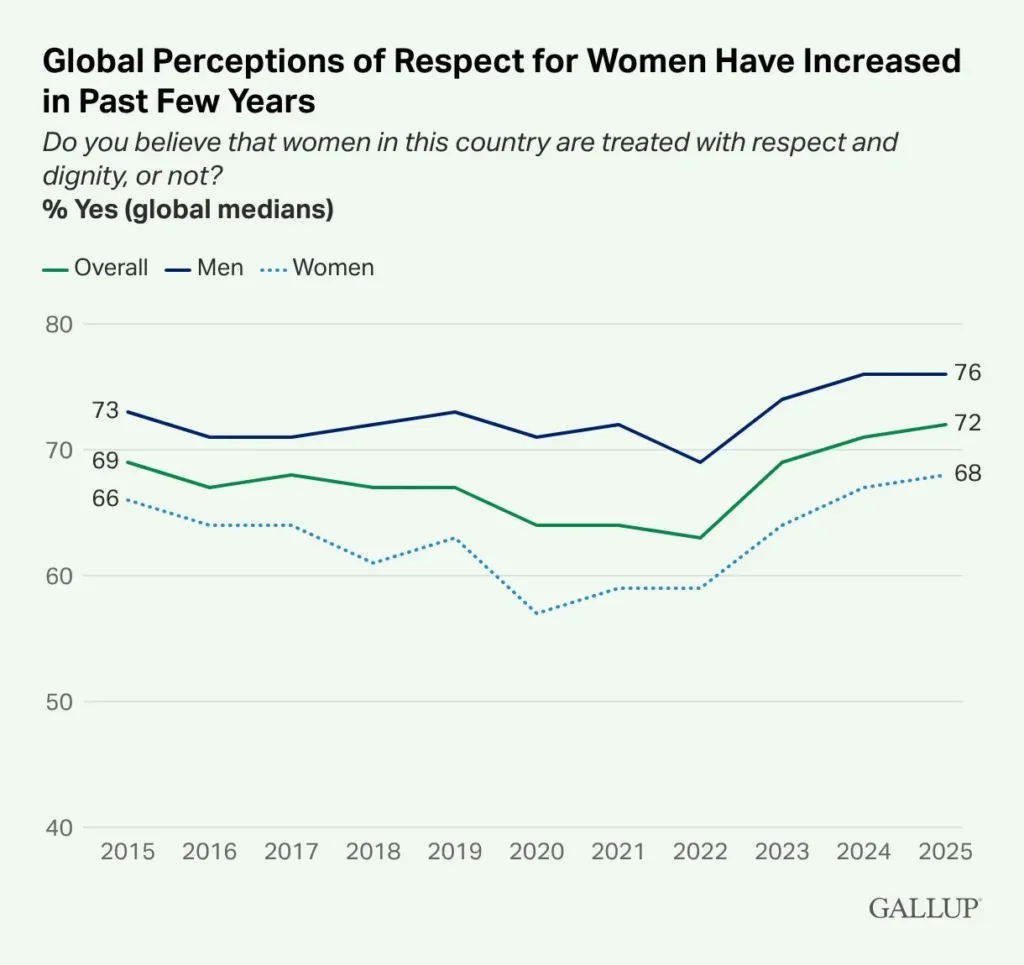
After declining in the early 2020s, perceptions of respect have rebounded sharply. Today, 72% of people say women are treated with respect and dignity, a nine-point increase since 2022. The change signals more than a shift in attitudes; it points to a factor that shapes economic participation, workplace culture, and long-term societal performance.

Where women feel respected (both in society and at work), countries tend to see higher workforce participation, stronger leadership pipelines, improved wellbeing and living standards, and greater economic resilience.
Respect, in other words, is a driver of prosperity.

For organizations, respect must become a strategic imperative. The future of work depends in part on whether workplaces create conditions where everyone can contribute and thrive. Leaders must prioritize building a culture of respect, recognizing that human capital remains the defining competitive advantage.
Perception Gaps Persist Despite Rising Respect
Global perceptions of respect for women have risen steadily after declining during the early 2020s, following the heightened visibility of the #MeToo movement. Across more than 20 countries in Southeast Asia, the Middle East and North Africa, Eastern and Southern Europe, and Latin America, perceived respect has improved by double digits.
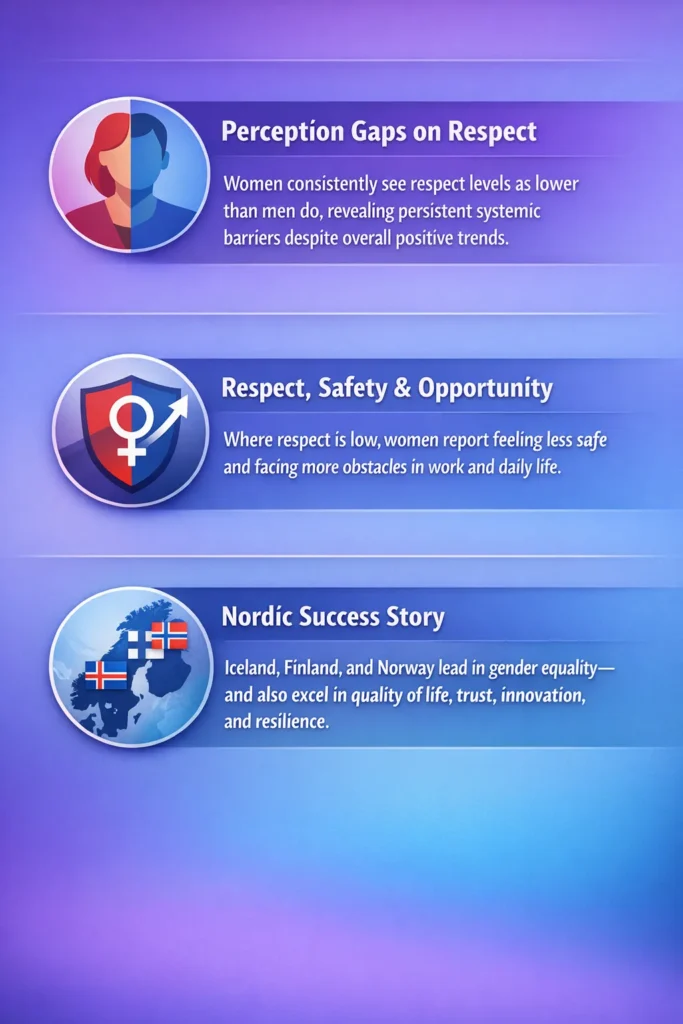
A consistent perception gap, however, persists between men and women. In 87 of the 140 countries surveyed by Gallup, men were significantly more likely than women to say women are treated with respect. In the remaining 53 countries, men and women reported similar views.
In no country were women more likely than men to say women are treated with respect.
In several countries, the perception gap is especially pronounced. The largest gaps appear in Portugal (26 points), Australia (25 points), and Greece (24 points). In the United States, the gap exceeded 20 points for the first time in recent years: 67% of men say women are treated with respect compared with 46% of women.
Other advanced economies, including Japan and Mexico, also rank among the ten countries with the widest perception gaps.
These differences matter because perceptions influence expectations, workplace culture, and policy priorities. People often act based on what they think others believe about gender roles — even if those beliefs are mistaken — which can reinforce outdated practices and slow progress on equality.
Data from the Organisation for Economic Co-operation and Development show that restrictive norms limit women’s participation in employment and access to capital, creating barriers to economic growth. For organizations and economies focused on the future of work, closing these gaps is, therefore, both a matter of fairness and a strategic necessity for long-term competitiveness.
What Gender-Progressive Economies Reveal About Respect
Countries that rank highest on global gender equality measures (including Iceland, Norway, Sweden, Germany, and Finland) share several structural advantages. These economies combine high female labor force participation with robust social protections, generous parental leave, accessible childcare, and leadership cultures with more accessible paths to senior roles for women. Together, these conditions enable more women to remain active in the workforce, pursue leadership opportunities, and contribute to economic and civic decision-making.
Policy design plays a central role. When family supports, workplace protections, and transparent career advancement systems operate together, they reinforce a broader culture of dignity and fairness. Respect shows up not just in attitudes, but also in the policies and institutions that shape daily work life.
The economic effects accumulate over time. In countries where women report higher levels of respect and support, workforce participation rises, leadership pipelines strengthen, and productivity improves.
The Nordic economies illustrate this relationship particularly well. They consistently report high living standards alongside strong economic performance, demonstrating that respect for women is both a social value and an economic asset.

For countries seeking to strengthen their future labor market, the message is clear: systemic policies matter more than isolated initiatives. Comprehensive parental leave, integrated childcare systems, and transparent promotion practices can ensure women remain fully engaged in the labor market throughout their careers.
 Why Respect in the Workplace Matters
Respect is the recognition of individuals’ dignity, value, and contributions through fair treatment, safety, and equitable opportunities. When workplaces uphold these principles, women participate more fully, engagement rises, and organizational performance improves.
When women are viewed as less respected or credible, these perceptions shape everyday workplace behavior and institutional practices, affecting who is hired, promoted, funded, or trusted to lead.
The result is fewer women entering or advancing in the workforce, weaker leadership pipelines, and reduced innovation over time.

Where women report low levels of respect, they are also more likely to experience both physical and psychological insecurity, which affects everything from commuting decisions to career risk-taking. Conversely, when respect increases, women report higher life satisfaction and optimism, which in turn boosts engagement, productivity, and overall economic contribution.
Respect in the workplace drives measurable outcomes:
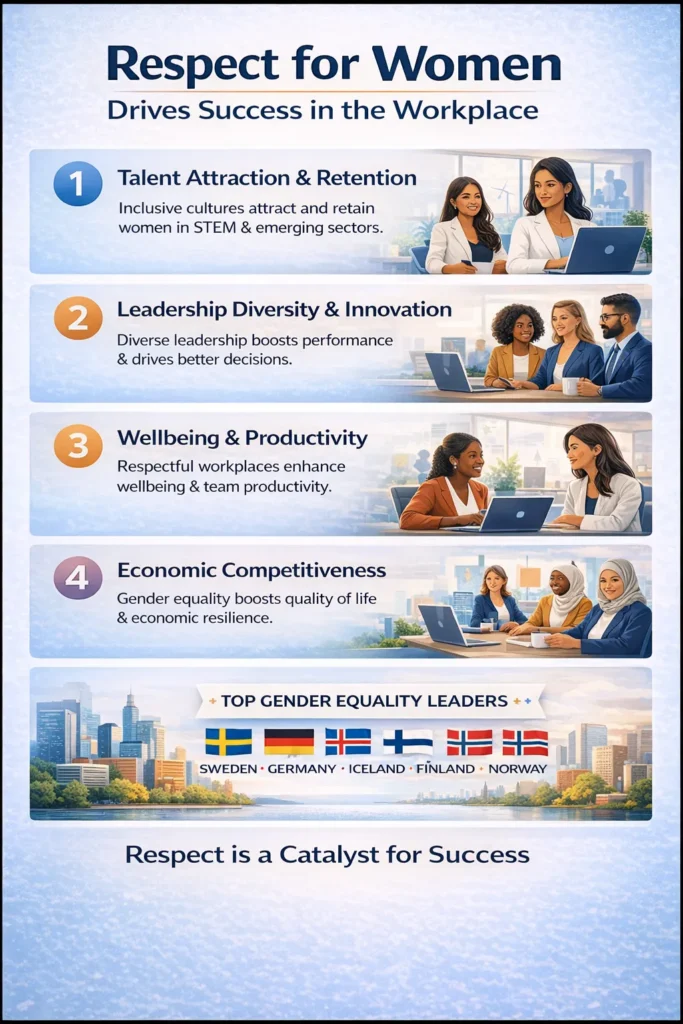
- Talent attraction and retention: Respect helps organizations attract women into emerging sectors such as technology, AI, and STEM, and retain them through life-stage transitions.
- Leadership diversity and innovation: Environments where women feel respected support higher participation in decision-making and problem-solving.
- Wellbeing and productivity: Respect underpins psychological safety. When women feel valued, engagement and output rise.
Practical strategies to increase respect in the workplace include offering fair pay, opportunities for advancement, robust anti-harassment policies, flexible work arrangements, and leadership development programs.
For organizations focused on the future of work, closing the gap between perception and reality is a strategic priority. Companies that fail to respect and value large segments of their workforce will risk constraining growth and resilience.

Turning Respect into a Competitive Advantage
Technological disruption, demographic change, and geopolitical uncertainty will characterize the next decade. Sustained growth under these conditions will require full economic participation. Women remain one of the largest untapped sources of global economic growth, and organizations—or entire economies—that fail to fully respect and value this population risk limiting their long-term resilience.
When respect is paired with policies that ensure safety, opportunity, and equity, it becomes a source of competitive advantage. Greater participation by women expands the talent pool and broadens the range of perspectives guiding decisions. Estimates suggest that if women participated in the workforce at the same rate as men, global GDP could increase by a staggering $7 trillion over the next decade.
Leaders can turn respect into an organizational asset by putting it into practice in concrete ways. This includes integrating respect into employee engagement and ESG reporting, ensuring respect is measured alongside other indicators of organizational responsibility and ethical performance.
It also means designing caregiving policies that enable career growth, creating transparent pathways to leadership, and treating dignity and safety as core economic priorities rather than just HR concerns. Organizations that embed respect for women in both their policies and culture will find that it moves beyond a cultural aspiration and becomes a tangible driver of sustainable growth, innovation, and workforce performance.
Honoring Progress, Committing to Action
The recent rise in perceived respect for women is encouraging, but perception alone is not enough. Respect drives participation, and participation fuels growth. To turn momentum into lasting change, organizations must translate respect into concrete policies, measurable reforms, and increased leadership representation.
On this International Women’s Day, the lesson is clear: respecting women in the workplace is both a moral and economic imperative. Those who act decisively today are building the foundations for an inclusive, high-performing future of work.