The office is staging a comeback, and right now, employees seem happy about it. After years of hybrid uncertainty and grudging returns, the mood has flipped. Workers are showing up more, and reporting that the office actually helps them do their jobs. That’s a meaningful change, and for workplace leaders, it’s an opening worth taking seriously.
JLL’s Human Experience (HX) research drawn from nearly 15,000 survey respondents puts numbers to what many in the industry have been sensing. Three-quarters of employees now say the workplace contributes to their productivity and employees who spend more time in the office report significantly higher satisfaction than those who come in once or twice a week.

But there’s a catch. The same data that shows a more optimistic workforce also reveals a growing mismatch between how offices are designed and how people are working in them. Collaboration-forward layouts, built for the post-COVID return, are running up against a challenge: how do you get heads-down work done in a space designed for anything but?
Fortunately, the survey data is specific about both. And the gaps it uncovers go well beyond the floor plan.

The office is earning its keep in unexpected ways
In-person attendance is up to 3.2 days per week globally, compared to 2.7 in 2024, and the way employees are spending that time tells an interesting story. Focused, individual work now accounts for 51% of office time, up from 48% the previous year. Employees are coming in to collaborate, but also to concentrate. In fact, 63% say that even though focused work can be done at home, they want to do it in the office, too.
That preference shows up in why people come in at all: alongside socialization and collaboration, office technology, work-life separation, and focused work all rank among the top reasons employees make the commute. Concentration, it turns out, is its own draw.
Face-to-face meetings are growing, wellbeing perception has improved, and the kinds of spaces employees want are getting more specific. Small huddle rooms and large conference spaces are in demand, medium and breakout rooms, less so. And with most meetings still involving at least some remote participants, seamless hybrid capability in every room has moved from nice-to-have to expected standard.
The gaps that need attention
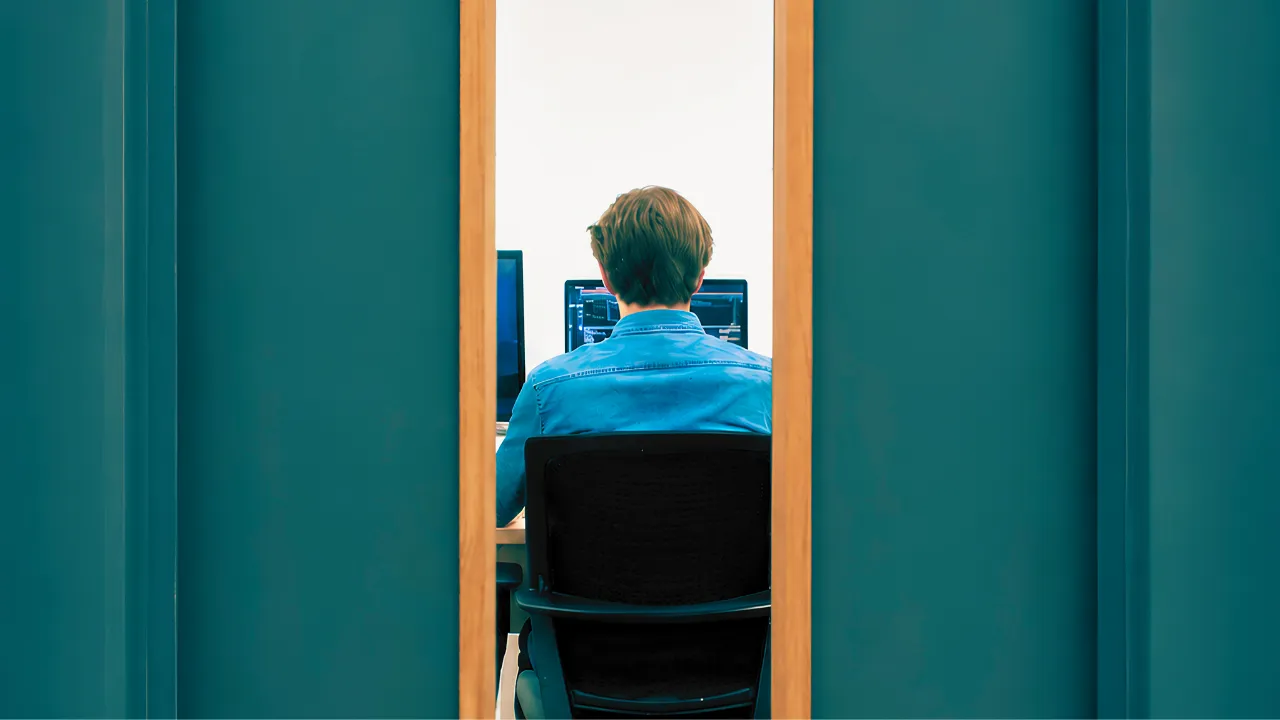
Of course, that optimism has a fine-print section. The worst-performing workplace factors in the survey are all tied to individual work: sound privacy, acoustics, focused work support, and private workspace. While collaboration spaces largely seem to be meeting expectations, today’s biggest complaints center around everything that happens in between meetings.

Nearly a quarter of employees cite noise levels, lack of focused space, and lack of call privacy as barriers to working effectively from the office. Open-plan layouts that push people to take calls at their desks, narrow workstations in high-traffic corridors, focus rooms monopolized for the day by colleagues who’ve claimed them as a private office: these are the daily frustrations wearing away at an otherwise improving picture.
Those pain points vary with age. Employees 35–54 cite acoustics most prominently, while those 55 and older flag private workspace, and workers under 35 are the most vocal about food quality and thermal comfort.
Technology can add another layer of frustration. Unreliable Wi-Fi, missing or malfunctioning cables, monitors that aren’t at every desk — these are table-stakes failures that quickly undermine an otherwise improving experience. The same goes for wellbeing provisions like nutrition and thermal comfort, which rank among the lowest-scoring factors overall.
Workers have real expectations around how well employers support them day-to-day, and right now the office is falling short of some things they’d consider basic.
Six things workplace leaders can do now
The good news: there are plenty of ways to address those shortfalls, and then some. Workplace leaders ready to act should start here:
1. Treat acoustics as infrastructure.
Soundproofing meeting rooms, adding phone booths, and creating properly designated quiet zones are productivity interventions first. Start with an acoustic audit before adding any new square footage.
2. Lock down the basics.
Clean, well-lit, reliably equipped spaces drive satisfaction more than many premium amenities. Wi-Fi stability, functional monitors and connectors, and consistent maintenance are the foundation everything else rests on.
3. Rebalance your meeting room inventory.
Shift toward small huddle rooms and larger conference spaces. Review every room for AV consistency; hybrid participants should have an equivalent experience regardless of which room the in-person team is in.
4. Take food and wellbeing seriously.
Improve cafeteria quality, variety, and pricing and close the distance between supply and demand for on-site dining. Add healthy snacks, reliable coffee, and fresh options. Younger employees are paying extra attention here, and the data on retention suggests you should be, too.
5. Invest where it actually matters to employees.
Community spaces are widely provided but underleveraged, while creative spaces, including project rooms, design thinking spaces and brainstorming rooms, are in short supply despite strong demand. Regular check-ins on which spaces employees find valuable keep investment going to the right places.
6. Make the rules as clear as the floor plan.
Great spaces underdeliver when people don’t use them as intended, from focus rooms claimed all day as private offices, to meeting rooms left empty after no-shows. Booking policies, etiquette guidelines, and clear signage on space intent help ensure design intentions come through in real-world use.
The workplace that wins from here
The HX data reflect a workforce that is increasingly happy to show up and feeling better about it than they have in years.
Organizations that respond to this moment deliberately by filling the gaps the data has made visible, designing for focus as much as collaboration, and treating wellbeing provisions as a baseline rather than a bonus will build workplaces that become a genuine reason people choose to be there.
Done right, this comeback is just the beginning.