



Corporate leaders have spent years trying to understand the way Gen Z communicates, but workers in this younger generation actually have a simple request for office talk: say what you mean.
New Preply research suggests younger workers find stock corporate phrases like “circle back” and “synergy” vague, which raises a question employers may find uncomfortable. Should a vocabulary built by several generations of professionals bend toward its newest members, or should newcomers learn the local dialect?

What Gen Z Workers Say They Would Use Instead
Preply analyzed Reddit discussions about workplace jargon, U.S. search data and a small exercise with some Gen Z office workers. “Circle back” drew the most complaints in the Reddit threads, followed by “synergy,” “bandwidth,” “touch base” and “take this offline.” Search data pointed to confusion as well: “paradigm” drew about 311,000 U.S. monthly searches, “synergy” about 310,000 and “best practice” about 303,000.
When the Gen Z workers were given definitions and asked how they would say the same thing, they often chose plainer words: “teamwork” for “synergy,” “availability” for “bandwidth,” “check in” for “touch base” and “quick win” for “low-hanging fruit.”

The Case For Meeting Younger Workers Partway
Preply reads the findings as a preference for clarity over informality, and says the frustration centers on how vague many of these phrases are. Its survey data adds that 82% of Gen Z respondents have seen communication problems or conversation avoidance cause trouble at work, and 39% would use workplace communication training if their employer offered it, the highest share of any generation surveyed. Search interest in “take this offline” and “run it up the flagpole” has also dropped 50% and 47%, a sign that some jargon is already fading without anyone issuing a mandate.
The Case For Newcomers Adapting
A reasonable counterpoint is that workplaces with several generations of working professionals have their own shared shorthand, and asking everyone to retool for the youngest and most junior group is a big request. Consider a person who moves to another country; the usual expectation is that the newcomer learns the local language, while the culture gradually absorbs a few borrowed words and habits in return. Applied to the office, entry-level workers who learn the existing vocabulary gain fluency in how senior colleagues think, and the workplace can adopt the clearer terms that prove useful on their merits.
Jargon Runs In Both Directions
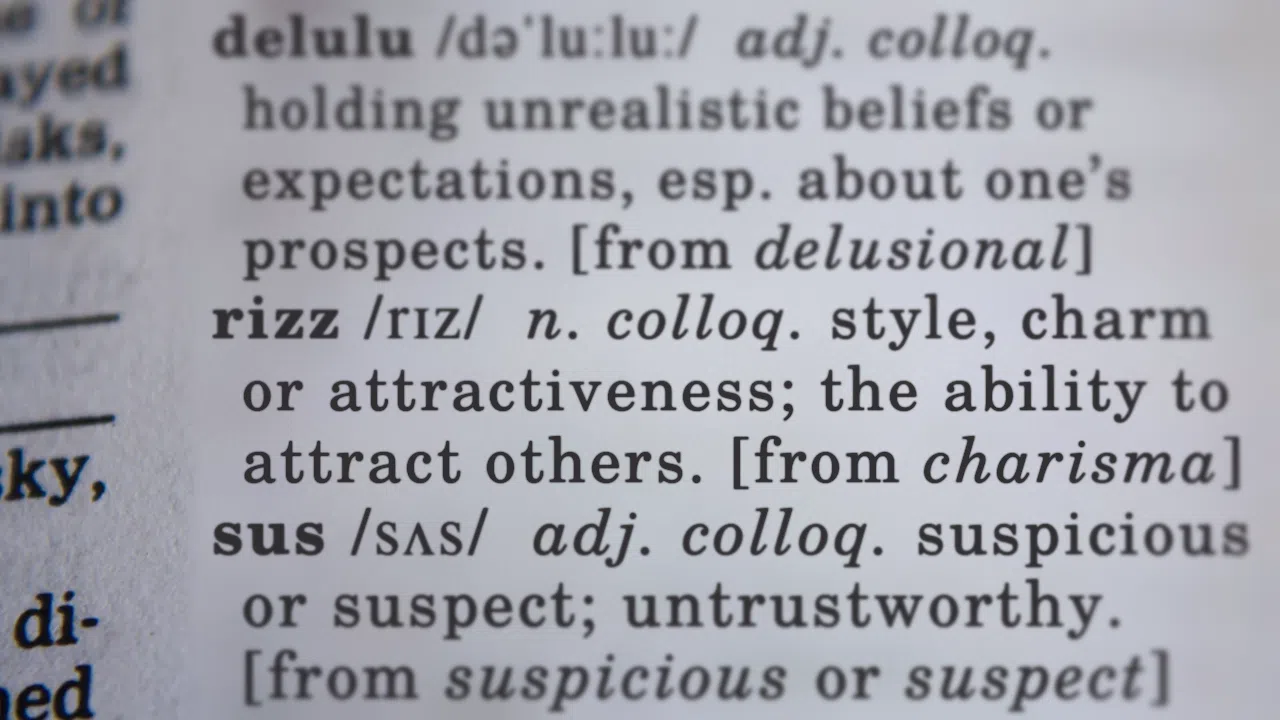
Preply’s slang survey complicates the idea that confusion flows one way. It found baby boomers the least likely generation to understand Gen Z terms such as “delulu,” “rizz” and “sus,” while Gen Z was the most likely to use “vibe” at work. Younger employees bring their own vocabulary that older colleagues have to decode.
For employers, the question is how much accommodation should be expected from everyone else. Every generation brings its own expressions, habits, and communication preferences into the workplace, but that doesn’t mean the existing workforce should have to abandon its vocabulary whenever a new generation arrives. Gen Z workers can make a case for clearer communication, especially when jargon creates confusion, but learning how colleagues communicate is also part of joining a professional environment.
There is room for both sides to adapt. Senior employees can drop phrases that obscure what they actually mean, while younger workers can learn the shorthand and context that have developed over years of working together.
The question is whether Gen Z is asking for clearer communication — or expecting the workplace to change its language around them.