



About This Episode
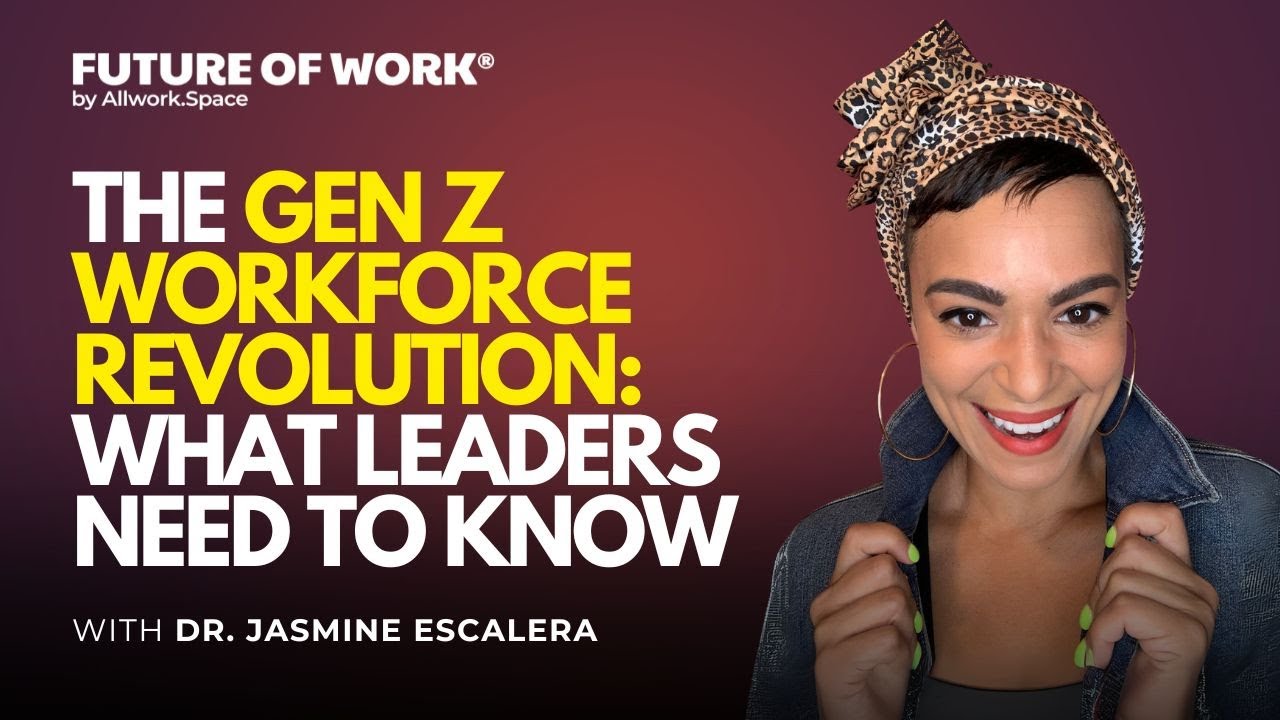
In this eye-opening episode of The Future of Work® Podcast, Dr. Jasmine Escalera, a career strategist and LinkedIn Top Voice, explores how Gen Z is reshaping the workplace from the ground up. From redefining success and demanding mental health support to leveraging TikTok for job applications, Jasmine explains why Gen Z isn’t killing workplace culture — they’re rebuilding it.
She also dives into the declining value of traditional education, the rise of trade and freelance jobs, and the urgent need for millennial leaders to step up as mentors. Packed with insights on AI, HR policy shifts, and generational tension, this conversation offers an unfiltered look at how the future of work is unfolding before our eyes.

About Dr. Jasmine Escalera
Jasmine Escalera, PhD, is a seasoned career expert with experience in hiring, management and leadership roles. For the past five years, she has dedicated herself to supporting professionals in finding the right roles and cultivating supportive work environments for their growth and success. Jasmine is a passionate advocate for diversity, equity and inclusion in the workplace and believes in ensuring equitable pay for everyone.
Jasmine’s expertise lies in career clarity, job search tactics, professional branding, interviewing with confidence, salary negotiation and fostering an empowered career mindset. Her insight and guidance have been featured in top publications such as Forbes, HuffPost, Nasdaq, and Business Insider. Recognized as a LinkedIn Top Voice in the career space, Jasmine is committed to helping individuals navigate their career paths with purpose and confidence.
With a Bachelor’s degree in Biochemistry and a PhD in Neuropharmacology, Jasmine brings a unique perspective to the field of career development.
What You’ll Learn
- Why Gen Z is shifting from loyalty to company to loyalty to self
- How TikTok and social media are becoming mainstream tools for job applications
- What the rise of trade jobs says about higher education’s relevance
- The evolving demands of Gen Z around mental health, flexibility, and culture
- Why millennials may hold the key to Gen Z’s workplace success
- How AI is changing job security—and what adaptability really means
- The difference between changing and adapting to change in your career
- Why beanbags and ping pong tables no longer count as company culture
Transcript
Dr. Jasmine Escalera [00:00:00] I think what Gen Z is really noticing is when we were growing up as millennials, what were we told? Go to college, get the six-figure job and the 401k, you’re set for life. That pathway, that pipeline doesn’t exist anymore.
Daniel Lamadrid [00:00:17] Jasmine, thank you so much for being with us today on the Future Work Podcast. How are you today?
Dr. Jasmine Escalera [00:00:21] I’m doing fabulous. It is a glorious and sunny day here in South Beach, so I couldn’t be happier.

Daniel Lamadrid [00:00:29] You know, you told me you were in South Beach, Miami, and I thought I’d add a little beach vibes here. Just, I’m a little bit jealous of your, yeah. I’m really excited about this episode and the conversation we’re gonna have. You as a career expert at Zeti and a LinkedIn Top Voice, you engage with professionals on a day-to-day basis, so you know what’s going on. And we both know that Gen Z is. Uh, it’s it’s safe to say that they’ve been getting some bad press lately. I mean, that’s the least we could say um They’ve been giving bad press. Lately We’re both millennials. I as you know currently Millennials um, they recently become the majority of management So right now it’s this I don’t even know what to call it. Is it a power struggle this ongoing debate between millennials? And Gen Z, we know that millennials currently are, or they say are the most burnt out generation. What are you seeing? What are seeing on your end? Why is there so much bad press with Gen Z? Is it because they’re killing workplace culture? Are they redefining it? Where do you see things going?
Dr. Jasmine Escalera [00:01:53] Well, I think, you know, what we’re seeing here is a mindset shift. You are also a millennial. I’m a millennia. We are still the age the last of the age of loyalty to company. You have to go in and be productive and show your skill set before you can ask for more. And toxic workplace that terminology didn’t even exist when I started my career. So this is a new generation that has brought in the mindset shift. You show me what you’re going to give to me before I show you what I’m gonna give to you. And they’re leaning more into work-life balance, flexibility, fulfillment at work. And in fact, if they’re not getting that, they’re job hopping, they’re ditching, they are moving on. And so I think what we’re seeing here is a change in corporate mindset from loyalty to company to loyalty to self. And what we’re needing to do as millennials is actually support the growth of Gen Z. Because if we allow Gen Z to really push the movement of healthy workplace culture, aligning our work to the things that really give us light up and are more passion-oriented and passion-filled. We might actually help to change corporate America into a space where we are more about the employees than anything else. And so I think we really need to foster Gen Z and really cultivate them and allow them to express themselves because I believe that they could actually create some shifts in the workplace.
Daniel Lamadrid [00:03:35] I totally agree. In a way, I think millennials could be the bridge between that happening, allowing these Gen Z workers to really redefine the workplace. And I mean, by 2030, I believe, Gen Z will make up 30% of the workforce. I mean it’s coming. There will be a point where they will be in charge. And I think maybe ultimately, if we don’t give them the chance, they so desperately want to change corporate America, as you say, they’re going to do it anyway.
Dr. Jasmine Escalera [00:04:14] I mean…
Daniel Lamadrid [00:04:15] Right.
Dr. Jasmine Escalera [00:04:16] I believe so. They’re either going to get the opportunity, we’re going to foster them to have it, or we’re gonna see what’s happening, which is they’re gonna start shifting away from corporate America and more into trade jobs, freelance jobs, and work that gives them what they want, which it’s so much more accessible now. When we were in the corporate space, there was no such thing as TikTok and Instagram, or maybe they were just, Instagram might have just been coming up. LinkedIn might have just been coming up, but these opportunities now that are available to them to monetize their personal brand and their skill set and the opportunity now with the way that AI is shifting corporate America for them to say, you know what, the college degree doesn’t even make sense for me anymore. I’m going to go into a trade job or even start my own business. We might start to see them just say, deuces, I’m out. I’m gonna do something else for myself. And then where are we all left?
Daniel Lamadrid [00:05:15] Yeah, I know. And I think in Adobe survey, a recent one, I think it came out last week stated that nine out of 10 Gen Z workers are actively seeking a career change. I think they’re realizing that what they’re being offered isn’t what they want. That they can get more money from out of the ordinary jobs like trade jobs, like you say. And so it Makes me kind of wonder… Who will fill these white collar jobs? More millennials? I mean, it’s interesting. I think it’ll be very interesting to see how that turns out. There’s also something happening here in terms of how they’re looking for jobs. Um, I mean, I still think of looking for a job as updating my resume, adding my picture, making it look pretty. The youngsters these days, they’re not doing that. They’re, they are doing it on social media. They’re applying via Tik TOK via LinkedIn, via Instagram. I think that’s a trend that is being accepted because a recent survey says that six out of 10 hiring managers in the US are now accepting job applications via social media. So you’re very active on social media as well. What kind of advice is Gen Z looking for online? Who are they listening to? Is it other Gen Z? Is it you, of course? What’s going on in terms of social media?
Dr. Jasmine Escalera [00:07:00] This is such a great question and it’s fascinating because what we found at Zeti is that 46% of Gen Z actually lands their jobs through TikTok, which is so interesting. So what we’re seeing here is a massive shift in the way that people are searching for positions and even landing positions. So, what’s happening now is we have a very flooded job market as we’re seeing the job numbers are going down in terms of availability. And these Gen Z-ers are starting to get much more savvy. Why am I gonna take myself over to LinkedIn when I have a TikTok presence, I have good TikTok presence. I know how to use TikTok. I can use it to my advantage. And in fact, much of the same resources as you would find outside of TikTok actually exist in TikTok. So they’re learning how to capitalize on not just a professional brand, but a personal brand, and use these social media platforms to their to their advantage. They’re also using these platforms for career advice and to seek out career expertise. So over 90% of Gen Z, according to Zeti, is actually using social media to get career advice. Now, should they be using TikTok for career advise? There’s great advice on TikTok. And in fact, there are great coaches. There’s a great expertise there. But what you wanna be cautious of is the career talk trends, the things where people are posting. You know, getting laid off or quitting from their job or posting trends that are not going to help you advance in your career and might ruin your professional brand. So you wanna make sure that if you’re using social media to land positions or to get career advice that you’re looking at it from the most professional lens possible. This is why platforms like LinkedIn are great. Because when you go into LinkedIn, you already know you got to button up a little bit. You know, you got a little more professional. Whereas with TikTok, anything goes. But when you are really using it for your career, you have to kind of think of it as how can I use this from a professional lens and how can I really capitalize on it? Not just for my personal brand, but also for professional opportunities.

Daniel Lamadrid [00:09:16] That makes total sense. And I’ve heard, I have no data to back this up, that there are, in fact, companies now more willing, like we said, to hire these Gen Z workers via TikTok. And they’re even more willing to do so if they have a big audience, because they’re searching for these. Influencer type employee advocates that the company could use to their advantage. So I mean, I think it’s a win-win maybe there.
Dr. Jasmine Escalera [00:09:50] Absolutely. Yeah, it’s definitely a win-win. If a company has a great employee who also has a brand that they’re bringing with them and the employee wants to showcase what a great company they’re working at, the different projects that they are working on, that is a definite win-winning situation there. And there are a lot of people on TikTok, a lot Gen Z-ers that are really their particular brand and land great opportunities. So why not?
Daniel Lamadrid [00:10:25] And we were saying that they’re preferring these trade jobs instead of the nine to five going to the office, even though Gen Z prefers a hybrid arrangement rather than full on remote or full on office. But if we take a step back here, if they’re looking for these trade jobs or different types of jobs or they want to be influencers. How is this impacting the education-to-career pipeline? Because it’s been said that… Workers don’t necessarily need a degree anymore to succeed in life.
Dr. Jasmine Escalera [00:11:11] Mm-hmm
Daniel Lamadrid [00:11:11] And the cost these days of higher education is just something that young workers aren’t willing to go into debt for. They’re not getting that money back in theory. What’s going on in terms of education? Do you believe that the educational system in the US specifically maybe is up to date on these new trends? Is there still space there for improvement. What happens? When maybe Gen Z realizes they don’t need higher education and they can get a higher paying job without it, what’ll happen to the education industry?
Dr. Jasmine Escalera [00:11:50] That is such an interesting question and it’s something I ponder all the time because YouTube University to me is the best thing that, you know, has ever happened. YouTube, there we go. You can get anything on YouTube and you can get it for free. I think what Gen Z is really noticing is when we were growing up as millennials, what were we told? Go to college, get the six-figure job and the 401k you’re set for life. Pathway, that pipeline doesn’t exist anymore. And so what Gen Z is really recognizing is, okay, I go to college and then I have a lot of student loan debt, but I can’t pay off because I can t get a job because the market is so flooded. AI is changing the field. I don’t even know if this career is actually going to exist in five to 10 years. So whereas we had longevity and we knew, okay, i’m going to start in this and then it was going to come this and that pipeline just simply doesn’t exist. For the vast amount of positions out there. We don’t know how these things are going to change. And so you add on to that the fact that Gen Z can make money by posting live on TikTok all day long. And you then add to that the fact they want more flexibility, more freedom, more work-life balance. And you add to, you add onto that the fact over 70% of US workers need a secondary source of income just to pay for basic life necessities. This is just like, but why? I think they’re looking at it from the standpoint of, but why would I go that traditional route if it’s not guaranteed that it’s actually going to exist for me? The bubble has burst. So when we were told this is the way it works, it doesn’t work that way anymore. And so there are just so many opportunities right now for Gen Z. To monetize or to make money in the way that they want to and potentially even have more security or more stability than corporate America can provide. So I just think they’re looking at it from the standpoint of why do an education that I’m going to have to pay for and pay back in student loans when I could just do something else? How is that going to affect higher education? How is that going to affect the education system at large? I can’t predict, but I’m going to definitely say much like everything else, everything is going to have to change. Right now, you can get a college degree with using AI.
Daniel Lamadrid [00:14:24] Yeah, yeah, yeah.
Dr. Jasmine Escalera [00:14:26] You can get a four-year college degree just with AI. You can just go to, just write every paper using ChatGPT. So that in itself is going to have to change the game.
Daniel Lamadrid [00:14:35] And I mean, you said something you yourself can’t predict. I don’t think anyone at this point can predict anything with the, with the way and the speed of how AI is advancing and changing everything. People say these are the 10 top 10 jobs in 10 years, but we don’t know that for sure. We don’t. Know how much AI is really going to advance. Will those jobs even be there? I mean it’s. I think it’s not the ability to change that will make young workers thrive or even millennials as we look into the future, but it’s the ability to adapt. Absolutely. We need to be constantly adapting. And if one can’t adapt, they’re already behind. It’s not about change. Absolutely! It’s about adapting to change. Yes, absolutely. Because change is gonna happen regardless.
Dr. Jasmine Escalera [00:15:31] 100%. Yeah. And I think when we think about it, there are certain career paths that are always going to need college educations and specified certification or specified degrees. And those likely will have shifts in regards to AI because there’ll be more automation and there’ll more support. Like for example, doctors. We’re always going to have to have doctors going to medical school. But how AI tools can be used to how they diagnose, how they treat. That is definitely something that is going to enhance the profession, not take the profession away. And so there will be career journeys and career paths that are going to just be enhanced by AI. Now, whether some will be taken away by AI, there are definitely gonna be positions that are highly automated, where we will start to see those positions taken by AI like for example, when you’re talking to someone and you get a chat bot. You used to be able to get a customer service representative. Now you get a chat bot. And that’s where we really need to be concerned. And that is where workers, all workers across the board, Gen Z, any worker needs to be asking themselves, what does my career journey presumably look like? How is AI going to potentially affect my role and my industry? And what can I be doing or learning? To be able to compliment where it’s going. And that’s the adaptability part, that’s key. What you said there is perfect because you’re going to have to adjust, adapt and change along with AI if you wanna stay in your particular profession and industry dependent on how it’s gonna change it.
Daniel Lamadrid [00:17:14] Yeah, I mean, that’s amazing advice. And I like this one quote or saying, I think a lot of people right now are reluctant to learn AI. Even a lot millennials our age, they’re not willing to accept AI because they fear that it’s gonna take their job away. And I liked the phrase, AI is not gonna take your job away, but someone who knows how to use AI will. And that’s, that’s just, that always in my head. That’s always in my head, I don’t know if it’s like a fear thing or when I go to bed at night, it’s like there, so I’m constantly looking for new tools. How can I automate this? How, you know, because that’s it. AI will only take the jobs mostly of those who don’t need, don’t understand it, don’t know how to use it because I believe they’re At least in the next 100 years, there will always need to be human interaction, human supervision, human creativity that goes alongside technology. Technology itself won’t change everything. There will always be the human aspect.
Dr. Jasmine Escalera [00:18:22] Yeah, you know, we are the strategic thinkers, and I think the way that – I love that quote because it means partnering with. We need to partner with the technology because the technology is going to – I want to say is going come. It’s already here. Yeah. How we use it is what we’re trying to figure out, and how much we use and what we use for is really the question. It’s not whether we’re going to use it, we’re using it. So you really have to think about how do I work alongside the technology, how do I learned it. How do I use it to my benefit? And if you can release the fear and go into more of that inquisitive state, how can I use it and how can i complement my skill set with it, you’ll really soar here. But if you don’t have that flexibility and adaptability, as you mentioned, then someone else who does is going to take over your role.
Daniel Lamadrid [00:19:14] No, definitely. And I mean, like you said previously, one of the biggest changes I believe that Gen Z is incorporating into the current workplace is the redefining culture through the need of mental health support. They don’t want this hustle hustle culture that we as millennials are so fixated on. How is This is changing workplace culture first, but. HR policies are, do you see that companies are adapting to these needs? Are they lagging behind? Because Gen Z will cut to the chase. They don’t want the ping pong tables. They don’t want the bean bags. That’s not what they want. And I mean, still myself as a millennial, I mean I sometimes go into an office and I see these ping pong, tables and bean bags and I’m like, Oh, this is amazing company culture, but it’s just a facade maybe, or at least to them. What are these pressures that you see companies, or specifically HR departments struggling with as they try to adapt or cater to these younger generations? Because they’re trying to bring them into the office at some point, which is, again, it’s something that Gen Z wants, you know? But what are you seeing in that regard?
Dr. Jasmine Escalera [00:20:35] Yeah, I love that you brought up the ping pong tables and the bean bags because I used to think that as well. Meanwhile, that’s just a way to create a space where you want to stay all day so you can just work all day. So I think that Gen Z does see it as a facade. What they want is they want to be happy, healthy and whole. And they want that in all aspects of their lives. So they want be able to be how happy, healthy and hole in their career just as much as outside of their career. And so they’re really thinking about it from the standpoint of, I want flexibility, I want work-life balance, I wanna be able to be psychologically protected when I come into a space, into the workplace. I wanna to be able thrive in this environment, but the only way I’m gonna do that and give you everything that I can to grow is if you give me back. And that’s a great mentality to have because it’s almost kind of like the, hey, I give you the 50, you give the 50 and we’re gonna thrive, it’s gonna be great. And so I think the thing is, is that some companies are really gravitating towards this. And even some companies that are doing return to office are saying, okay, let’s continue to maintain some flexibility for positions where it makes sense. But then you have other organizations and other companies that are trying to go back to the pre-pandemic time where everybody’s back in the office. Everything is the way it was before. And that’s simply just not going to work. It’s not gonna work for Gen Z, but it’s also potentially not gonna work for a lot of other employees either, because these other employees now have had the opportunity to do remote work, have had a taste of some work-life balance and flexibility, and don’t necessarily want that taken away either. So I think for any company and for any HR department, it’s really about thinking about what your workers need to thrive. And if you’re not sure, asking those questions and having those conversations is a great starting point. Instead of just throwing down the hammer and implementing policies across the board, take a moment to ask your employees what they want and what they need. As you mentioned, a lot of Gen Z wants something that’s hybrid. They don’t necessarily wanna sit at home all day behind a computer. They understand that they want to build these communication skills and these networking skills. So being able to provide that flexibility for your employees across the board is gonna be really helpful. So for HR professionals who are kind of like the in-between, really supporting leadership in the organization to listen to employees and then having those conversations and open dialogs about policies moving forward that will help employees end companies so that there’s the synchronicity.
Daniel Lamadrid [00:23:21] I love that. Yes. And you mentioned communication skills. Communication skills, fundamental workplace behavior. I think that’s one of the things that millennials or older generations are struggling with the most when it comes to Gen Z being in an office or on a Zoom call. I mean, there’s a recent report stating that managers, seven out of 10 managers compare overseeing or managing Gen Z as babysitting. They don’t know basic workplace etiquette. They don’t know how to dress. They don’t know how to multitask, but is it their fault? Do you think it’s their fault. I mean, let’s, let’ remember that if we see life in a timeline, these younger generations didn’t have that ASAP opportunity to come into the office and learn these things because of the pandemic, because of many reasons, because do you think its their fault or are the people that are whining? The older ones and not the younger ones? Who’s whining here? Because there’s a lot of whining going on.
Dr. Jasmine Escalera [00:24:29] There is a lot of whining going on. And I think you hit the nail on the head that a lot of Gen Zers didn’t have the opportunity to do internships. They didn’t have the opportunities to go into the workplace. They basically were home in front of computers for college for a good amount of time. So we’re talking about a really different level of individual here with different training. Also, they grew up in a time where you can get everything from your phone. I know certain Gen Z-ers who don’t even use computers. They do everything on their phone. It’s this. It’s not this. This is a moment for us as millennials and for us in the older generation to teach and a moment, for Gen Z, to learn. So, there needs to be that openness and receptiveness from both parties. Listen, the best possible thing that we as Millennials and older generation can do is instill our knowledge to the younger generation. And the best thing that they can do, is accept that knowledge, but also then help us. I have learned so much from Gen Z. As I mentioned, toxic workplace didn’t exist when I started my career. Impostor syndrome. That term was not discussed when I started my career either. We didn’t know that was the thing. In fact, what were you told? You gotta leave that at the door, right? You walk through the door. Whatever you’re going through stays over there.
Daniel Lamadrid [00:26:05] And now it’s bring your full self to work.
Dr. Jasmine Escalera [00:26:07] Bring your full self, right, you know, and that and of course, there are professional boundaries that we all have to maintain. We’re not talking about, you know, going crazy here. But what we are talking about is acceptance, full acceptance of us as our human selves. We are not professional robots. And so Gen Z is can really help us accept those components of ourselves and teach us different ways to be productive at work that put ourselves first. So if we can teach and they can learn and they can teach, and we can learn, this could be a really beautiful symbiotic relationship. But I think what we’re going into with this is, oh, well, in my day, this is how it worked. Well, it ain’t your day anymore. It’s just not. Yeah. What you talked about when you said adaptability. What how are we also being adaptable like how are you also being accepting and how are we using this vast amount of knowledge to mentor to train to guide the younger generation especially when you get the ones who want to learn and accept that we have to be across the board.
Daniel Lamadrid [00:27:23] That’s amazing advice. And that’s actually what I was going to ask you, but you beat me to it. That’s excellent advice for people in leadership positions now, millennials, older generations, but also for Gen Z. I think If you right now were speaking directly to a Gen Z professional entering the workforce right now, what would you tell them? And the same goes for leaders, let’s say millennials. What would you them? What is your best piece of advice for them to grow as professionals, stay within the workforce? What would say to them?
Dr. Jasmine Escalera [00:28:01] For Gen Z, I would say seek out the mentors that want to teach you. Seek out the good mentors, because there are some great people out there who really, truly value mentorship. Seek the people that will help you grow. I wish, as a millennial when I started my career, that I had taken mentorship more seriously, that I have taken those connections more seriously. So for Gen Z. You’re a connector. You know how to connect. I mean, if you’ve got thousands and tens of thousands of people on your TikTok, you are a connector, you’re an expert connector. Use that skill to your advantage in this space and find those people. And for the older generation, the millennials and above, mentor, have fun, find those junior people that want to learn and instill your knowledge. I’ve never felt more excited and more energized about my profession than when I was able to teach someone, not just, oh, you type this and you put this here and you put that, but the actual knowledge of how to grow in this space. That is where we can really thrive. Finding mentors who want to teach and being the mentor you wish you had to the younger generation, I think that would be my biggest piece of advice is mentorship both ways. Teach, learn.
Daniel Lamadrid [00:29:26] That’s amazing advice. And I think you’re totally, totally right. And I that through older generations and millennials teaching and really enjoying that process, like you mentioned, I do relate to that. They can sort of. Start to vanish that burnout mentality. I mean, burnout right now is a fact. Millennials are the most burnt out generations. They’re like in the middle of what used to be and what’s to come. They’re expected to lead, they’re expected to take charge, but no one’s leading them. But that makes total sense. That makes total since and I think it’s great advice. I really enjoyed this conversation. I think I’m as excited as you to see what will happen. Um, I will, I hope I don’t get canceled, but I used, I used to be the millennial that was reluctant to hire Gen Z. I have worked with Gen Z in the past. I have gotten the Gen Z stare. Um, didn’t know it was a thing until recently when they made it popular on TikTok, they’re leveraging social media to express what they’re feeling. So that’s a good thing, but, um, I’m sort of like changing my mindset. Now these these Gen Z, these younger generations, they are really, I believe, changing how we do things, how we work, why we work in a way that maybe we could not. And there might be a little grudge there. That’s why all this bad press, I believe that’s what I’m seeing. I don’t know. Yeah.
Dr. Jasmine Escalera [00:31:03] That could very well be true, because I tell you, I am very impressed by what they are doing. Not all of it. Yeah, not all of. Yeah, yeah, yeah. Yeah.
Daniel Lamadrid [00:31:18] Um yeah i mean i just i’ve done some soul searching and i think i used to have this grudge against them like yeah what do you mean you can make more money doing videos but then i was like oh i wish i could have done that what do you mean? You want to change culture and you want you don’t want beanbags oh but i think i wanted to do that as well so yeah i think we need to make that grudge disappear and turn it into something that we both generations benefit from and the ones to come because Gen Alpha’s coming. And we don’t know what they’re up to next.
Dr. Jasmine Escalera [00:31:50] Oh my god i can’t even imagine like that would uh jesus my head will explode
Daniel Lamadrid [00:31:56] Oh my God. But I hope maybe we get to have another convo here on the Future Work Podcast soon to come to see what’s going on and really know and identify what the next trend will be.
Dr. Jasmine Escalera [00:32:07] Absolutely.
Daniel Lamadrid [00:32:09] Jasmine, it was a pleasure having a conversation with you. Again, I hope we get to do it soon. Now, what is the best way that our audience can get in touch, learn from you? Obviously you’re a LinkedIn top voice, so everyone make sure to follow and visit Jasmine on LinkedIn. What other ways would you recommend people reach out?
Dr. Jasmine Escalera [00:32:31] Absolutely. So if you’re looking for specifically career advancement, career tips, job search tips, we post a ton of really helpful blogs on Zeti, so zeti.com and then slash blog. But if you just go on zeti dot com, it is a resume template builder, so it’ll help you out for sure. So check out our different blog posts because we talk a lot about these exact conversations and how you can really level up in your career.
Daniel Lamadrid [00:33:00] Awesome. Thank you so much, Jasmine. And again, everyone, thank you for joining the future work podcast once again, and we hope to hear you soon. If it’s impacting the future of work, it’s in the Future of Work podcast by allwork.space.