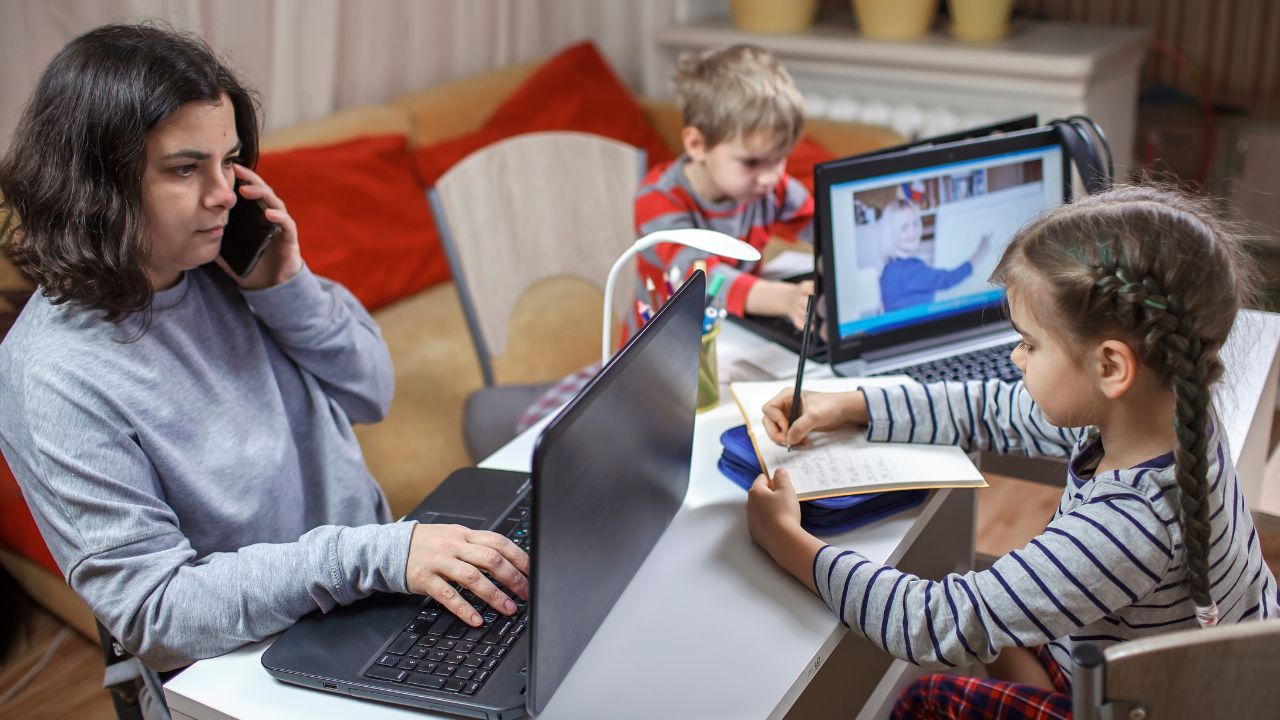
Remote work has altered the professional world for women, particularly mothers, by reducing the career disadvantages often associated with family responsibilities, a new study from the National Bureau of Economic Research (NBER) suggests.
According to the findings, offering work-from-home flexibility helps mitigate the “motherhood penalty” in traditionally demanding, family-unfriendly industries like finance and business. As remote work becomes more normalized, these sectors are increasingly accessible to women with children, improving their ability to balance career growth with family life, according to HR Dive.

This is expanding the number of high-paying and fast-paced jobs that can accommodate parenting demands, which could help reduce gender inequality in the workforce. For young women, the possibility of remote work may also influence long-term decisions — encouraging greater investment in education, high-growth career paths, and long-term job commitments.
Employees place high value on remote options. Another recent NBER study revealed that tech workers, for instance, are willing to take pay cuts of up to 25% to maintain remote or hybrid arrangements — significantly more than earlier estimates had suggested.

Beyond personal preferences, the remote work trend has strategic implications for employers as well. Companies that offer flexible arrangements may find that women are more likely to stay with the organization after becoming mothers, making it more worthwhile to invest in their training and development.
Ultimately, the normalization of remote work could play a significant role in reshaping gender dynamics in the labor market, especially in sectors that have historically been less accommodating to parenting responsibilities.