
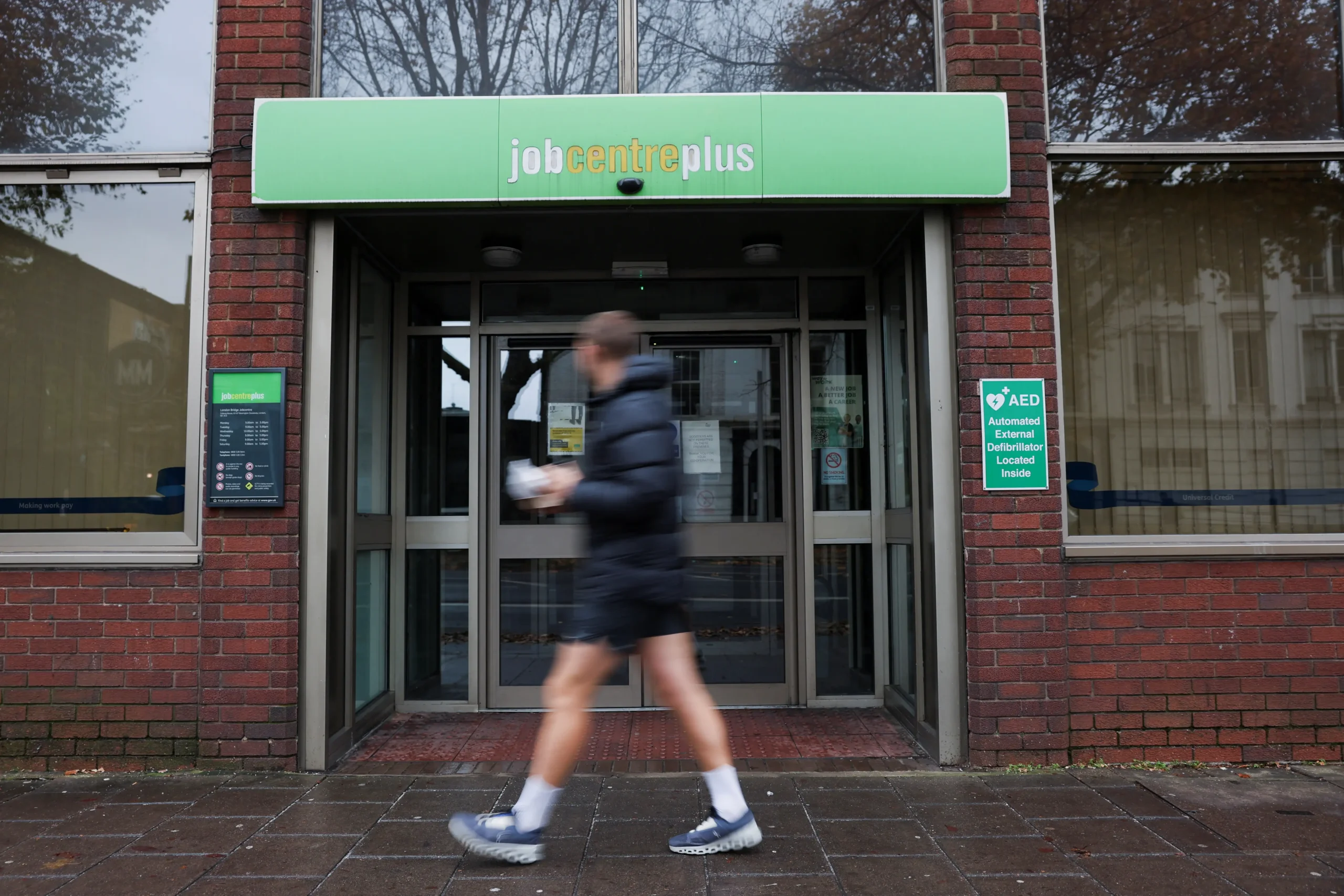
British unemployment is likely to rise to its highest since 2015 this year, partly due to a rising minimum wage and last year’s increase in a tax on employers, a leading think tank said on Wednesday.
The National Institute of Economic and Social Research forecast that the jobless rate would average 5.4% this year, up from 4.8% in 2025 and higher than predicted by most forecasters.

“Part of this unemployment story in the U.K. is rising labour costs,” NIESR economist Ben Caswell said.
An increasing minimum wage – which recent governments have lifted to two thirds of median earnings – and a jump in employers’ social security contributions led to a 10.6% jump in the cost of hiring an entry-level worker last year, NIESR said.

“Industries which have a larger share of their workforce on the minimum wage have also experienced larger increases in their respective unemployment rates,” Caswell said.
NIESR’s analysis of official data also showed a rise in unemployment in the IT sector which it said might be a result of artificial intelligence reducing demand for entry-level jobs.
Britain’s minimum wage is due to rise by a further 4% in April, keeping it among the highest for a major economy relative to average earnings. Prime Minister Keir Starmer’s government has said it wants to continue to phase out the lower minimum wage paid to 18-20 year-old workers.
However, not all the increase in unemployment was due to fewer job vacancies, NIESR said.

More people who previously were not in work or looking for work – and therefore were not considered to be unemployed – were now trying to find a job, after several years following the pandemic when so-called inactivity rates rose.
Barring a recession, the unemployment rate was likely to fall to 5% in 2028 or 2029, roughly its long-term sustainable rate outside of an economic boom, NIESR said.
Britain’s official unemployment rate was its lowest in around 50 years at 3.8% in 2022 and 2019 although the survey used to calculate it is now in the process of being overhauled due to quality issues.
NIESR nudged up its growth forecasts for 2026 and 2027 to 1.4% and 1.3% from forecasts of 1.2% for both years in November. It predicted two Bank of England interest rate cuts this year, lowering benchmark borrowing costs to 3.25% from 3.75%.
The BoE is due to publish updated economic forecasts on Thursday alongside its February monetary policy decision. Economists polled by Reuters do not expect a rate cut before March at the earliest.
(Reporting by David Milliken; Editing by William Schomberg)