




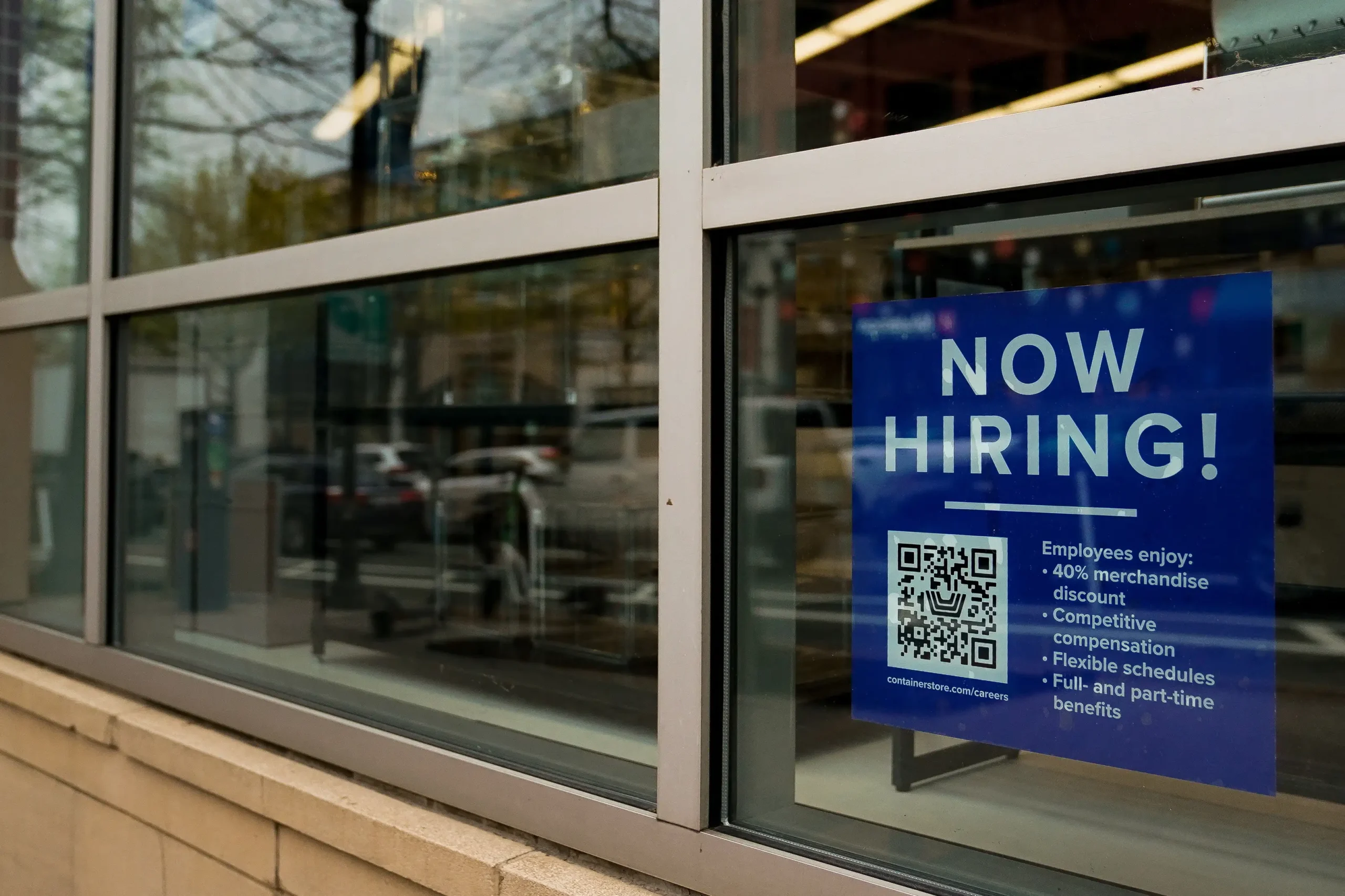
The number of Americans filing new applications for unemployment benefits increased more than expected last week, but the underlying trend remained consistent with a stable labor market.
The biggest rise in weekly jobless claims in nearly two months reported by the Labor Department on Thursday likely reflected distortions from snowstorms across much of the country as well as normalization after volatility linked to difficulties adjusting the data for seasonal fluctuations around the holiday season and at the turn of the year.

“There is no sign of the kind of layoffs we expect to see in a weakening labor market during the early days of a recession,” said Carl Weinberg, chief economist at High Frequency Economics. “The level of claims is just very low. Claims are well within the recent range over the last two years.”
Initial claims for state unemployment benefits jumped 22,000, the largest increase since early December, to a seasonally adjusted 231,000 for the week ended January 31, the Labor Department said on Thursday. Economists polled by Reuters had forecast 212,000 claims for the latest week.

Heavy snow and freezing temperatures blanketed large portions of the country towards the end of January, which could have left some people unemployed temporarily. Unadjusted claims shot up 5,301 in Pennsylvania and increased 3,421 in New York. They rose 2,214 in New Jersey. There were also notable increases in applications in Illinois, Missouri, Ohio and Wisconsin.
Claims are also likely rising as the volatility in late 2025 and early this year washes out of the data.
Through the distortions, the labor market remains in what economists call a “low hire, low fire” mode. The four-week moving average of claims, considered a better measure of labor market conditions as it strips out weekly volatility from the data, rose 6,000 to 212,250.
“Little has changed in the labor market since the fourth quarter,” said Samuel Tombs, chief U.S. economist at Pantheon Macroeconomics.

U.S. stocks opened lower. The dollar was steady against a basket of currencies. U.S. Treasury yields fell.
UPS, Amazon Boosted Planned Layoffs in January
While a separate report from global outplacement firm Challenger, Gray & Christmas showed layoffs announced by U.S. employers soared 205% to 108,435 last month, United Parcel Service and Amazon.com accounted for the bulk of the planned job cuts. Economists were unsure whether these planned layoffs would significantly impact the claims data.
High-profile layoffs last year, including by the two companies, did not result in a notable jump in jobless claims.
Economists have blamed the labor market stasis on uncertainty stemming from import tariffs and the growing popularity of artificial intelligence, which they say has left businesses unsure of their staffing needs as they deploy more resources towards AI. They are cautiously optimistic job growth will pick up this year as tax cuts underpin consumer spending.
The number of people receiving unemployment benefits after an initial week of aid, a proxy for hiring, increased 25,000 to a seasonally adjusted 1.844 million during the week ended January 24, the claims report showed. The so-called continuing claims had declined for three straight weeks, with economists also citing seasonal adjustment issues at the start of the year.
Some people may have exhausted their eligibility for benefits, limited to 26 weeks in most states.
The claims data have no bearing on January’s employment report, which will be released next Wednesday as they fall outside the survey period. The report, initially scheduled for Friday, was delayed by the recently ended three-day shutdown of the federal government.
Economists’ estimates for nonfarm payrolls are currently converging around an increase of 70,000 jobs. Payrolls rose by 50,000 jobs in December.
The unemployment rate is forecast to have held steady at 4.4%. Economists say labor market stability could encourage the Federal Reserve to keep interest rates unchanged through the first half of the year. The U.S. central bank last week left its benchmark overnight interest rate in the 3.50%-3.75% range.
(Reporting by Lucia Mutikani; Editing by Chizu Nomiyama and Andrea Ricci )