




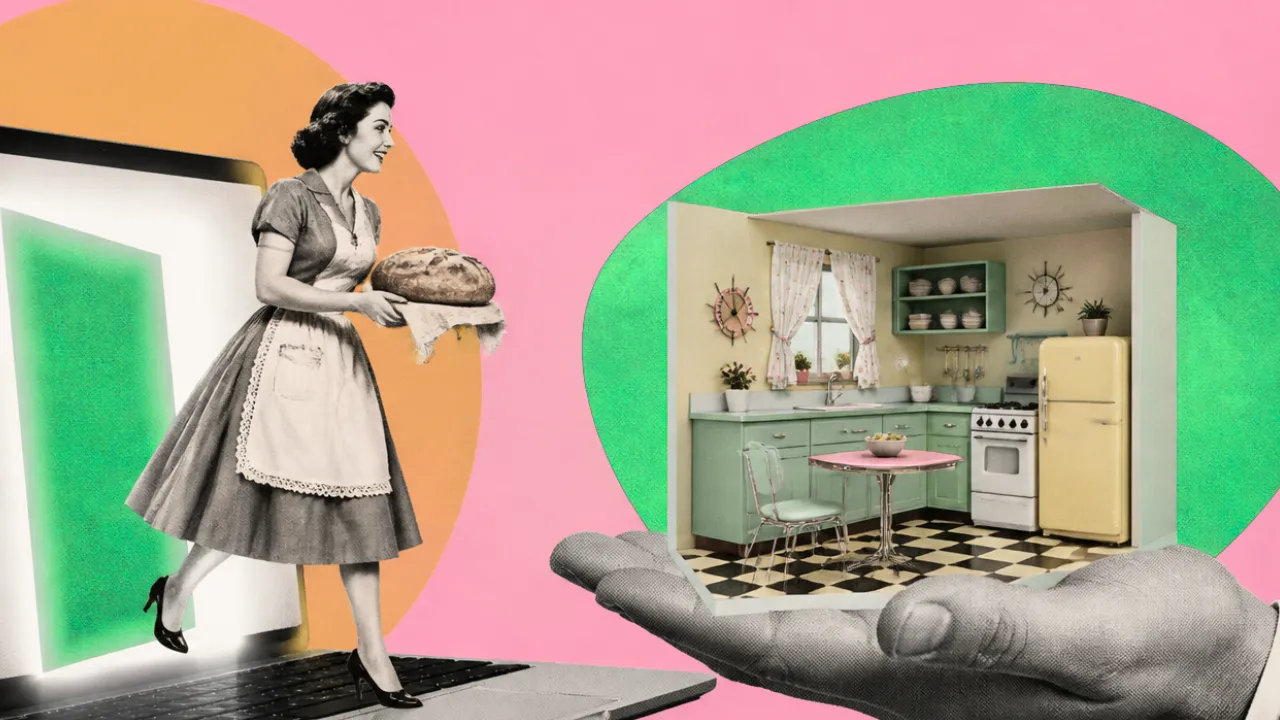
The tradwife fantasy sells a familiar promise: leave the exhausting modern workplace behind, marry a provider, raise children, bake bread, and build a life centered on home instead of a career. On social media, the arrangement can look like an escape from burnout, corporate politics, expensive childcare, and the impossible expectation that women should excel at work while managing most of the responsibilities at home.
It is easy to understand the appeal. Women have spent decades being told they can have it all, only to discover that having a career and a family can mean doing two full-time jobs at once. For many, the problem is not a lack of ambition, but rather, the price of pursuing it.

But the tradwife revival raises a more uncomfortable question: when women say they are tired of working, do they want to give up their careers, or do they want to stop carrying so much of the burden alone?
Those are very different things…and confusing them could mean trading the exhaustion of modern work for a form of dependence that earlier generations of women fought to escape.

Women Wanted Economic Freedom, Not Another Set of Rules
Women did not suddenly discover paid work in the 20th century. Women have always worked, including in agriculture, domestic service, factories, family businesses, and other jobs that were often poorly paid or undervalued. What changed over time was their access to a wider range of occupations, education, legal rights, and control over their own earnings.
According to the U.S. Bureau of Labor Statistics, women’s labor force participation rose from 33.9% in 1950 to a peak of 60% in 1999. In 2026, it stood at 57.9%.
That history was about more than getting a job title or climbing a corporate ladder; earning money could mean having a say in how a household operated, building savings, supporting children, or leaving a relationship that had become unsafe. A paycheck could create options that a woman dependent on someone else’s income did not have.
The legal history is equally revealing. Under the doctrine of coverture, married women in early American law often lacked an independent legal identity from their husbands. Depending on the state and period, they could be restricted from controlling wages, owning or managing property independently, signing contracts, or bringing legal actions in their own names. State laws gradually expanded married women’s property rights during the 19th and early 20th centuries. In 1974, the federal Equal Credit Opportunity Act prohibited credit discrimination based on sex or marital status, helping women obtain credit without the discriminatory barriers they had faced.

The point is not that every woman in the past was trapped, or that every marriage was oppressive. It is that financial dependence could make leaving a bad marriage far harder, and women’s rights to earn, own, and control money were hard-won forms of independence.
The right to work was a way for women to have more control over what happened next in their own life.
There are countless posts on social media from stay-at-home moms going through divorces where their husbands (and sole providers) have left them with nothing. The women in these videos are self-proclaimed tradewives warning the next generation of women to ensure that they always have a backup plan or their own stream of income if their marriages do not work out.
View this post on Instagram
The Tradwife Ideal Offers an Answer to a Real Problem
There are legitimate reasons women might question the bargain they have been offered. Housing costs are high, childcare can consume a large share of household income, and many workplaces still reward employees who can put in long hours while someone else handles the needs of the family.
Economist Corinne Low explores this pressure in Having It All: What Data Tells Us About Women’s Lives and Getting the Most Out of Yours. In an interview with Wharton about the book, Low explained that working mothers’ time is being squeezed because career demands remain high while men have not taken on household responsibilities at the same rate.
Low’s argument helps explain why the promise of traditional homemaking can feel so attractive. If paid work leaves a woman depleted and domestic labor is still waiting for her when she gets home, the idea of stepping away from the job can look like relief.
And there is nothing inherently wrong with wanting to stay home with children, prioritizing family, or choosing a life without a demanding career. Some families can afford to live on one income, and some women genuinely prefer full-time homemaking.
The problem begins when an individual preference becomes a universal prescription, especially when social media presents the arrangement as an uncomplicated route to happiness. The beautiful kitchen, coordinated outfits, and home-cooked meals show the visible rewards. They rarely tell the full story of who controls the money, what happens to retirement savings, how the household would cope if the breadwinner lost a job, or what options remain if the relationship ends.

A lifestyle can be appealing without including a reliable safety net.
What Happens When the Marriage Ends?
The tradwife ideal often depends on a central assumption: the provider will continue providing. But a marriage is not a guarantee against illness, job loss, death, separation, or abuse.
The National Network to End Domestic Violence says financial abuse occurs in 99% of domestic violence cases. It can include restricting access to bank accounts, controlling spending, sabotaging a partner’s employment, or preventing them from working. The organization notes that financial control can make it difficult for survivors to leave an abusive relationship or establish safety afterward.
That is the risk at the heart of economic dependence. A woman can willingly leave her job and trust her partner, only to find years later that she has little savings of her own, an employment history with a long gap, limited recent experience, or no easy way to cover housing and other expenses alone. If her partner is controlling or abusive, those vulnerabilities can become tools of control.
Even in a marriage without abuse, relationships end. In fact, 40% of marriages will end in divorce. But no one can promise that a marriage will last forever, and the possibility of separation is reason enough to plan for financial resilience.
The question is not whether women should assume their husbands will fail them, but rather if there is a plan in place to remain financially secure in the absence of another person. A plan that works only while everything goes right is a fragile plan.
Giving Up a Career Can Mean Giving Up More Than a Paycheck
The immediate financial cost of leaving work is obvious: lost wages. The longer-term costs can be easier to overlook. Time out of the workforce can mean slower career progression, fewer opportunities to build retirement savings, less access to employer benefits, and difficulty returning at the same level of pay. A partner who earns the household income may accumulate experience, promotions, professional contacts, and retirement assets while the homemaker’s unpaid work keeps the household running.
That unpaid work has real value. Cooking, cleaning, caregiving, organizing family life, and raising children are essential contributions. But the fact that the work matters does not mean the person doing it automatically has equal access to the money and assets the household accumulates.
A fair arrangement needs to account for that imbalance. Couples can share ownership of assets, maintain independent savings, contribute to retirement accounts where eligible, and agree on what financial security looks like for both partners. Homemaking does not have to mean financial helplessness.
The risk comes when dependence itself is marketed as proof of devotion, femininity, or a successful relationship. Love does not require surrendering the ability to support yourself.
Maybe Women Do Not Want to Give Up Work. Maybe They Want Work to Stop Taking Everything.
There is a difference between rejecting the modern work arrangement and rejecting women’s independence. The first can be a reasonable response to workplaces that make caregiving difficult, reward constant availability, and leave parents stretched thin. The second risks reviving old vulnerabilities without solving the problems that made traditional homemaking attractive in the first place.
The answer cannot simply be to tell women to work harder, become better mothers, find a richer husband, or optimize their schedules until every demand fits. Low’s research points to a more useful question: how can women build lives that are financially secure and personally fulfilling without being expected to excel at every role at once?
That may mean choosing full-time homemaking. It may mean a career with fewer hours, a more flexible employer, a partner who shares domestic work, or a different division of paid and unpaid labor. It may mean deciding that professional ambition matters deeply, or that it does not.
The important thing is that women have a genuine choice, including the ability to change their minds.
The tradwife revival is powerful because it recognizes that many women are exhausted by a system that asks them to earn like they have no caregiving responsibilities and care for their families as if they have no job. But a return to dependence is a poor solution to a problem rooted in unequal expectations.
Women fought for the ability to earn money, control their property, and build lives beyond marriage because those options mattered — especially when life does not follow the plan. The goal should be to make work and family life more humane, not to make women’s security depend on finding and keeping the right provider.