Advertisements
Your Brand Deserves The Spotlight - Advertise With Us - Allwork.Space
  • Marketplace
  • Resources
  • Business Directory
  • Events
  • Advertise
  • Publish a Press Release
  • Submit Your Story | Get Featured
  • Get the Newsletter
  • Contact
  • About Us
The FUTURE OF WORK® since 2003
Allwork.Space
No Result
View All Result
Subscribe
  • Submit Your StoryNew
  • More
    • Columnists
      • Dr. Gleb Tsipursky – The Office Whisperer
      • Nirit Cohen – WorkFutures
      • Angela Howard – Culture Expert
      • Drew Jones – Design & Innovation
      • Jonathan Price – CRE & Flex Expert
    • Get the Newsletter
    • Events
    • Advertise With Us
    • Publish a Press Release
    • Brand PulseNew
    • Partner Portal
  • Latest News
  • Business
  • Leadership
  • Work-life
  • Career Growth
  • Tech
  • Design
  • Workforce
  • Coworking
  • CRE
  • Podcast
  • Submit Your StoryNew
  • More
    • Columnists
      • Dr. Gleb Tsipursky – The Office Whisperer
      • Nirit Cohen – WorkFutures
      • Angela Howard – Culture Expert
      • Drew Jones – Design & Innovation
      • Jonathan Price – CRE & Flex Expert
    • Get the Newsletter
    • Events
    • Advertise With Us
    • Publish a Press Release
    • Brand PulseNew
    • Partner Portal
  • Latest News
  • Business
  • Leadership
  • Work-life
  • Career Growth
  • Tech
  • Design
  • Workforce
  • Coworking
  • CRE
  • Podcast
No Result
View All Result
Subscribe
Allwork.Space
No Result
View All Result
Advertisements
UltraSoftBIS Work Smarter, Not Harder
Home News

50 Years After OSHA, Report Warns Millions of U.S. Workers Still Lack Basic Safety Protections

A new report warns that OSHA’s thin staffing, lax penalties, and state-level resistance are undermining workplace safety and putting millions of workers in danger.

Allwork.Space News TeambyAllwork.Space News Team
September 30, 2025
in News
Reading Time: 5 mins read
A A
50 Years After OSHA, Report Warns Millions of U.S. Workers Still Lack Basic Safety Protections

Federal safety laws fall short as inspectors dwindle, penalties stay low, and states resist protecting workers from rising hazards — like heat and violence.

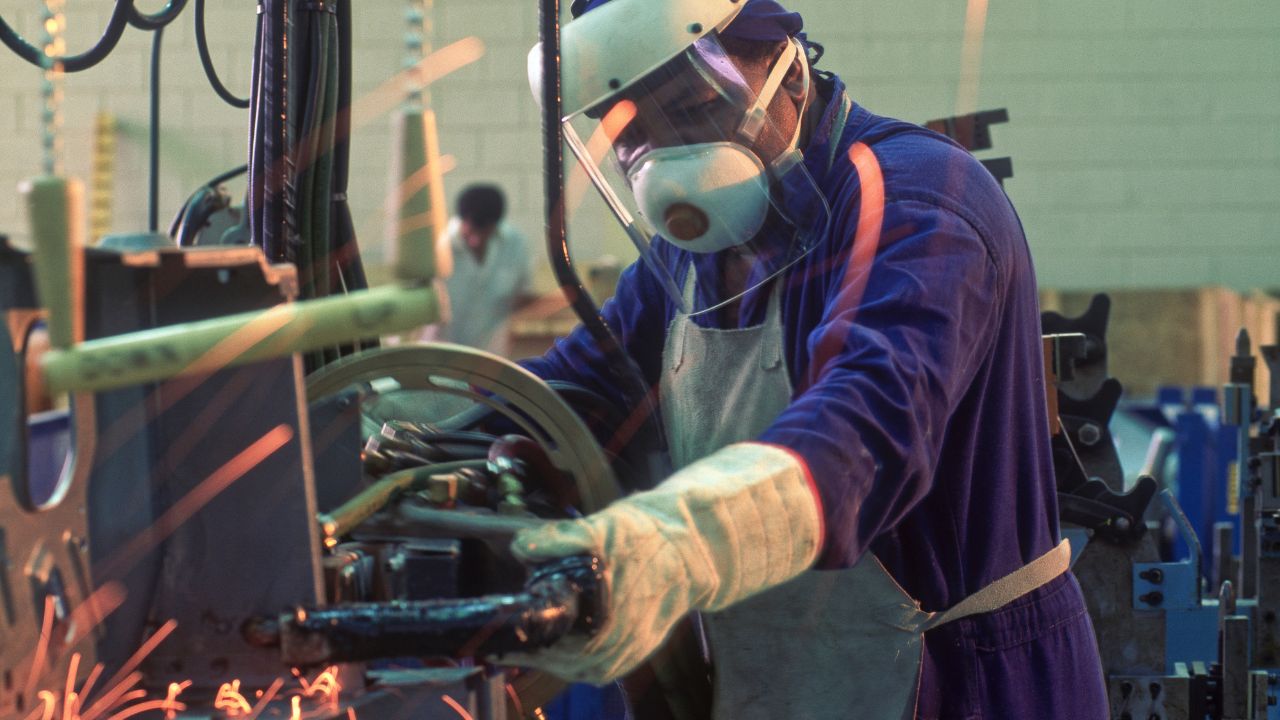
More than 50 years after the creation of OSHA (the U.S. federal agency meant to protect workers’ lives) the system meant to guarantee safety on the job is stretched thin, riddled with inconsistencies, and increasingly vulnerable to political sabotage, according to the Economic Policy Institute. 

The Law That Changed Everything — Kind Of

In 1970, after decades of pressure from labor movements, Congress passed the Occupational Safety and Health (OSH) Act. This landmark law created two key bodies:

Advertisements
Build Your AI - Disaster Avoidance

OSHA: The Occupational Safety and Health Administration is the enforcement agency responsible for setting and applying workplace safety standards.

NIOSH: The research body tasked with studying workplace hazards and guiding OSHA’s rulemaking.

Advertisements
Nexudus - Tech Stack Lovers

The law mandates that workplaces must be “free from recognized hazards that could cause death or serious physical harm.” Since then, workplace fatalities and injuries have dropped by 65%, even as the workforce has more than doubled.

Too Few Inspectors, Too Much Ground to Cover

Despite the gains, OSHA’s capacity has never kept pace with the scale of its mission, according to the report. There are fewer than 2,000 inspectors responsible for over 160 million workers. At current staffing levels, it would take 185 years to inspect every workplace just once.

And enforcement isn’t the only problem — some employers face penalties so small they amount to little more than a parking ticket. In 2024, the average federal fine for a serious safety violation was just $4,083, with some state plan penalties dipping even lower.

A Tale of 50 States: Who’s Covered and Who’s Not

The OSH Act gives states the option to operate their own OSHA-approved “state plans” if they meet or exceed federal standards. But state plans are wildly inconsistent. Here’s how it breaks down:

Advertisements
Your Brand Deserves The Spotlight - Advertise With Us - Allwork.Space
  • 29 states fall under federal OSHA jurisdiction.
  • 21 states have state OSHA plans covering private and public workers.
  • 6 states run “hybrid” plans, where only public-sector workers are covered by the state.

Some set the national bar (think: California or Washington). Others drag their feet on even basic compliance. And federal OSHA has no authority over public-sector workers in the 29 federal states — millions of workers fall into that gap.

The Trump-Era Rollbacks That Shook the System

During the Trump administration, OSHA and MSHA (the mining equivalent of OSHA) came under fire. Actions included:

  • Attempting to shutter safety offices and defund NIOSH.
  • Allowing massive penalty reductions for violations — up to 70%.
  • Promoting self-audit exemptions, letting companies police themselves.
  • Pausing or shelving critical rules, like silica dust protections for miners and a federal standard for heat exposure.

One of the biggest red flags? The proposed weakening of OSHA’s General Duty Clause, a foundational piece that requires employers to protect against known dangers not otherwise regulated. This move would carve out dangerous exemptions across entire industries.

The Gaping Holes in Federal Coverage

Even in 2025, no federal standards exist for several deadly or disabling hazards. These include:

More stories for you

How To Communicate Gen AI Change So Employees Listen, Engage, And Actually Adopt

How To Communicate Gen AI Change So Employees Listen, Engage, And Actually Adopt

2 hours ago
Added Workplace AI Features Spur Microsoft Productivity Suite Price Increases For 2026

Added Workplace AI Features Spur Microsoft Productivity Suite Price Increases For 2026

11 hours ago
U.S. Planned Layoffs Plummet 53% In November, But Still Outpace 2024 Levels

U.S. Planned Layoffs Plummet 53% In November, But Still Outpace 2024 Levels

11 hours ago
U.S. Weekly Jobless Claims Fall To Three-Year Low Amid Mixed Labor Market Signals

U.S. Weekly Jobless Claims Fall To Three-Year Low Amid Mixed Labor Market Signals

11 hours ago
  • Extreme heat exposure
  • Wildfire smoke
  • Ergonomic injuries (e.g., repetitive lifting or twisting)
  • Workplace violence
  • Airborne infectious diseases

As climate change accelerates and frontline workers face growing threats, these gaps are deadly.

What States Can Do — and Why Many Don’t

States have the legal authority to go beyond federal OSHA, especially those with approved state plans. Yet many haven’t. Some states have even weakened their standards or resisted updates mandated by federal OSHA.

What proactive states can and should do:

  • Adopt unregulated protections: Like heat, smoke, ergonomics, violence, and airborne pathogens.
  • Enact right-to-refuse laws: Let workers legally decline unsafe work during climate emergencies or outbreaks.
  • Mandate Injury and Illness Prevention Programs (IIPPs): Like those required in California and Washington.
  • Increase penalty amounts: To make them actually matter to employers.
  • Implement “instance-by-instance” citations: To hit repeat offenders where it hurts.

The Local-Level Blockade: State Preemption Laws

Even when cities or counties try to step in, some states stop them cold. Preemption laws in states like Texas and Florida block local ordinances that could strengthen safety standards — particularly around extreme heat. That means even if local governments want to act, state legislatures often tie their hands.

Advertisements
Build Your AI - Disaster Avoidance

Holding States Accountable

When state plans are less effective than required, workers and advocates can:

  • Document enforcement failures, such as delayed inspections or unresolved complaints;
  • File a CASPA (Complaint About State Program Administration) with federal OSHA;
  • Publicize failures through press campaigns and coalition advocacy;
  • Resist legislation that would weaken standards or enforcement capacity.

However, the CASPA process is often slow and rarely leads to major changes on its own. Successful advocacy typically involves combining official complaints with public pressure and coalition organizing.

Safety Depends on Where You Work and Who’s in Power

Whether you’re protected on the job often depends less on your occupation and more on your zip code and state legislature. Some workers get state-of-the-art protections. Others are left with loopholes, low fines, and government agencies too underfunded to enforce the law.

The system works…when it’s allowed to. But between federal inaction, political interference, and uneven state enforcement, U.S. workplace safety is fragile, and right now, the cracks are showing.


Advertisements
UltraSoftBIS Work Smarter, Not Harder
Advertisements
Subscribe to the Future of Work Newsletter
Source: Economic Policy Institute
Tags: LeadershipNorth AmericawellnessWorkforce
Share6Tweet4Share1
Allwork.Space News Team

Allwork.Space News Team

The Allwork.Space News Team is a collective of experienced journalists, editors, and industry analysts dedicated to covering the ever-evolving world of work. We’re committed to delivering trusted, independent reporting on the topics that matter most to professionals navigating today’s changing workplace — including remote work, flexible offices, coworking, workplace wellness, sustainability, commercial real estate, technology, and more.

Other Stories Recommended For You

How To Communicate Gen AI Change So Employees Listen, Engage, And Actually Adopt
Tech

How To Communicate Gen AI Change So Employees Listen, Engage, And Actually Adopt

byDr. Gleb Tsipursky
2 hours ago

Clear, consistent, multi-channel communication made Gen AI adoption smoother and more trusted.

Read more
Added Workplace AI Features Spur Microsoft Productivity Suite Price Increases For 2026

Added Workplace AI Features Spur Microsoft Productivity Suite Price Increases For 2026

11 hours ago
U.S. Planned Layoffs Plummet 53% In November, But Still Outpace 2024 Levels

U.S. Planned Layoffs Plummet 53% In November, But Still Outpace 2024 Levels

11 hours ago
U.S. Weekly Jobless Claims Fall To Three-Year Low Amid Mixed Labor Market Signals

U.S. Weekly Jobless Claims Fall To Three-Year Low Amid Mixed Labor Market Signals

11 hours ago
Advertisements
Get more revenue. Do less work - Alliance Virtual Offices
Advertisements
Yardi Kube automates flex & coworking operations

Unlock your competitive edge in tomorrow's workplace.

Join a community of forward-thinking professionals who get exclusive access to the latest news, trends, and innovations that are shaping the future of work.

2025 Allwork.Space News Corporation. Exploring the Future Of Work® since 2003. All Rights Reserved

Advertise  Submit Your Story   Newsletters   Privacy Policy   Terms Of Use   About Us   Contact   Submit a Press Release   Brand Pulse   Podcast   Events   

No Result
View All Result
  • Home
  • Latest News
  • Topics
    • Business
    • Leadership
    • Work-life
    • Workforce
    • Career Growth
    • Design
    • Tech
    • Coworking
    • Marketing
    • CRE
  • Podcast
  • Events
  • About Us
  • Advertise | Media Kit
  • Submit Your Story
Subscribe

Welcome Back!

Login to your account below

Forgotten Password?

Retrieve your password

Please enter your username or email address to reset your password.

Log In
This website uses cookies. By continuing to use this website you are giving consent to cookies being used. Visit our Privacy and Cookie Policy.
-
00:00
00:00

Queue

Update Required Flash plugin
-
00:00
00:00