
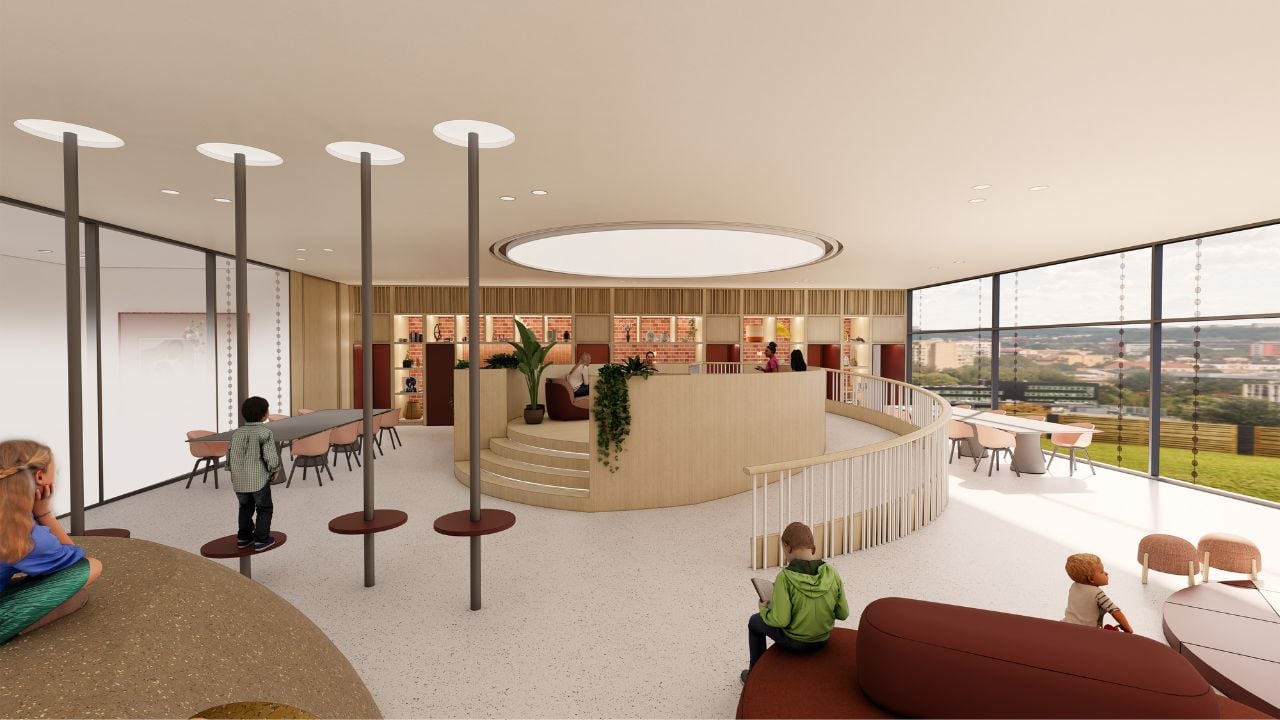
Motherhood often brings long stretches of isolation, especially when balancing work, childcare, and time for yourself. All Moms, a nonprofit based in Richardson, Texas, is reimagining what workplaces can be, offering a space where mothers and their children can spend time together, feel supported, and take part in activities that meet real daily needs.
This caregiver-focused model showcases new possibilities for the future of the workplace, giving parents more ways to stay connected and productive.

Can Child Play and Productivity Coexist?
In our work with All Moms, the Dallas studio of Perkins&Will is exploring what it can look like for a space to support both mothers and their children. Throughout this process, we created renderings that reflect the nonprofit’s commitment to promoting well-being across the full range of mothers’ experiences.
From the start, our goal was to design a space that felt authentic and inclusive to the All Moms membership. Our team began by collaborating closely with members, using visioning sessions in combination with research and direct input.

The All Moms team emphasized the need for a warm and approachable environment, where members can be themselves without hesitation. This shaped our vision for what we came to call a “mom-centered sanctuary.”
We had the rare opportunity to design this 6,000-square-foot sanctuary without the structural limitations of an existing space. This allowed us to focus entirely on design strategies that center a mother’s experience. With no specific lease or location in mind, every square foot could be shaped to support authentic and welcoming interactions.
According to a recent study from CoWorking Cafe, about 73% of moms in the U.S. with children under the age of 18 are working, and this rate is steadily increasing. Many parents understand the stress of a cranky child disrupting an important Zoom call or the complicated logistics of managing care during a work emergency. At All Moms, caregiving and productivity coexist by design, allowing members to focus on work while their children are engaged and safe nearby.
Most workplaces won’t or don’t need to accommodate children daily. But the design strategies behind All Moms offer a blueprint for reducing the strain on a parent’s life when the personal and professional collide.

Rethinking the Workplace for Mothers
Isolation is a common challenge for parents, which is why All Moms creates opportunities for connection. The community includes moms of multiples, neurodivergent moms, single and bilingual moms, working and stay-at-home moms, and more, all coming together in a space designed with inclusion as the top priority.
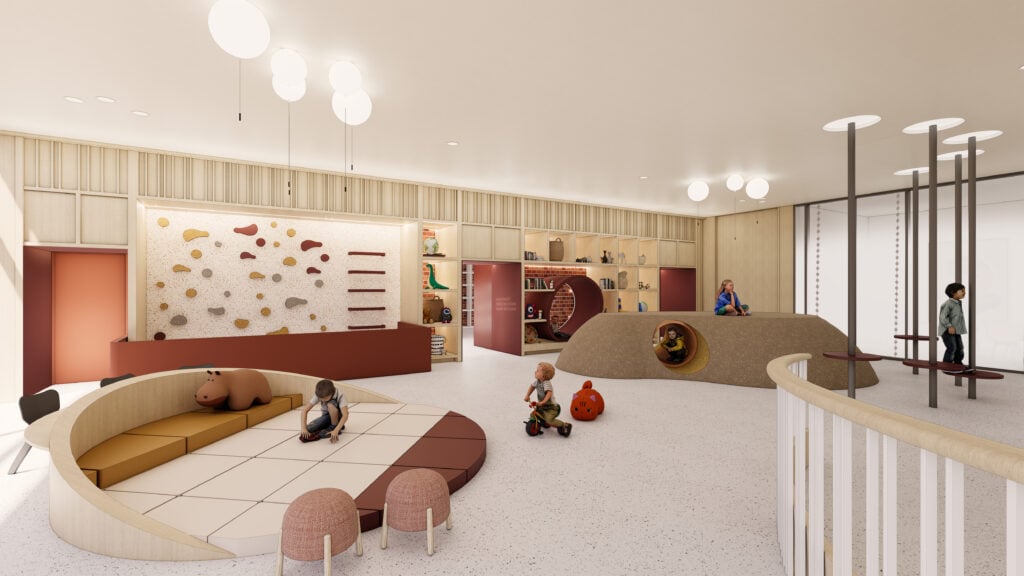
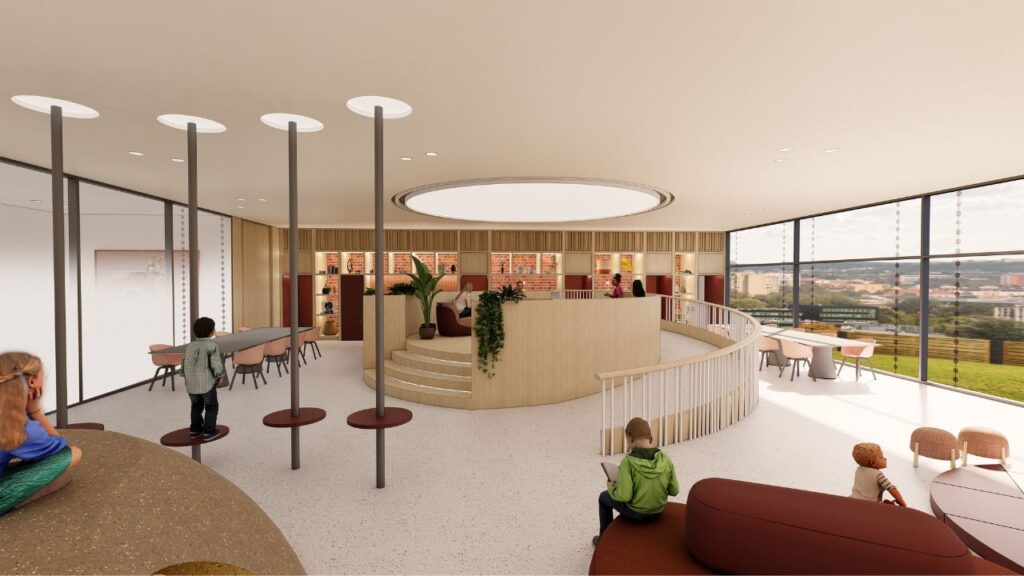
The design prioritizes both function and well-being. Wellness spaces like the therapy room, nursing space, and nap room sit alongside coworking areas, a parent lounge, and multipurpose room. This creates flexible zones where work and caregiving can coexist.
Play zones engage children of all ages, keeping them within reach so mothers can participate fully in group programs and activities. A kitchenette and storage for toys and other items help keep the environment organized and practical for daily use.
Flexible layouts and wellness areas acknowledge the diverse responsibilities employees manage each day, also allowing the space to evolve with the organization.
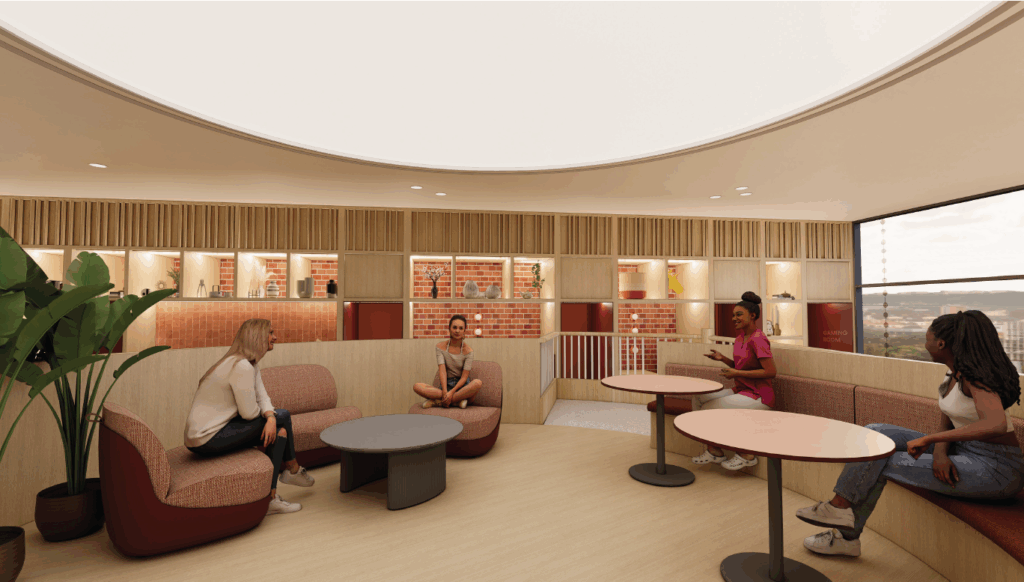
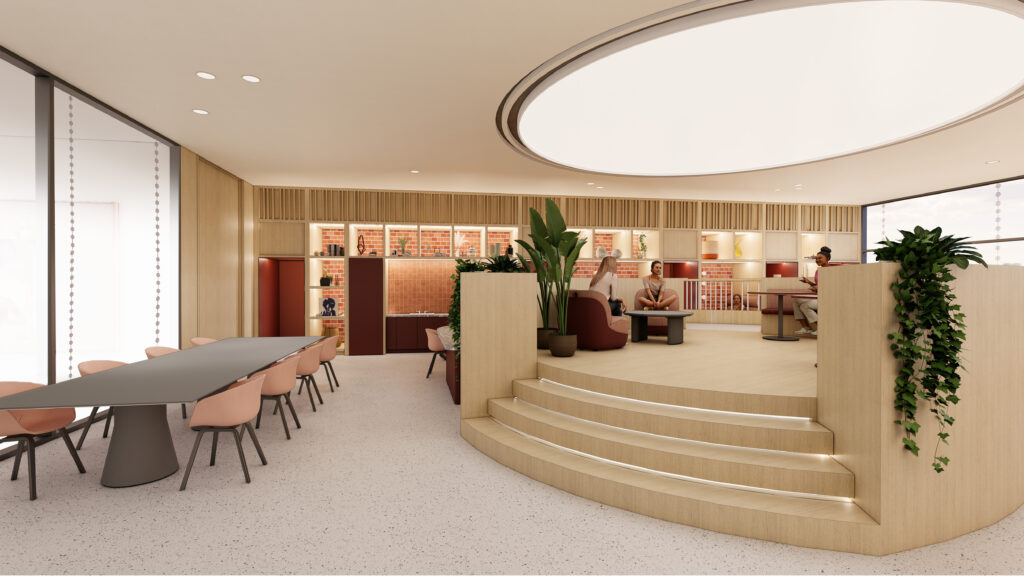
A closer look at the central podium, reached by both stairs and ramp, shows how this raised area creates a comfortable spot for conversation while still keeping a clear view of children at play. The more adult-focused side of the multipurpose space connects to the offices, mothers room, gaming room, and therapy room. Renderings Courtesy of Perkins&Will.
What All Moms Teaches us About Wellness, Rest, Safety, and Support
The most effective inclusive design removes barriers you might not realize are even there.
Consider the nap room. Wellness amenities in the All Moms design like the nap room support employees at every stage of life, from new parents to those managing chronic illness or fatigue. The same space addresses multiple realities without requiring anyone to justify their need for it.
This principle extends throughout. Therapy rooms normalize mental health support as part of holistic well-being rather than crisis intervention. Unisex, single-occupancy restrooms and restrooms sized appropriately for children offer all users independence while also providing privacy and safety for gender-nonconforming adults.
Diffused lighting helps reduce sensory overwhelm for neurodivergent users, and clear wayfinding supports a sense of safety, allowing users to feel confident from the moment they enter. Organic materials and nature-inspired finishes ground the space in calm without defaulting to gendered assumptions.
Spaces specific to caregivers, such as private rooms for nursing or pumping, demonstrate how thoughtful placement can shift culture. Converted closets imply that nursing is something to hide, while those integrated into the floor plan acknowledge simple biological reality.
Supporting employees’ full lives supports their productivity. Designing with empathy builds the foundation for both, helping foster an enduring culture of care.
Implementing These Initiatives in Future Workplaces
The traditional office operates on the unstated assumption that employees can fully separate their professional and personal lives. But what if we didn’t have to?
The All Moms project doesn’t suggest every workplace can or should welcome toddlers. What it does is highlight that the line between personal and professional may be more porous than we pretend. And that as people debate the future of the physical workplace, there may be an opportunity for designers to take innovative steps to support an employee’s whole self.
Achieving more inclusive workplaces requires listening directly to the people who will use them. Collaborative visioning sessions reveal needs that designers might not anticipate.
What emerges from this process are spaces that work with people’s lives, not against them. The wellness amenities, flexible layouts, and accessibility features in the All Moms design respond to the reality that life doesn’t pause while we’re in a meeting.