- Co+Hoots was ranked by Inc.com as the #4 coworking space in the U.S.
- Founder Jenny Poon shares that Co+Hoots is focused on collaboration, community, and supporting entrepreneurs and independent professionals
- The secret to Co+Hoots success has been its ability to build a loyal community that has helped them scale by word of mouth recommendations
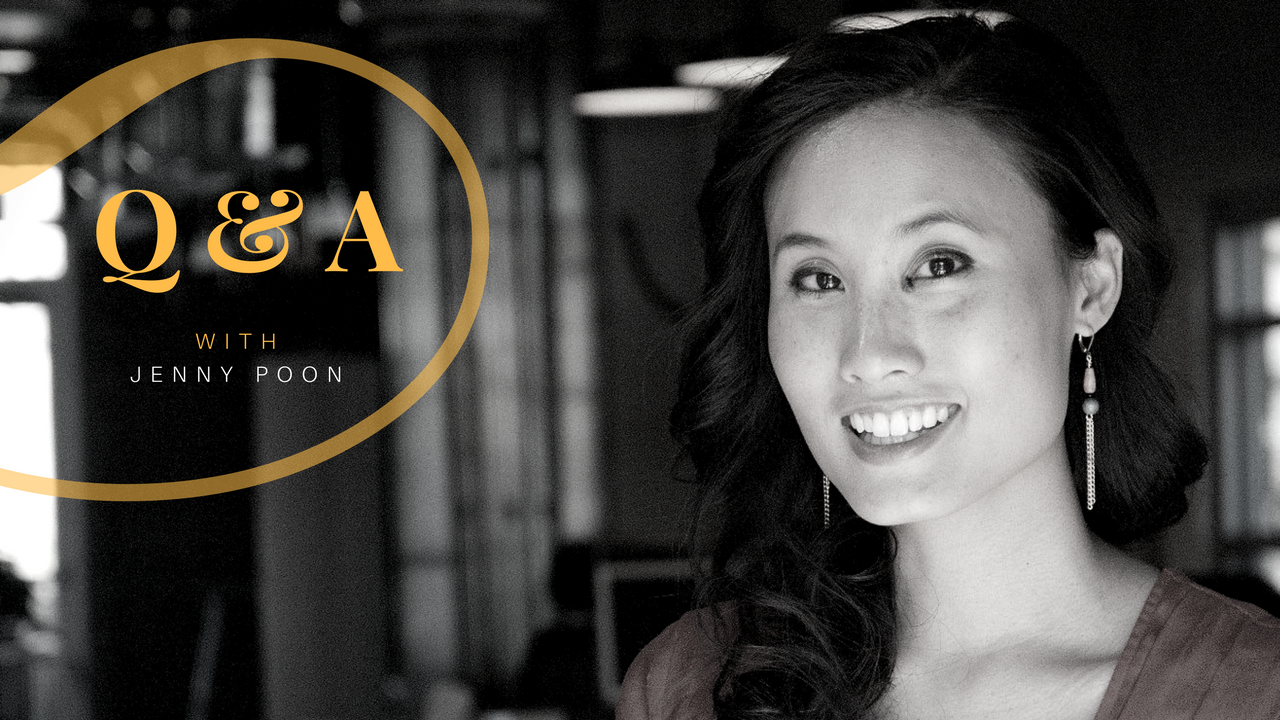
In 2010, Jenny Poon founded Co+Hoots, a “member-sustained, community-supported collaborative coworking space” in Phoenix, Arizona that Inc.com ranked the #4 coworking space in the U.S. This year, Poon and her team are breaking ground on a second Co+Hoots location in Mesa, Arizona.
With a strong focus on collaboration, community and supporting entrepreneurs and independent professionals, Co+Hoots has become a centerpiece of the local entrepreneurial and business ecosystem. It’s also a driver for creating a more diverse, accessible entrepreneurial community in Arizona. The Co+Hoots Foundation, a nonprofit formed in 2014, has a mission to “create a community that is equitable, innovative and thriving by providing opportunities for underrepresented communities through ongoing education, scholarships and partnerships.”

Between its coworking space and its foundation, Co+Hoots transforms the lives and businesses of area entrepreneurs. Allwork.space chatted with Poon about creating an inclusive, safe space, empowering young people from low socioeconomic backgrounds and the importance of building community, both inside and outside of a coworking space. Here are the highlights of our conversation.
Allwork.space: You’ve really established Co+Hoots in the Phoenix business ecosystem. What’s your big picture view on what Co+Hoots offers the city and entrepreneurial community?

Jenny Poon: We’re a big connector. That’s a big part of what makes us really special. A lot of the work we do is about driving economic development and community-building within the areas we operate. We work a lot with community groups to make them understand what resources are available for entrepreneurs at any stage: whether they’re just now launching, or they’ve been around for 15 years and are in scaling mode, or they’re a high-level executive that’s looking to branch out and start a consulting business. There are different needs with each of those different stages.
That’s an upward slope of the different demographics we serve. We also serve communities that are underrepresented. Through our nonprofit we have programming to serve the low-income community as well as minorities, women, and those who have less opportunities to get into entrepreneurship. Our goal is to see more people become entrepreneurs and start businesses, which then creates jobs and sparks economic activity.
Allwork.Space: When you launched Co+Hoots, was serving underrepresented communities part of your vision for the space?
Not in the beginning. I was working for myself and I needed a place to grow. I needed different problems solved. One of the problems was physical space, but the second biggest problems was finding out where to go to grow my business. That piece of it was a part of our early programming. We didn’t want to be just a space. I saw so many businesses failing because they didn’t know where to turn to find the resources they needed—they didn’t know how to find the best bookkeeper for them, or how to do online marketing and all the things you need to do when you’re operating all by yourself.

In the beginning, I was just looking to solve that. As I got into it—coming from the background of being a minority, a woman, and being young—there aren’t very many of us. I saw that the people who ended up entering our space were your typical white males. That doesn’t help our economy when a whole sector of people aren’t creating jobs and being successful in running their business.
Studies have shown that if women entered the workforce our economy would soar. If women created businesses at the same pace men do, our economic impact would be threefold. How do we start working on supporting those groups that have good ideas just as everyone else.
Allwork.Space: How did that awareness translate into changing the dynamic in the space?
We really looked at what was happening and asked how we could be more inclusive and change the dynamic of our space from being just the typical white male. How do I attract more people like me? We instilled a culture of inclusivity, of knowledge-sharing for everyone, and being a safe place for everyone to be successful.
As an entrepreneur, you know how scary it is to have to admit you’re struggling with something. This becomes a safe place for you to do that. Not every space is like that—not every place allows you to put down the ego and the face you need to put up every day when you’re running a business and be vulnerable and honest with where you are in your business in order to overcome the challenges you’re currently facing.
Allwork.Space: Co+Hoots has strong relationships and partnerships in the Phoenix business community. How have you been able to extend that dynamic of inclusivity and support that’s in your space into the larger community?
Through our nonprofit, the Co+Hoots Foundation, we have our Youth Startup Weekend, which is a three-day hackathon for high school kids. We really target kids from low socioeconomic communities. Through those programs, we partner with Arizona State University, we’ve partnered with GCUC (Global Coworking Unconference Conference), we’ve partnered with local startups to get them engaged in helping young entrepreneurs become successful.
We run a free Lunch and Learn series as part of Co+Hoots. Every Wednesday it’s a different topic. We have partners at the city level talking about how, as a business, you can enter the state and city procurement department or programming so you can qualify for large grants and can propel your business to the next level. Most cities want to give that business to someone local. The problem is, there’s a lot of red tape and most small businesses don’t know how to navigate that process.
Through our foundation we do advisement days. We partner with GoDaddy to give free advice on how entrepreneurs can improve their digital brand and digital marketing. We have a partnership with a law firm that gives advisement to anyone who needs legal contract advice. Anyone can schedule time with the attorneys and get a contract reviewed at no cost. These are all little fees that add up.
We’ve kind of become a modern day SCORE. Our focus is on expanding those resources to people who need it: giving access to all of those people in underrepresented communities, and also making sure they know about them. A lot of these resources are hidden and they aren’t marketed.
We’ve built a really large community on the ground. We have 250 members, 175 companies, a social media reach of over 10,000 people. With the technology we have today, people know how to find those resources because we put them everywhere. We have a direct tie to the mayor who helps share a lot of the programming, and we have a direct tie to all the economic development private-public partnerships that are out there that work directly with low-income communities or the school districts. We have built those relationships and are able to share the resources we have and give people access to the resources they need.
Allwork.Space: How does that strong community ethos and focus on diversity affect the vibe inside Co+Hoots?
When we started in the early days, yes, the members were mostly white guys, but they were very conscious of the dynamic in the space. They knew that being surrounded by all of the same people wasn’t a great thing. They helped create the diversity we needed. It can’t be all women fighting for women’s rights, we need men to step up to do these things, as well. Early on, all of our early adopters and founding members were actively engaged in the goal of bringing more women and more minorities into the mix of our community.
Our mission is to be a safe place for entrepreneurs of all kinds to be successful. We specifically list those out: we say, entrepreneurs—no matter their race, gender, age, socioeconomic status, sexual orientation—have a safe space to be successful here at Co+Hoots.
Because we state that, and it’s a part of everything we do and how we onboard each member, it’s instilled in our community. Members are around the programming all the time, so they understand it and we actually encourage our members to be involved as volunteers in all the programming. When we ran our Youth Startup Weekend, we had 50 volunteers: 25 from our Co+Hoots community and 25 from outside our community.
Allwork.Space: How would you advise a space operator who wants to connect more with the larger community but isn’t sure how to start?
For people who want to do this, if they’re just starting out, it’s important to really nurture your first adopters. They will be the guide for your moving forward. Keep those people very close.
Uber isn’t necessarily loved right now, but when they first expanded to the Southwest region, the general manager moved their location into Co+Hoots. It was just him—just one person. Over the next two years, he grew it to 12 people, moved out of our space,
and took over a 40,000 square foot space in downtown Phoenix. We connected them to government partners and now Arizona is the hub for autonomous vehicles because of those connections Uber was able to make here and the support the coworking community gave them.
I just met with the manager again yesterday. We haven’t been in the same space for over four years, but they continue to maintain a membership and they continue to share the community we’ve helped them build. They continue to share the coworking concept with anybody they meet. And they deal with a lot of entrepreneurs on a daily basis because most of their drivers are entrepreneurs.
Allwork.Space: Thanks, Jenny. From a business perspective, what’s the importance of having Co+Hoots established in the local entrepreneurial, community and business ecosystem?
It’s incredibly important to have that relationship with our membership and the culture instilled from the very beginning. While we might look like a large company, and we have a large space, we actually operate with maybe two and a half staff. We have two full-time staff and two part-time people. We’re really only able to continue building this culture and the work we’re doing because we have this community.
It’s not that we ask the community to man the front desk for us, or run operations for us, or onboard new members for us—we ask them to just do what they came here for. We ask them to introduce themselves and help continue to spur the community. We ask them to attend the Lunch and Learns and share them with people who might benefit from them. They become our marketing arm for us, which has been the best, most efficient way for us to expand our reach. We don’t do any advertisement in print; we do a little bit of online advertising to maybe boost an event on Facebook. Almost everything is word of mouth for us.
That’s been incredibly important and it’s the reason we’ve been able to scale with pretty modest operational costs. And that’s really the way loyalty is built. You can’t build loyalty by buying it and you can’t build community by buying it either. We’ve been really fortunate to have great advocates and ambassadors who believe in what we’re doing and actively support and share and refer people who would be a good fit to our community.