- After the events of 2020, the flexible workspace sector can help CRE recover from the coronavirus pandemic.
- Speaking at LATAM Coworking Summit, Newmark’s Iván González discussed how companies are rethinking their office space and turning to flex space as a solution.
- While the home office has proven to be a viable alternative for the workplace, it’s not a long-term solution – and it is deteriorating worker mental health.
During this year’s LATAM Coworking Summit, Iván González from Newmark gave a presentation about how the flexible workspace sector can help CRE recover from the coronavirus pandemic.
González started off by saying that what we are currently experiencing is an acceleration of trends that were already underway prior to the pandemic. “What we expected to see 5 to 10 years from now, we’re seeing today as a result of the pandemic.”

This is important because the pandemic has created a new tipping point for organizations, forcing them to rethink their operations.
“Companies had just started to see some results on their investments and strategies; just when they thought they figured something out and were on the other side of an issue, the pandemic hit. What companies thought would work, suddenly stopped working.”

The balance some companies had worked for years to achieve was unexpectedly thrown off. Everything changed overnight, including the CRE needs of organizations. Most importantly, companies were forced into a situation where they had to cut as many expenses as possible in order to survive.
The first step was to lay off people; however, companies learned soon after that layoffs were not enough. Even when companies where operating with the minimum staff required, they were still struggling to make ends meet. They reached a point where they couldn’t continue laying off people because they couldn’t afford the severance pay.
Companies were facing the following scenario:
Their staff was reduced significantly, however their real estate remained the same. This meant that their CRE costs remained the same as prior to the pandemic.
Many executives decided to reach out to their landlords and property developers in the hopes of renegotiating their leases. While some were amenable to such arrangements, others weren’t.
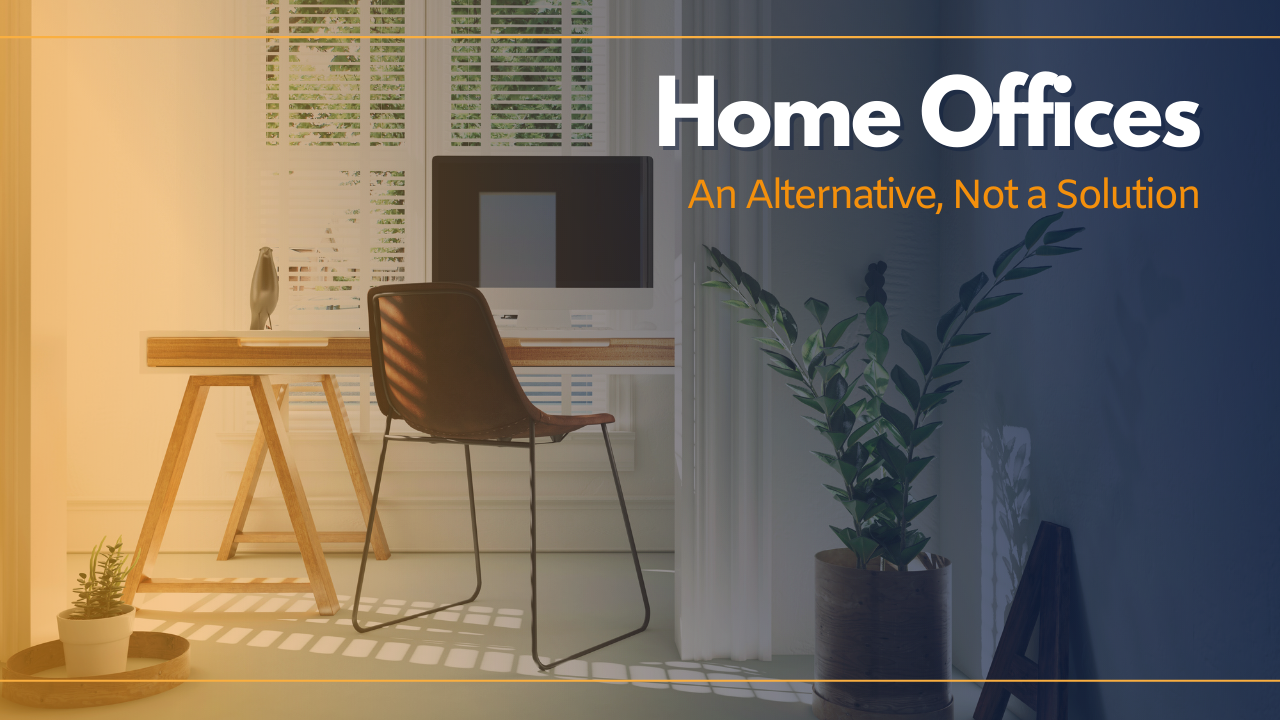
Home Offices: An Alternative, Not a Solution
Despite continuing to pay for office space, companies were forced to send workers home.
At first, people believed the home office to be the panacea of work arrangements. A few months later, most workers across the world started to realize why this was far from the truth:
It meant the line between work and life was blurred…if not completely erased.
Interestingly enough, González noted that surveys conducted by Newmark found that some people would rather work from home than the office; despite the chaos associated with working from home:
- Kids
- Spouses working nearby
- Roommates working nearby
- Lack of infrastructure
- Pets.
What this told us was that some companies were failing to provide adequate or attractive workplaces for their employees prior to the pandemic.
This makes us think that we are not designing adequate or attractive workplaces where people can work effectively and productively. This means that moving forward companies need to prioritize designing corporate spaces that exceed what a home office can offer workers.
Otherwise, employees won’t want to come back…especially since they’ve already learned that they don’t need to office to work.
While the home office has proven to be a viable alternative for the workplace, it’s not a viable long-term solution.
“People want workplaces that make them happy and contribute to their wellbeing.” The home office does not offer that.
Quite the contrary, González argues that working from home is deteriorating worker mental health.
“The pandemic is forcing us to behave as if we are depressed; we are being asked to isolate ourselves, to avoid social events and social interactions.”

The less we connect with others, the more likely we are to become depressed.
The Workplace as a Resource to Prevent Depression
“The pandemic of this century will be depression. Already, depression levels are as high as they have ever been.
The COVID-19 pandemic has not only accelerated technology, but it has also accelerated depression among working individuals.”
Workplaces, when designed carefully, can help prevent depression among workers.
“If we build spaces that contribute to people’s happiness and wellbeing, we can contribute to the battle against loneliness and depression.”
Flexible workspaces, in particular, can play a key role in this. By providing attractive workplace environments where people are likely to find connection with others, flexible workspaces can help bring people out of their home offices and into stimulating workplace environments.